

Short Answer
Definition of Thinness
The concept of thinness encompasses the measurement of minimal thickness or slenderness in objects, materials, or phenomena. It spans a wide spectrum, from everyday physical items to abstract scientific entities, challenging our understanding of size and dimension. Thinness is not only a physical attribute but also a metaphorical idea that invites reflection on fragility, existence, and the limits of perception.
Everyday Examples: Human Hair
One of the most familiar examples of thinness in daily life is a single strand of human hair. Typically, the diameter of a human hair ranges from 17 to 180 micrometers (µm), with an average thickness near 75 µm. This variation depends on factors such as genetics, ethnicity, and health conditions. Despite its minuscule size, hair can appear visually striking due to its color and light-reflecting properties. In cultural contexts, hair often symbolizes delicacy and beauty, serving as a tangible representation of life’s intricate fragility.
Advanced Materials: Graphene
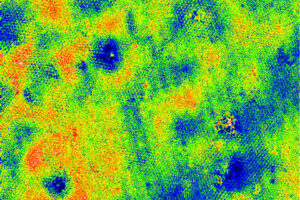
Graphene stands out as a groundbreaking material in the study of thinness. It consists of a single atomic layer of carbon atoms arranged in a hexagonal lattice, measuring approximately 0.335 nanometers in thickness. This two-dimensional structure exhibits extraordinary mechanical strength, exceptional electrical conductivity, and remarkable thermal properties. Graphene’s unique characteristics have revolutionized fields such as electronics, energy storage, and materials science, embodying the paradox of immense strength within an almost imperceptible layer.
Non-Material Thinness: The Nature of Light
Moving beyond tangible matter, light represents an intriguing form of thinness in the non-material realm. Photons, the fundamental particles of light, exhibit wave-particle duality and do not possess physical thickness in the traditional sense. Instead, their “thinness” can be conceptualized through their wavelength, which for visible light ranges between 400 and 700 nanometers. Light’s intangible nature challenges conventional definitions of thinness, highlighting the interplay between presence and absence, substance and void.
Quantum Scale: The Ultimate Thinness
At the quantum level, particles such as electrons epitomize the concept of extreme thinness. These subatomic entities are considered point particles with no measurable radius, according to the Standard Model of particle physics. Their dimensions defy classical measurement, existing as fundamental units of matter with properties that blur the boundaries between size and infinity. Quantum particles thus represent the pinnacle of thinness, embodying the profound mysteries of the microscopic universe.
Nanotechnology and Engineered Nanostructures
Nanotechnology has enabled the creation of materials with thicknesses reduced to mere nanometers, pushing the limits of thinness in engineered structures. Examples include quantum dots, nanosheets, and other nanoscale constructs that exhibit unique physical and chemical properties distinct from their bulk counterparts. These nanostructures have transformative applications across medicine, computing, and environmental science, illustrating how thinness extends beyond physical dimensions to influence technological innovation and future possibilities.
Philosophical Perspectives on Thinness
Beyond its physical manifestations, thinness carries significant philosophical weight. It prompts contemplation about the nature of existence, perception, and reality. Each example of thinness-from the tangible human hair to the intangible light and quantum particles-serves as a symbol for deeper inquiry into the fabric of the universe. The pursuit of understanding thinness becomes a metaphorical journey, exploring the delicate balance between the visible and invisible, the material and immaterial realms.
Why Understanding Thinness Is Important
Exploring thinness is crucial for advancing scientific knowledge, technological development, and philosophical thought. In material science, understanding ultra-thin substances like graphene leads to innovations in electronics and energy. In physics, studying quantum particles deepens our grasp of the universe’s fundamental laws. Philosophically, thinness challenges our perceptions and encourages reflection on the nature of reality. Thus, thinness is not merely a physical measurement but a gateway to broader insights across disciplines.
Common Misconceptions About Thinness
The thinnest things must be visible to the naked eye.
Many of the thinnest entities, such as quantum particles and atomic layers, are far beyond direct human observation and require advanced instruments to study.
Thinness always implies fragility.
Some ultra-thin materials, like graphene, possess extraordinary strength despite their minimal thickness.
Light has physical thickness similar to solid objects.
Light is a non-material phenomenon characterized by wavelength, not physical thickness.
Real-World Applications and Examples
Practical uses of thin materials and concepts of thinness abound in modern technology and science:
- Graphene in Electronics:
Graphene’s thinness and conductivity enable the development of faster, more efficient electronic devices. - Nanostructures in Medicine:
Nanoparticles are used for targeted drug delivery, improving treatment precision and reducing side effects. - Quantum Particles in Computing:
Quantum bits (qubits) leverage quantum properties to revolutionize computational power. - Light in Communication:
Fiber optic cables use light’s properties to transmit data over long distances with minimal loss.
Conclusion: The Endless Exploration of Thinness
The investigation into what constitutes the thinnest entity on Earth is an ongoing journey that transcends simple measurement. From the tangible strands of human hair to the ethereal nature of light and the enigmatic quantum particles, each example enriches our understanding of the universe. Thinness serves as both a scientific parameter and a philosophical metaphor, bridging the gap between the observable and the abstract. This exploration invites continual curiosity, encouraging us to probe ever deeper into the subtle layers that compose reality.
FAQ
What is the significance of studying thin materials?
Studying thin materials can lead to innovations in various fields such as electronics, medicine, and understanding fundamental physics.




Leave a Reply