
Short Answer
Definition of the Cell Nucleus
The nucleus is a vital organelle found in eukaryotic cells, often described as the cell’s control center. It houses the cell’s genetic material and orchestrates numerous biochemical activities essential for cellular function and survival. Far from being a static compartment, the nucleus is a dynamic hub where critical processes such as gene expression, DNA replication, and ribosome production take place.
Structural Components of the Nucleus
Nuclear Envelope
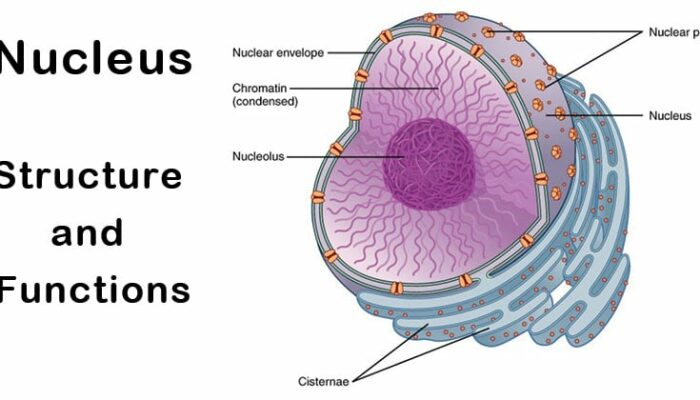
The nucleus is enclosed by the nuclear envelope, a double lipid bilayer membrane that serves as a selective barrier between the nucleoplasm and the cytoplasm. This envelope consists of two membranes:
- Inner membrane:
Provides structural support and interfaces with the nuclear matrix. - Outer membrane:
Continuous with the rough endoplasmic reticulum, highlighting the interconnectedness of cellular organelles.
Embedded within the nuclear envelope are nuclear pores-complex protein assemblies that regulate the transport of ions, molecules, and proteins, ensuring controlled communication between the nucleus and cytoplasm.
Nucleoplasm
Inside the nuclear envelope lies the nucleoplasm, a gel-like substance analogous to the cytoplasm. It acts as a suspension medium for nuclear components, including chromatin and the nucleolus, facilitating their functions within the nucleus.
Chromatin
Chromatin is a complex of DNA and associated proteins that exists in two distinct forms:
- Euchromatin:
Loosely packed chromatin that is transcriptionally active, allowing genes to be expressed. - Heterochromatin:
Densely packed chromatin that is transcriptionally inactive, serving to silence certain genes.
This structural variation in chromatin organization is fundamental to regulating gene activity and cellular differentiation.
Nucleolus
The nucleolus is a prominent, non-membrane-bound structure within the nucleus, often referred to as the “nucleus within the nucleus.” It is the site of ribosomal RNA (rRNA) synthesis and the assembly of ribosomal subunits, which are then transported to the cytoplasm to participate in protein synthesis.
Nuclear Matrix and Lamins
The nuclear matrix is a fibrous protein network that provides mechanical support and organizes chromatin within the nucleus, functioning similarly to the cytoskeleton in the cytoplasm. Closely associated with the nuclear matrix are lamins, intermediate filament proteins forming a dense mesh beneath the inner nuclear membrane. Lamins are crucial for maintaining nuclear shape, regulating gene expression, and organizing chromosomes.
Functional Roles of the Nucleus
Gene Regulation and Expression
The nucleus governs gene expression by controlling the accessibility of chromatin and facilitating transcription within euchromatin regions. It also coordinates the synthesis of ribosomal components in the nucleolus, linking genetic information to protein production.
Cell Cycle and Mitosis
During cell division, the nuclear envelope disassembles to allow chromatin condensation into visible chromosomes, a process essential for accurate chromosome segregation. Errors in this process can lead to aneuploidy, a condition often associated with cancer and other diseases.
Nucleocytoplasmic Transport
Nuclear pore complexes (NPCs) embedded in the nuclear envelope regulate the bidirectional movement of molecules between the nucleus and cytoplasm. These complexes are composed of nucleoporins, proteins that form a selective gateway ensuring cellular homeostasis and communication.
Advanced Visualization Techniques
Electron microscopy and other high-resolution imaging methods have enabled detailed visualization of nuclear architecture, including nuclear pores, chromatin organization, and the nuclear matrix. These technologies provide insights into the structural basis of nuclear functions and their alterations in disease states.
Implications of Nuclear Structure in Health and Disease
Disruptions in nuclear architecture are linked to a variety of pathological conditions, including genetic disorders and cancers. Abnormalities in nuclear envelope integrity, chromatin organization, or nucleocytoplasmic transport can impair cellular function and contribute to disease progression. Understanding these structural-functional relationships is critical for developing novel therapeutic approaches.
Epigenetic Regulation Within the Nucleus
Beyond the DNA sequence, the nucleus is a center for epigenetic modifications-chemical changes to DNA and histone proteins that influence gene expression without altering the genetic code. These modifications respond to environmental cues and cellular signals, adding an additional layer of gene regulation crucial for development and adaptation.
Why Understanding the Nucleus Is Essential
The nucleus is fundamental to life, serving as the repository and regulator of genetic information. Its complex architecture and dynamic functions underpin cellular activities from growth to response to environmental changes. Advances in nuclear biology continue to deepen our understanding of molecular and cellular processes, with significant implications for medicine, biotechnology, and genetics.
Summary
The nucleus is a sophisticated organelle characterized by its double membrane, selective nuclear pores, chromatin organization, nucleolus, nuclear matrix, and lamins. Together, these components coordinate to regulate gene expression, maintain genomic integrity, and facilitate cell division. Ongoing research into nuclear structure and function promises to unlock new insights into cellular life and disease mechanisms, highlighting the nucleus as a central focus in cell biology.
FAQ
What is the function of the nucleus?
The nucleus serves as the control center of the cell, housing genetic material and regulating gene expression, cell division, and other critical cellular processes.
What are the main components of the nucleus?
The main components include the nuclear envelope, nucleoplasm, chromatin, nucleolus, and nuclear matrix.





Leave a Reply