
Short Answer
Definition and Fundamental Characteristics of Neutrons
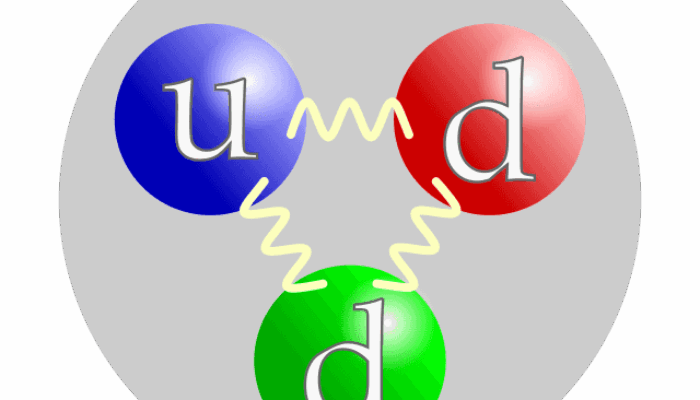
Neutrons are subatomic particles located within the atomic nucleus alongside protons. Unlike protons, neutrons carry no electric charge, making them electrically neutral. Their mass is marginally greater than that of protons, approximately 1.008664 atomic mass units (amu). This slight mass difference is significant in nuclear interactions and decay mechanisms. The neutrality of neutrons allows them to penetrate atomic nuclei without experiencing electrostatic repulsion, which is crucial for the cohesion of atomic nuclei, especially in heavier elements.
Neutrons and Atomic Nucleus Stability
The stability of an atomic nucleus heavily depends on the presence of neutrons. Protons, all positively charged, naturally repel each other due to electromagnetic forces. Neutrons provide a balancing effect by contributing to the strong nuclear force, a powerful but short-range interaction that binds protons and neutrons together within the nucleus. This force counteracts the repulsive electromagnetic forces, maintaining nuclear integrity. The neutron-to-proton ratio is a key determinant of nuclear stability; isotopes with an optimal ratio tend to be stable, whereas imbalanced ratios often result in radioactive decay.
Isotopes: Variations in Neutron Number
Isotopes are forms of the same chemical element that differ in their neutron count while retaining the same number of protons. This variation in neutron number imparts distinct nuclear properties to each isotope. For example, carbon-12, with six protons and six neutrons, is stable, whereas carbon-14, containing six protons and eight neutrons, is radioactive and undergoes beta decay. The study of isotopes is essential for understanding nuclear stability, radioactive processes, and applications such as radiocarbon dating and nuclear medicine.
Neutrons in Nuclear Reactions and Energy Production
Neutrons play a central role in initiating and sustaining nuclear reactions, including fission and fusion. In nuclear fission, the absorption of a neutron by a heavy nucleus causes it to split into smaller nuclei, releasing a substantial amount of energy. In stellar fusion, neutrons assist in overcoming the electrostatic repulsion between positively charged nuclei, enabling the fusion of hydrogen atoms into helium under extreme temperatures and pressures found in stars. These processes highlight the neutron’s critical function as a catalyst in energy generation, both in astrophysical phenomena and human-engineered nuclear reactors.
Neutron Interactions with Matter and Scientific Applications
Due to their lack of electric charge, neutrons can traverse materials with minimal deflection, making them invaluable in scientific research and industrial applications. Techniques such as neutron diffraction and neutron spectroscopy utilize neutron scattering to probe the atomic and molecular structures of materials. These methods provide detailed information about crystallography, magnetic properties, and dynamic behaviors in solids and liquids, advancing fields like material science and condensed matter physics.
Neutrons in Nuclear Technology and Safety
Neutrons are fundamental to the operation of nuclear reactors and the advancement of nuclear technology. Nuclear reactors depend on neutron-induced chain reactions to produce energy. Control rods, made from neutron-absorbing materials, regulate these reactions to maintain safe and steady power output. Additionally, understanding neutron behavior is crucial for nuclear security, including the design, maintenance, and non-proliferation of nuclear weapons.
Neutron Stars: Astrophysical Significance
Beyond Earth, neutrons are the primary constituents of neutron stars-extremely dense remnants of supernova explosions. These stars consist almost entirely of neutrons packed under immense gravitational pressure, creating a state of matter that challenges current physical theories. Studying neutron stars provides valuable insights into gravity, quantum mechanics, and the properties of matter under extreme conditions, serving as natural laboratories for fundamental physics research.
Summary: The Essential Role of Neutrons
Neutrons are indispensable to the structure and function of atoms, influencing nuclear stability, enabling nuclear reactions, and facilitating advanced scientific investigations. Their unique properties and interactions underpin many technological applications and deepen our understanding of both terrestrial and cosmic phenomena. Ongoing research into neutrons continues to expand their significance across multiple scientific disciplines.
Frequently Asked Questions (FAQ)
What defines a neutron?
A neutron is a neutral subatomic particle found in the nucleus of an atom, possessing a mass slightly greater than that of a proton.
Why are neutrons crucial for atomic nucleus stability?
Neutrons contribute to the strong nuclear force that binds protons together, counteracting the repulsive electromagnetic forces between positively charged protons.
How do neutrons influence isotopes?
The number of neutrons varies among isotopes of the same element, affecting their nuclear stability and radioactive behavior.
What is the role of neutrons in nuclear reactions?
Neutrons initiate and sustain nuclear reactions such as fission and fusion, processes that release energy used in power generation and astrophysical phenomena.
What are neutron stars?
Neutron stars are dense celestial objects composed almost entirely of neutrons, formed from the collapsed cores of massive stars after supernova explosions, providing insights into extreme states of matter.
FAQ
What is a neutron?
A neutron is an electrically neutral subatomic particle found in the nucleus of an atom, having a mass slightly greater than a proton.
Why are neutrons important in the atomic nucleus?
Neutrons contribute to the stability of the atomic nucleus by mediating the strong nuclear force that counters the electromagnetic repulsion between protons.
How do neutrons affect isotopes?
Isotopes of an element differ in neutron number; this difference impacts their stability and radioactive properties.
What role do neutrons play in nuclear reactions?
Neutrons initiate and sustain nuclear reactions such as fission and fusion, releasing energy used in various applications including nuclear power.
What are neutron stars?
Neutron stars are dense celestial objects composed almost entirely of neutrons, formed from supernova remnants, providing insights into extreme states of matter.






Leave a Reply