
Short Answer
Definition of a Quantum Computer
A quantum computer is an advanced computational device that exploits the principles of quantum mechanics to process information in ways unattainable by classical computers. Unlike traditional systems that use binary bits, quantum computers utilize quantum bits or qubits, which enable them to perform complex calculations more efficiently by leveraging quantum phenomena such as superposition and entanglement. Understanding the physical makeup of a quantum computer involves examining the nature of qubits, their physical embodiments, and the system architectures designed to optimize their performance.
Qubits: The Fundamental Units of Quantum Computing
At the heart of quantum computing lies the qubit, short for quantum bit. Unlike a classical bit that exists strictly as either 0 or 1, a qubit can simultaneously occupy multiple states due to the quantum mechanical property known as superposition. This unique characteristic allows quantum computers to process a vast number of possibilities concurrently.
- Physical Implementations:
Qubits can be realized through various physical systems, each with distinct advantages and limitations. Common implementations include trapped ions, superconducting circuits, photonic systems, and topological qubits. - Superposition and Entanglement:
These quantum properties enable qubits to perform parallel computations and establish correlations that classical bits cannot replicate, forming the basis for quantum computational power.
Types of Qubit Technologies
Trapped Ion Qubits
Trapped ion quantum computers use individual ions confined within electromagnetic fields. These ions are manipulated with laser pulses to control their quantum states precisely. The stability of trapped ions results in exceptionally low error rates, making them promising candidates for reliable quantum computation. However, scaling up the number of qubits is challenging due to the complexity of controlling each ion and the extensive infrastructure required.
Superconducting Qubits
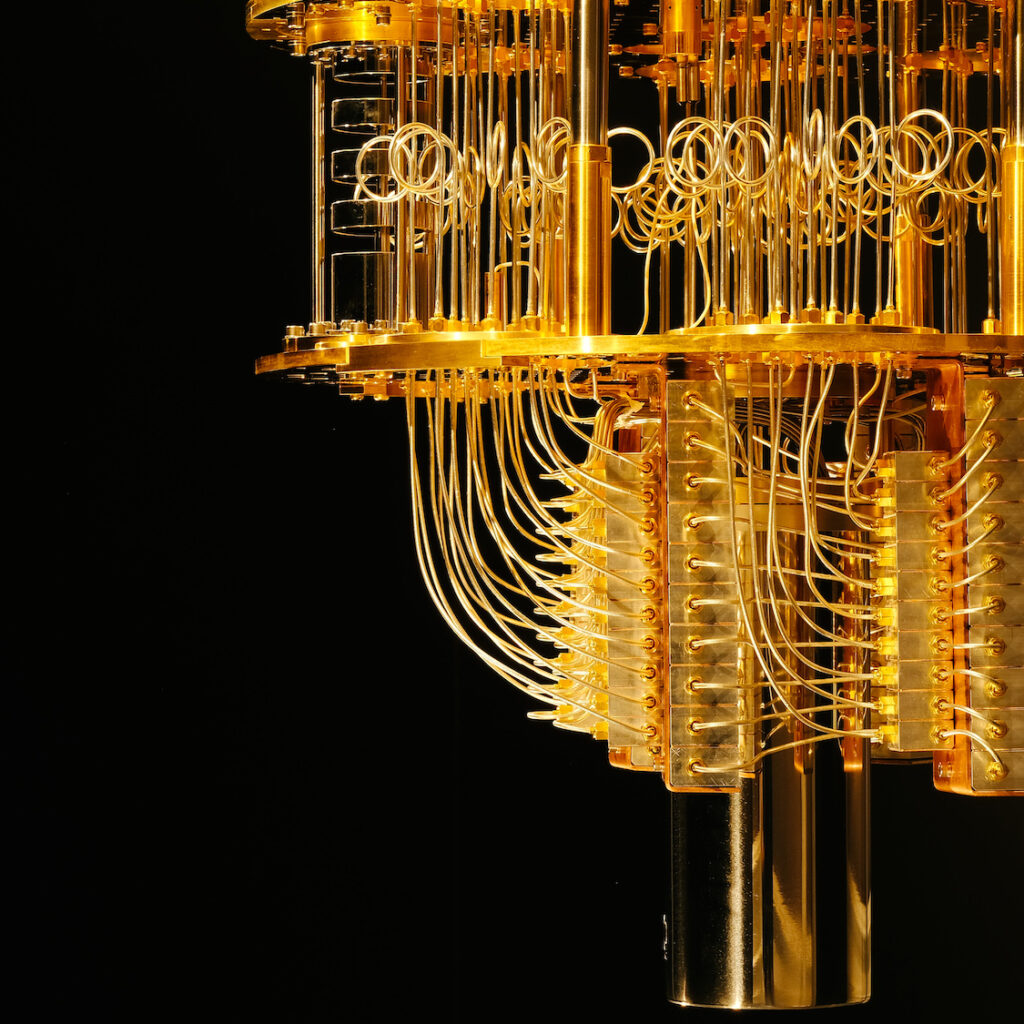
Superconducting qubits are fabricated from materials that exhibit zero electrical resistance at cryogenic temperatures. They represent quantum states through the flow of electrons in superconducting circuits. These qubits enable fast quantum gate operations and have become a popular choice in quantum processor development. Despite improvements in coherence times, the necessity for ultra-low temperature environments and intricate wiring systems poses challenges for scalability and operational efficiency.
Photonic Qubits
Photonic quantum computing harnesses the quantum properties of light, using individual photons as qubits. This approach benefits from inherent resistance to decoherence and can operate at room temperature, reducing the need for complex cooling systems. However, creating effective two-photon interactions and minimizing photon loss during measurements remain significant obstacles to advancing this technology.
Topological Qubits
Topological qubits represent a cutting-edge approach that encodes quantum information in the global properties of exotic quasi-particles called anyons, which exist in two-dimensional spaces. This encoding offers potential immunity to local noise, enabling fault-tolerant quantum computation. Despite their theoretical advantages, experimentally stabilizing anyonic states has proven difficult, making this an active area of research.
Quantum Computer Architecture
Quantum computing systems are typically organized into layered architectures, each responsible for specific functions that collectively enable quantum computation. The main components include:
- Qubit Layer:
The physical qubits where quantum information is stored. - Control Layer:
The subsystem that manipulates qubit states through quantum gates and operations. - Measurement Layer:
The mechanism that reads out the results of quantum computations.
This layered design facilitates modular development and integration of quantum hardware and software components.
Environmental Requirements for Quantum Computing
Most quantum computers operate under extremely low temperatures, often close to absolute zero, to suppress thermal noise that can disrupt delicate quantum states. Achieving such conditions requires advanced cryogenic technology, which introduces additional complexity and cost. Maintaining these environments is critical for preserving qubit coherence and ensuring reliable quantum operations.
Quantum Error Correction
Quantum information is highly vulnerable to errors caused by decoherence and operational imperfections. To address this, quantum error correction techniques are employed, which involve encoding logical qubits using multiple physical qubits. Common error correction codes include the surface code and cat codes, which create redundancy through entanglement to detect and correct errors without collapsing the quantum state.
While essential for practical quantum computing, these methods increase the number of qubits required and complicate circuit design, posing significant challenges for scalability and resource management.
Applications and Significance of Quantum Computing
The transformative potential of quantum computing spans numerous fields, including cryptography, optimization, and drug discovery. By solving problems that are intractable for classical computers, quantum technology promises breakthroughs in secure communication, complex system modeling, and material science. However, overcoming obstacles related to qubit scalability, error correction, and environmental control remains crucial for realizing these benefits.
Common Misconceptions About Quantum Computers
Quantum computers can instantly solve all problems.
Quantum computers excel at specific types of problems but are not universally faster than classical computers for every task.
Qubits are just like classical bits but faster.
Qubits operate under fundamentally different principles, such as superposition and entanglement, which enable unique computational capabilities.
Quantum computers do not require special environments.
Most quantum systems need extremely low temperatures and controlled environments to maintain qubit coherence.
Conclusion: The Physical Essence of Quantum Computers
Physically, a quantum computer is a complex integration of qubit technologies, architectural layers, environmental controls, and error correction mechanisms. Each element plays a vital role in harnessing the quantum mechanical properties that empower these machines. As research advances, the continued refinement of qubit implementations and system designs will be pivotal in transitioning quantum computing from experimental setups to practical, scalable technologies that could revolutionize computation.
FAQ
What is a quantum computer?
A quantum computer is a type of computational device that uses quantum mechanics to process information, employing qubits that can exist in multiple states simultaneously.
How do qubits differ from classical bits?
Unlike classical bits that can only be 0 or 1, qubits can be in a state of superposition, allowing them to represent multiple possibilities at once.
What are the main types of qubit technologies?
The main types include trapped ion qubits, superconducting qubits, photonic qubits, and topological qubits, each with unique advantages and challenges.






Leave a Reply