
Short Answer
Understanding Quantum Mechanics
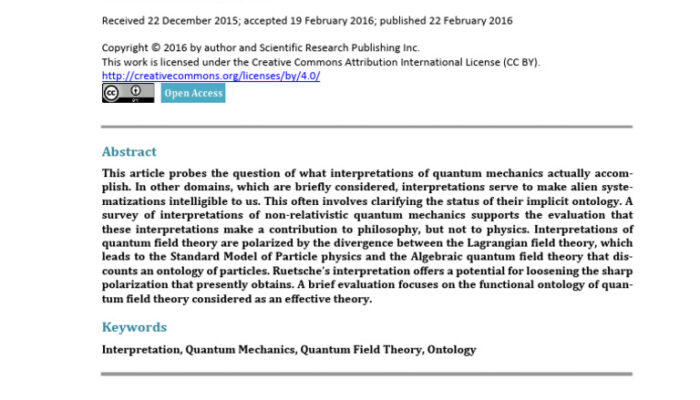
Quantum mechanics represents a groundbreaking theoretical framework in modern physics, providing the essential basis for interpreting phenomena at the microscopic scale. Far from being a purely abstract theory, it has far-reaching consequences across numerous scientific fields, including chemistry, materials science, and cosmology. This article explores the diverse significance of quantum mechanics, highlighting its revolutionary impact, interdisciplinary applications, and its crucial role in advancing contemporary technology.
Historical Context and Paradigm Shift
At the dawn of the 20th century, classical mechanics dominated scientific thought with its deterministic approach to physical phenomena. However, the emergence of quantum theory introduced a radical shift by revealing that particles at atomic and subatomic levels behave in fundamentally probabilistic ways. This new perspective challenged the classical assumptions of predictability and causality, replacing them with principles such as superposition, which asserts that particles can simultaneously occupy multiple states. This concept defies traditional binary logic and has reshaped our understanding of the microcosm.
Core Principles of Quantum Mechanics
- Wave-Particle Duality:
Quantum entities exhibit both wave-like and particle-like properties depending on the experimental context, prompting a reevaluation of classical notions of matter and energy. - Quantum Entanglement:
Described by Einstein as “spooky action at a distance,” entanglement refers to the phenomenon where particles become instantaneously correlated regardless of the distance separating them, defying classical ideas of locality and separability.
Quantum Mechanics in Chemistry
Quantum mechanics has revolutionized chemical science by providing a detailed understanding of atomic and molecular structures. Quantum chemistry applies these principles to explain how atoms bond and interact, enabling precise predictions of chemical reactions and molecular behavior. Advances in quantum computational techniques allow researchers to simulate molecular interactions with remarkable accuracy, facilitating breakthroughs in drug development and materials engineering. The theory also clarifies electron configurations, which underpin the unique chemical properties and reactivities of elements, thereby guiding the synthesis of novel compounds.
Impact on Materials Science
In materials science, quantum mechanics is indispensable for deciphering the electronic characteristics of substances. This knowledge has led to the innovation of semiconductors and insulators critical to modern electronics. The creation of quantum dots-nanostructures with distinctive optical and electronic features-exemplifies the practical application of quantum principles. These advancements have significant implications for fields such as electronics, solar energy, and biomedical imaging, where understanding quantum behavior enhances efficiency and functionality.
Quantum Computing: A New Technological Frontier
Quantum computing harnesses the unique properties of quantum bits, or qubits, which can exist in superposition states, unlike classical bits restricted to binary values. This capability endows quantum computers with extraordinary computational power for specialized tasks, including factoring large numbers and simulating complex quantum systems more effectively than classical machines. The development of quantum computing heralds a transformative era with potential breakthroughs in cryptography, artificial intelligence, and the modeling of intricate systems.
Quantum Mechanics and Cosmology
The principles of quantum mechanics extend into cosmology and theoretical physics, offering insights into the universe’s origins and structure. Quantum fluctuations in the early universe are believed to have seeded the large-scale cosmic formations observed today. Efforts to unify quantum mechanics with general relativity have given rise to quantum cosmology and the pursuit of quantum gravity theories, which aim to reconcile gravity with quantum phenomena. These endeavors deepen our understanding of black holes, dark matter, and the ultimate fate of the cosmos.
Philosophical Dimensions of Quantum Theory
Beyond its scientific applications, quantum mechanics provokes profound philosophical inquiry. The theory’s interpretational challenges raise questions about the nature of reality, the role of measurement, and the observer’s influence. Various interpretations, such as the Copenhagen interpretation and the many-worlds hypothesis, reflect the ongoing debate about the fundamental meaning of quantum phenomena. This philosophical richness underscores quantum mechanics not only as a physical theory but also as a catalyst for exploring existential questions.
Significance and Future Prospects
As research delves deeper into quantum phenomena, the importance of quantum mechanics continues to grow. Its foundational principles have sparked revolutionary technologies, enhanced scientific knowledge, and inspired extensive philosophical discourse. The integration of theory and practical application makes quantum mechanics a cornerstone of modern science, impacting diverse sectors including healthcare, communications, and energy. Engaging with quantum mechanics expands our understanding of the universe and equips us with innovative tools to explore the frontiers of science and technology.
FAQ
What is quantum mechanics?
Quantum mechanics is a fundamental theory in physics describing the behavior and interactions of energy and matter at atomic and subatomic scales.
How does quantum mechanics affect chemistry?
It explains atomic and molecular structures and reactions, enabling precise predictions and advancements in drug development and materials engineering.
What role does quantum mechanics play in technology?
It underpins modern technologies such as semiconductors, quantum dots, and quantum computing, impacting electronics, energy, and computing.
Why is quantum mechanics important in cosmology?
Quantum mechanics provides a framework to understand the early universe, cosmic structures, and efforts to unify gravity with quantum physics.
What philosophical questions does quantum mechanics raise?
It challenges classical notions of reality, measurement, and observation, leading to interpretations like the Copenhagen interpretation and many-worlds hypothesis.






Leave a Reply