
Short Answer
Definition of Atomic Mass Unit
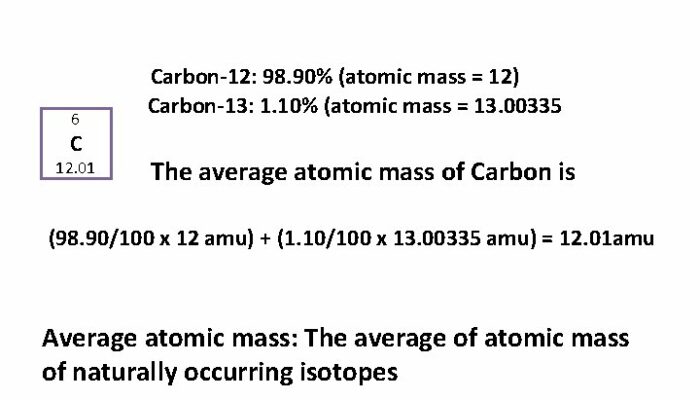
The atomic mass unit (amu), also referred to as the unified atomic mass unit (u), is a fundamental standard used to express the mass of atoms and molecules. It provides a consistent scale for comparing the masses of different atomic species by defining one amu as exactly one twelfth the mass of a carbon-12 atom. This unit is essential for quantifying atomic and molecular masses in a way that is both precise and universally accepted across scientific disciplines.
Significance in Atomic and Molecular Science
The atomic mass unit acts as a universal language for measuring atomic masses, enabling scientists to communicate and calculate these values with clarity and consistency. Without this standardized unit, the interpretation of atomic masses would be fragmented and confusing, hindering progress in fields such as chemistry and particle physics. By providing a common reference point, the amu simplifies the comparison of elements and isotopes, facilitating a deeper understanding of atomic structure and interactions.
Role in the Periodic Table and Chemical Calculations
Within the periodic table, each element is assigned an atomic mass expressed in amu, which reveals not only its identity but also its chemical behavior. This measurement is crucial for determining molar masses, which underpin stoichiometric calculations in chemistry. Accurate molar masses allow chemists to predict reaction outcomes and balance chemical equations with precision, driving advancements in chemical research and industrial applications.
Stoichiometry and Molar Mass
- Stoichiometry:
The calculation of reactants and products in chemical reactions relies on molar masses derived from atomic masses expressed in amu. - Molar Mass:
The mass of one mole of a substance, calculated by summing the atomic masses of its constituent atoms, is essential for quantitative chemical analysis.
Isotopes and Atomic Mass Unit
Isotopes are variants of the same element that differ in neutron number, resulting in distinct atomic masses. The amu enables differentiation between isotopes and aids in understanding their relative stability and natural abundance. For example, hydrogen isotopes-protium, deuterium, and tritium-are distinguished by their atomic masses, which influence their nuclear properties and applications in fields like nuclear chemistry and radiometric dating.
Atomic Mass Unit in Astrophysics
The atomic mass unit extends its influence beyond terrestrial laboratories into the cosmos. Stellar nucleosynthesis, the process by which stars generate new elements, depends heavily on atomic masses. The conversion of hydrogen into helium within stars, a key energy-producing reaction, is governed by the mass differences measured in amu. These subtle variations affect energy output, stellar temperatures, and the life cycles of stars, highlighting the amu’s critical role in understanding cosmic phenomena.
Applications in Pharmaceutical Science
In drug development, precise knowledge of molecular mass, expressed in atomic mass units, is vital for determining drug efficacy and safety. The therapeutic effectiveness of pharmaceuticals often hinges on exact dosages, where even minor deviations in molecular mass can lead to significant changes in bioavailability and patient outcomes. Thus, the amu is indispensable in pharmacology, guiding the design and synthesis of molecules tailored to interact optimally with biological systems.
Philosophical and Scientific Implications
The atomic mass unit embodies more than a mere measurement; it symbolizes the bridge between the microscopic and macroscopic realms. By quantifying the mass of subatomic particles, the amu enriches our comprehension of matter’s fundamental nature and the universe’s intricate structure. This unit fosters a unified perspective that connects the infinitesimal scale of atoms to the vastness of the observable world, deepening our philosophical and scientific appreciation of existence.
Global Scientific Collaboration and Standardization
The adoption of the atomic mass unit as a standardized measurement fosters international cooperation among scientists. A shared vocabulary is essential for collaborative research, enabling chemists, physicists, biologists, and environmental scientists to work together effectively. This global consensus is particularly crucial in addressing complex challenges such as climate change and public health, where multidisciplinary approaches rely on precise and consistent scientific data.
Summary: The Atomic Mass Unit’s Enduring Importance
Far from being an abstract concept, the atomic mass unit is a cornerstone of modern science. It underpins our understanding of atomic and molecular masses, facilitates chemical and physical calculations, and influences diverse fields from astrophysics to pharmacology. By providing a standardized measure, the amu unites various scientific disciplines and inspires ongoing exploration into the nature of matter and the universe. Its subtle yet profound impact continues to drive scientific discovery, one atomic mass unit at a time.
FAQ
What is an atomic mass unit?
An atomic mass unit (amu) is a standard unit for measuring the mass of atoms and molecules.
Why is the atomic mass unit important?
It provides a consistent way to measure and compare atomic and molecular masses, facilitating scientific communication and calculations.
How is the atomic mass unit used in chemistry?
It is used to express atomic masses in the periodic table and is essential for stoichiometric calculations.
What role does the atomic mass unit play in astrophysics?
It helps in understanding stellar nucleosynthesis and the life cycles of stars.






Leave a Reply