
Short Answer
Definition of Matter and Atoms
Matter refers to anything that has mass and occupies space, encompassing all physical substances around us. This includes solids, liquids, gases, and plasma, which make up the tangible world we experience daily. Atoms, in contrast, are the minuscule units that compose matter. They are the fundamental particles that combine in various ways to form the diverse materials and objects in the universe.
- Matter:
Anything with mass and volume, observable in forms such as ice, water, air, and stars. - Atoms:
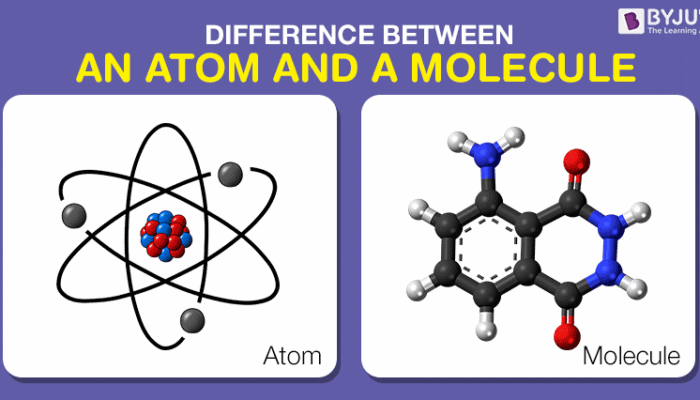
The smallest units of matter, consisting of a nucleus surrounded by electrons, serving as the building blocks of all substances.
Structural Composition of Atoms
An atom is composed of a dense nucleus containing protons and neutrons, orbited by electrons in defined energy levels. This structure resembles a miniature solar system, where the nucleus acts as the sun and electrons as orbiting planets. The number of protons, known as the atomic number, determines the element’s identity and its position on the periodic table.
Properties and Characteristics
Macroscopic Properties of Matter
The observable traits of matter include color, texture, state (solid, liquid, gas), density, and volume. These characteristics arise from the collective interactions of vast numbers of atoms and molecules, influenced by external conditions such as temperature and pressure.
Atomic-Level Properties
Atoms possess intrinsic properties such as atomic mass, electric charge, and electronegativity. These subatomic features govern how atoms interact chemically and physically, influencing reactions, bonding, and the formation of molecules.
The Role of Energy in Matter and Atomic Interactions
Energy is integral to the behavior and transformation of both matter and atoms. At the macroscopic scale, energy manifests as kinetic, potential, or thermal energy, driving changes in state and motion. At the atomic scale, energy affects electron configurations and chemical bonding, with absorption or emission of energy altering atomic arrangements and thus the properties of matter.
Relationship Between Matter and Atoms
Matter is essentially an aggregate of atoms bound together, making atoms indispensable to the existence of matter. However, atoms alone do not constitute matter until they combine to form molecules and larger structures. This interdependence can be likened to an orchestra, where atoms are individual musicians and matter is the symphony created by their collective performance.
How Atoms Form Matter
Atoms bond through various types of chemical interactions-ionic, covalent, and metallic bonds-to create molecules and compounds. These molecular structures aggregate to form the different states and types of matter we observe, from the hardness of metals to the fluidity of water.
Real-World Examples
- Water:
Composed of two hydrogen atoms bonded to one oxygen atom, water exemplifies how atoms combine to form a vital substance with unique properties. - Iron:
Made up of iron atoms arranged in a crystalline lattice, iron’s strength and magnetic properties arise from atomic interactions. - Air:
A mixture of gases like nitrogen and oxygen, each molecule formed by atoms bonded in specific ways, demonstrating matter in gaseous form.
Common Misconceptions
Matter and atoms are the same.
Matter is made up of atoms, but the two are distinct; matter is the substance, while atoms are its fundamental units.
Atoms are indivisible.
Atoms consist of smaller particles-protons, neutrons, and electrons-and can be split in nuclear reactions.
Importance of Understanding Matter and Atoms
Grasping the distinction and connection between matter and atoms is crucial in fields such as chemistry, physics, and material science. This knowledge underpins technological advancements, from developing new materials to understanding biological processes. It also enriches our comprehension of the universe’s structure and the fundamental principles governing physical reality.
FAQ
What is matter?
Matter is anything that has mass and occupies space, including solids, liquids, gases, and plasma.
What is an atom?
An atom is the smallest unit of matter, consisting of a nucleus surrounded by electrons.
How do atoms form matter?
Atoms bond through ionic, covalent, and metallic bonds to create molecules and compounds, which form different states of matter.
Are matter and atoms the same thing?
No, matter is composed of atoms, but they are distinct; matter is the substance, while atoms are its fundamental units.





Leave a Reply