
Short Answer
Definition of Atoms and Compounds
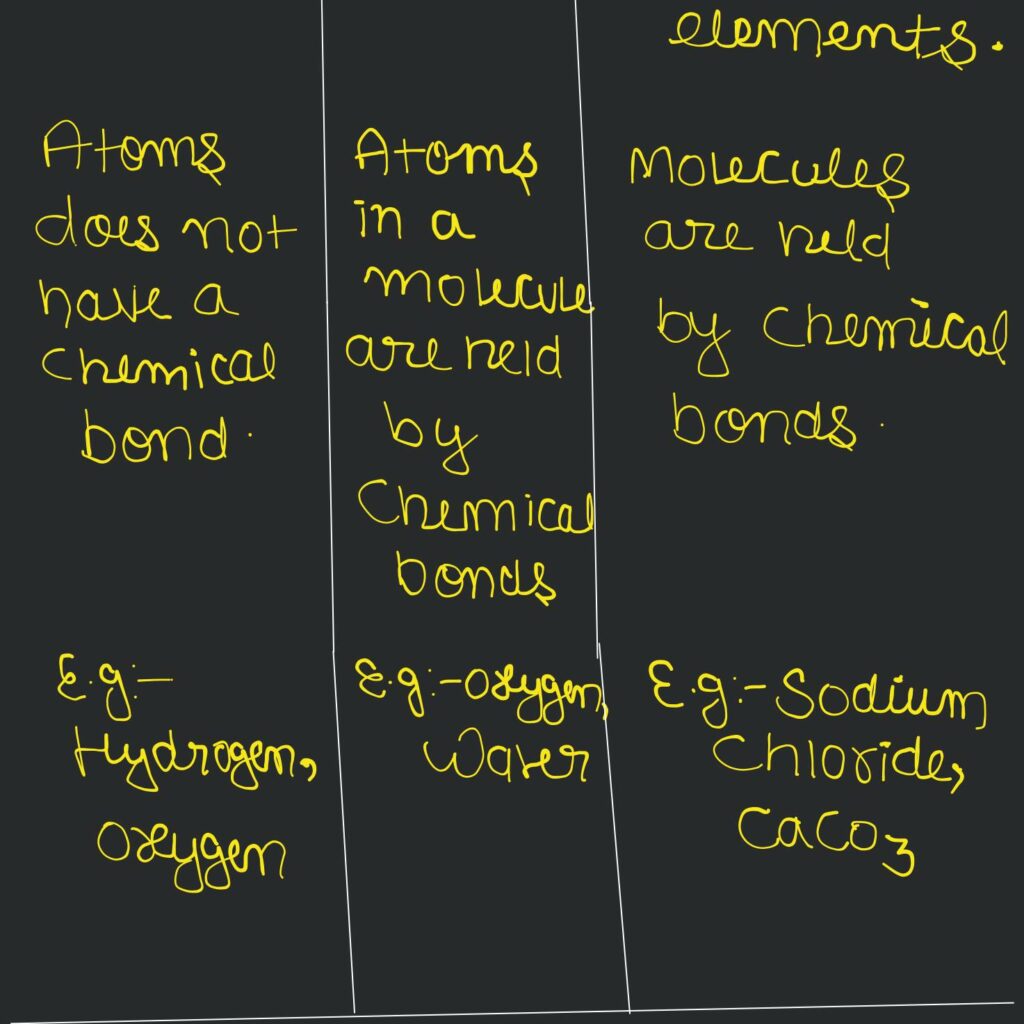
Atoms and compounds represent essential concepts in chemistry, forming the foundation for understanding the composition and behavior of matter. An atom is the smallest unit of an element that retains its chemical identity, while a compound is a substance created when two or more different elements chemically combine, resulting in new properties distinct from those of the individual atoms.
Understanding Atoms
What Is an Atom?
An atom is the fundamental building block of matter, composed of a central nucleus surrounded by electrons. The nucleus contains protons, which carry a positive charge, and neutrons, which are electrically neutral. The number of protons, known as the atomic number, uniquely identifies each element. For example, hydrogen has one proton, whereas carbon contains six, defining their positions and characteristics in the periodic table.
Key Features of Atoms
Atoms are incredibly small, typically measured on the nanometer scale, making them invisible to the naked eye. Their stability and chemical behavior are governed by the arrangement of electrons in specific energy levels or orbitals around the nucleus. This electron configuration determines how atoms interact with one another, influencing bonding and reactivity.
Categories of Atoms
- Elements:
Pure substances made up of only one type of atom, such as gold (Au), oxygen (O), and iron (Fe). - Ions:
Atoms that have gained or lost electrons, acquiring a net electrical charge. Positively charged ions are called cations, while negatively charged ions are anions. - Isotopes:
Variants of the same element with identical proton numbers but differing neutron counts, resulting in different atomic masses. Examples include Carbon-12 and Carbon-14.
Exploring Compounds
What Defines a Compound?
A compound is a chemical substance formed when two or more different elements bond together through chemical reactions. These bonds create molecules or extended structures with properties that differ significantly from those of the individual atoms involved. Compounds can exist as discrete molecules, ionic lattices, or network solids depending on their bonding and composition.
Distinctive Properties of Compounds
Compounds are characterized by fixed chemical formulas that specify the types and proportions of atoms present. For instance, water (H2O) consists of two hydrogen atoms bonded to one oxygen atom. Compounds are broadly categorized into organic compounds, which primarily contain carbon and hydrogen, and inorganic compounds, which may lack carbon entirely.
Types of Chemical Bonds in Compounds
- Ionic Bonds:
These bonds form when electrons are transferred from one atom to another, producing oppositely charged ions that attract each other. Sodium chloride (NaCl) is a classic example of an ionic compound. - Covalent Bonds:
In covalent bonding, atoms share pairs of electrons to achieve stability. Methane (CH4) exemplifies this, with carbon sharing electrons with four hydrogen atoms. - Metallic Bonds:
Found in metals, these bonds involve a ‘sea’ of delocalized electrons shared among a lattice of metal ions, which imparts properties like electrical conductivity and malleability.
How Atoms and Compounds Relate
Atoms serve as the fundamental units that combine in various ways to form compounds. While atoms retain their elemental identity, compounds exhibit new chemical and physical properties due to the interactions and bonds between different atoms. This transformation from individual atoms to complex compounds is central to the diversity of materials and substances observed in nature and technology.
Real-World Illustrations of Compounds
Examining common compounds helps clarify the concept of chemical combination:
- Carbon Dioxide (CO2):
Composed of one carbon atom bonded to two oxygen atoms, it plays a vital role in respiration and the Earth’s carbon cycle. - Sodium Bicarbonate (NaHCO3):
Known as baking soda, it is widely used in cooking, cleaning, and as an antacid. - Acetic Acid (C2H4O2):
The main component of vinegar, it is important in food preservation and chemical synthesis.
Common Misunderstandings About Atoms and Compounds
- Misconception: Atoms can exist independently in nature.
Correction: While atoms are the basic units of matter, they rarely exist in isolation under normal conditions, often bonding to form molecules or compounds. - Misconception: Compounds are simply mixtures of elements.
Correction: Compounds involve chemical bonds between elements, resulting in substances with unique properties, unlike mixtures where components retain their individual characteristics.
Significance in Science and Everyday Life
Grasping the difference between atoms and compounds is crucial for multiple scientific disciplines, including chemistry, physics, biology, and materials science. This knowledge underpins innovations in pharmaceuticals, environmental technology, and industrial manufacturing. Moreover, understanding these concepts enhances our comprehension of natural phenomena and the composition of the world around us, influencing everything from nutrition to energy production.
FAQ
What is an atom?
An atom is the smallest unit of an element that retains its chemical identity, composed of a nucleus surrounded by electrons.
What is a compound?
A compound is a substance formed when two or more different elements chemically bond together.
What are the main types of chemical bonds in compounds?
The main types of chemical bonds are ionic bonds, covalent bonds, and metallic bonds.



Leave a Reply