
Short Answer
Definition of the Strong Force
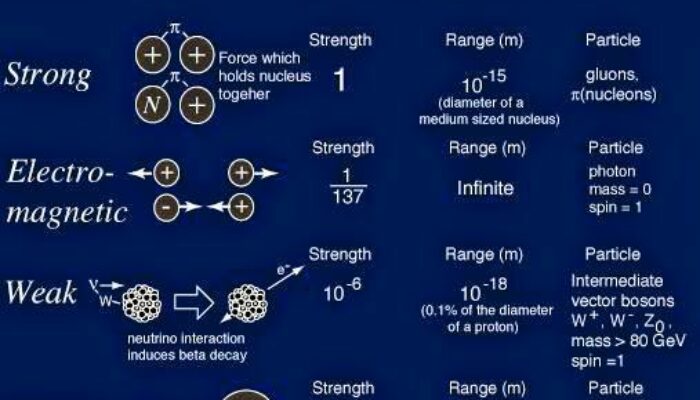
The strong force, also referred to as the strong nuclear force or strong interaction, is one of the four fundamental forces governing the universe, alongside gravity, electromagnetism, and the weak nuclear force. It is the essential force responsible for holding protons and neutrons tightly bound within an atom’s nucleus, counteracting the electromagnetic repulsion between positively charged protons. Without this force, atomic nuclei would disintegrate, making the existence of matter as we know it impossible.
Fundamental Characteristics and Mechanism
Operating at the subatomic scale, the strong force acts over an extremely short range-approximately the size of a proton’s diameter-yet it exerts an extraordinarily powerful influence. This force arises from the exchange of gluons, massless particles that mediate the interaction between quarks, the elementary constituents of protons and neutrons. Gluons facilitate a strong attraction that binds quarks together, ensuring the stability of hadrons (particles made of quarks).
Quantum Chromodynamics and Color Confinement
The strong force is a manifestation of the principles described by Quantum Chromodynamics (QCD), the theory that explains how quarks and gluons interact. A distinctive feature of QCD is asymptotic freedom, where quarks interact weakly when extremely close but experience stronger forces as they move apart. This leads to color confinement, the phenomenon that quarks cannot exist in isolation but are perpetually confined within composite particles such as protons and neutrons.
Potential Energy and Hadronization
The potential energy associated with the strong force behaves similarly to a stretched elastic band: as quarks are pulled apart, the energy stored in the force increases. When this energy becomes sufficiently high, it can generate new quark-antiquark pairs, a process known as hadronization. This mechanism not only binds particles but also contributes to the creation of new hadrons, especially in high-energy environments like particle accelerators.
Role in the Early Universe and Element Formation
Beyond particle physics, the strong force played a crucial role in the early universe, particularly during Big Bang nucleosynthesis. As the universe cooled after the Big Bang, the strong interaction enabled the fusion of protons and neutrons into atomic nuclei, laying the foundation for the formation of diverse chemical elements. Without the strong force, the universe would lack the elemental variety necessary for stars, planets, and life.
Experimental Study and Challenges
Studying the strong force presents unique challenges due to the confinement of quarks and gluons, which prevents direct observation. Unlike electromagnetism, the strong interaction cannot be isolated easily. Physicists investigate it indirectly through high-energy collisions in particle accelerators such as the Large Hadron Collider (LHC). These experiments analyze the particles produced in collisions to gain insights into the behavior of quarks, gluons, and the dynamics of QCD.
Mass-Energy Equivalence and the Strong Force
The strong force significantly contributes to the mass of protons and neutrons through the mass-energy equivalence principle expressed by Einstein’s equation E=mc². The energy stored in the strong interaction accounts for most of the visible mass in the universe, linking this fundamental force directly to the structure of matter. This connection has profound implications for astrophysics, influencing our understanding of stellar evolution, supernovae, and matter under extreme conditions.
Ongoing Research and Theoretical Implications
Despite advances in understanding the strong force, many aspects remain elusive, particularly the nature of quark and gluon confinement. Researchers continue to explore unifying theories, such as string theory, which aim to integrate quantum mechanics with general relativity. The strong force remains a central focus in these efforts, highlighting its importance in the quest for a comprehensive theory of fundamental interactions.
Why the Strong Force Is Essential
The strong force is indispensable for the existence and stability of matter. By binding atomic nuclei, enabling element formation, and contributing to the mass of visible matter, it underpins much of the physical universe. Its study not only deepens our understanding of the microscopic world but also informs broader scientific fields, from cosmology to particle physics, making it a cornerstone of modern science.
FAQ
What is the strong force?
The strong force is the fundamental interaction responsible for binding quarks together inside protons and neutrons, and holding these nucleons tightly bound within atomic nuclei.
How does the strong force work?
It operates through the exchange of gluons between quarks, creating a powerful attraction that confines quarks within hadrons and holds the atomic nucleus together.
Why is the strong force important?
Without the strong force, atomic nuclei would fall apart, preventing the formation of chemical elements and thus matter as we know it.
What challenges exist in studying the strong force?
Because quarks and gluons are confined and cannot be isolated, scientists study the strong force indirectly using high-energy particle collisions in accelerators.
What is color confinement?
Color confinement is the principle that quarks cannot exist alone but are always confined within composite particles like protons or neutrons due to the strong force.





Leave a Reply