
Short Answer
Definition of Subatomic Particles
Subatomic particles are the minute constituents that form matter, existing at scales significantly smaller than atoms. These particles are the foundational elements studied in particle physics, revealing the intricate forces and interactions that shape the universe. They include a variety of entities, each with distinct properties and roles in the composition and behavior of matter.
- Fundamental Particles:
Particles such as quarks and leptons that are not composed of smaller components. - Composite Particles:
Particles like protons and neutrons, which are made up of quarks bound together.
Classification of Subatomic Particles
Subatomic particles are primarily divided into two major groups: baryons and leptons. This classification is based on their composition and the forces they interact with.
- Baryons:
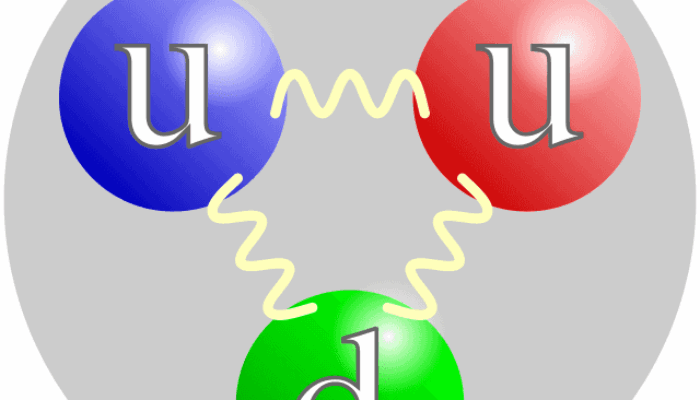
These particles, including protons and neutrons, form the nuclei of atoms. Each baryon consists of three quarks and is influenced by the strong nuclear force, which binds quarks together. - Leptons:
This group includes electrons, muons, taus, and neutrinos. Leptons are fundamental particles that do not experience the strong nuclear force but are affected by electromagnetic and weak nuclear forces.
Quarks: The Building Blocks of Baryons
Quarks are elementary particles that combine to form baryons. There are six distinct types, known as flavors:
- Up
- Down
- Charm
- Strange
- Top
- Bottom
The interactions among quarks are mediated by gluons, the carriers of the strong nuclear force. This dynamic interaction results in the formation of composite particles such as protons and neutrons. Interestingly, the mass of baryons arises predominantly from the energy of the gluon fields rather than the quarks’ intrinsic masses, a concept explained by quantum chromodynamics (QCD).
Leptons and Their Unique Characteristics
Leptons are fundamental particles without any known substructure. They are organized into three generations:
- Electron and electron neutrino
- Muon and muon neutrino
- Tau and tau neutrino
Neutrinos are especially notable for their extremely small masses and weak interactions with matter, making them difficult to detect. Their elusive nature has significant implications in astrophysics and cosmology, influencing phenomena such as supernova explosions and stellar energy production.
Fundamental Forces and Particle Interactions
The behavior of subatomic particles is governed by several fundamental forces:
- Electromagnetic Force:
Mediated by photons, this force affects charged particles and is responsible for chemical bonding and material properties. - Strong Nuclear Force:
Carried by gluons, it binds quarks within baryons and holds atomic nuclei together. - Weak Nuclear Force:
Involved in processes like beta decay, it governs certain types of particle transformations.
The Standard Model of Particle Physics
The Standard Model is a comprehensive theoretical framework that describes the fundamental particles and forces (except gravity) in the universe. It encompasses quarks, leptons, gauge bosons (force carriers), and the Higgs boson. The Higgs boson, discovered at CERN in 2012, is a scalar particle responsible for imparting mass to other particles through the Higgs mechanism, confirming key aspects of particle physics and mass-energy equivalence.
Applications and Technological Impact
Research into subatomic particles extends beyond theoretical physics, driving innovations in various fields:
- Medical Imaging:
Techniques like Positron Emission Tomography (PET) scans rely on principles of particle physics. - Particle Accelerators:
Tools for probing fundamental particles have also contributed to advancements in materials science and medicine. - Computing:
Developments in particle physics have influenced computational methods and technologies.
Unresolved Questions and Theoretical Extensions
Despite the successes of the Standard Model, significant mysteries remain, particularly concerning dark matter and dark energy, which constitute most of the universe’s mass-energy content. The Standard Model does not currently include viable candidates for dark matter particles, prompting exploration of theories beyond it, such as supersymmetry and models involving extra spatial dimensions.
Significance of Studying Subatomic Particles
Understanding subatomic particles is crucial for comprehending the fundamental structure of matter and the forces shaping the cosmos. This knowledge not only advances scientific theory but also fosters technological progress and deepens philosophical insights into the nature of existence. Ongoing research promises to expand our grasp of the universe, potentially leading to revolutionary discoveries that challenge current paradigms.
FAQ
What are subatomic particles?
Subatomic particles are particles smaller than atoms, including electrons, protons, neutrons, quarks, and leptons.
How are subatomic particles classified?
They are broadly classified into baryons, which include protons and neutrons, and leptons, which include electrons and neutrinos.
What is the role of quarks?
Quarks are the fundamental building blocks of baryons and interact via the strong nuclear force mediated by gluons.
What fundamental forces affect subatomic particles?
Subatomic particles are influenced by the strong nuclear force, electromagnetic force, and weak nuclear force.
Why is the Higgs boson important?
The Higgs boson is responsible for giving mass to other particles through the Higgs mechanism.






Leave a Reply