
Short Answer
Definition of Atoms and Their Components
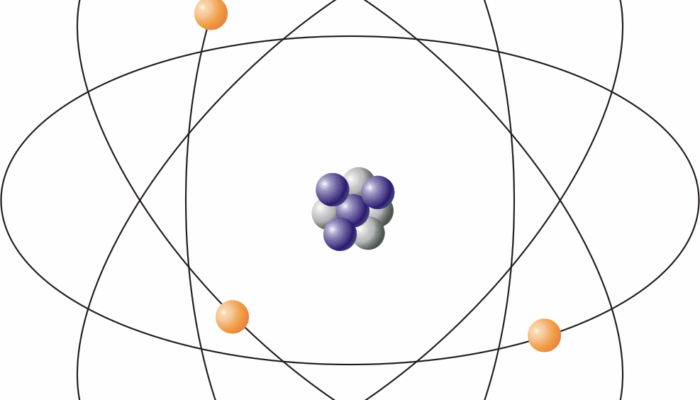
Atoms are the essential units that constitute all matter, serving as the smallest entities that retain the characteristics of chemical elements. Each atom consists of a central nucleus enveloped by a cloud of electrons. The nucleus itself is composed of protons and neutrons, collectively known as nucleons. These components collectively define the atom’s identity and behavior in chemical processes.
- Atom:
The smallest unit of an element that maintains its chemical properties. - Protons:
Positively charged particles located in the nucleus, determining the atomic number and element identity. - Neutrons:
Neutral particles within the nucleus that contribute to atomic stability and isotope variation. - Electrons:
Negatively charged particles orbiting the nucleus in defined regions called orbitals, influencing chemical bonding. - Molecules:
Structures formed by two or more atoms bonded chemically, creating diverse substances.
Atomic Structure and Its Significance
At the heart of an atom lies the nucleus, a dense core containing protons and neutrons. Surrounding this nucleus is a dynamic cloud of electrons arranged in shells or energy levels. The number of protons in the nucleus, known as the atomic number, uniquely identifies each element. For example, hydrogen has a single proton, whereas helium contains two. Neutrons, although electrically neutral, play a vital role in stabilizing the nucleus and contribute to the existence of isotopes-variants of elements with differing neutron counts.
Role and Behavior of Protons, Neutrons, and Electrons
Protons carry a positive charge that balances the negative charge of electrons, which orbit the nucleus at various distances. This balance of charges is fundamental to the atom’s electrical neutrality and influences how atoms interact chemically. Neutrons, lacking any charge, provide nuclear stability by mitigating the repulsive forces between protons. Variations in neutron numbers lead to isotopes, which have practical applications in fields such as radiometric dating and medical diagnostics.
Electrons occupy specific atomic orbitals-regions where they are most likely to be found. These electrons are organized into shells, with the outermost shell, called the valence shell, playing a crucial role in chemical bonding. Atoms tend to achieve a full valence shell, driving the formation of molecules through either sharing electrons (covalent bonds) or transferring electrons (ionic bonds).
Formation and Types of Chemical Bonds
Molecules arise when atoms connect via chemical bonds, which can be broadly categorized into covalent and ionic bonds. Covalent bonds involve the mutual sharing of electrons between atoms, resulting in stable molecular structures. Ionic bonds, in contrast, form when electrons are transferred from one atom to another, creating charged ions that attract each other. This bonding versatility underpins the vast array of chemical compounds found in nature, from simple diatomic molecules like hydrogen (H2) to complex biological macromolecules such as DNA.
Applications and Importance of Atomic Understanding
The exploration of atomic and subatomic particles extends beyond theoretical science, impacting numerous practical domains. Insights into electron behavior have driven advancements in semiconductor technology, which is foundational to modern electronics. Additionally, manipulating atomic structures has enabled the development of nanotechnology, allowing precise engineering of materials at the molecular scale.
In nuclear physics, the forces binding protons and neutrons within the nucleus-primarily the strong nuclear force-are critical for atomic stability. This force counteracts the electrostatic repulsion between positively charged protons. Understanding these interactions is essential for harnessing nuclear energy and studying radioactive decay, which has applications in energy production and determining the age of geological samples.
Quantum Mechanics and Atomic Theory
Modern atomic theory is deeply influenced by quantum mechanics, which reveals the dual wave-particle nature of electrons and the probabilistic distribution of their positions around the nucleus. This framework has revolutionized our comprehension of atomic behavior, providing a more nuanced and accurate depiction of matter at the smallest scales. Quantum mechanics continues to guide research, promising further breakthroughs in physics, chemistry, and material science.
Common Misconceptions About Atoms
Atoms are indivisible and unchangeable.
Atoms consist of smaller subatomic particles and can undergo nuclear reactions that alter their structure.
Electrons orbit the nucleus in fixed paths like planets around the sun.
Electrons exist in probabilistic orbitals, not fixed orbits, as described by quantum mechanics.
All atoms of an element are identical.
Isotopes of an element differ in neutron number, affecting atomic mass and stability.
Why Understanding Atoms Is Crucial
Atoms form the foundation of all matter, making their study indispensable across scientific disciplines. Knowledge of atomic structure and behavior informs chemistry, physics, biology, and technology, enabling innovations from medical imaging to electronics. The principles governing atomic interactions explain the diversity of materials and the mechanisms behind chemical reactions, energy production, and material properties. As science advances, a deeper grasp of atomic phenomena continues to unlock new possibilities, shaping the future of technology and our understanding of the universe.
FAQ
What is an atom?
An atom is the smallest unit of an element that retains its chemical properties.
What particles make up an atom?
Atoms are composed of protons, neutrons, and electrons.
How do atoms bond to form molecules?
Atoms bond chemically through covalent or ionic bonds to form molecules.






Leave a Reply