
Short Answer
Definition of Active Medium in Laser Technology
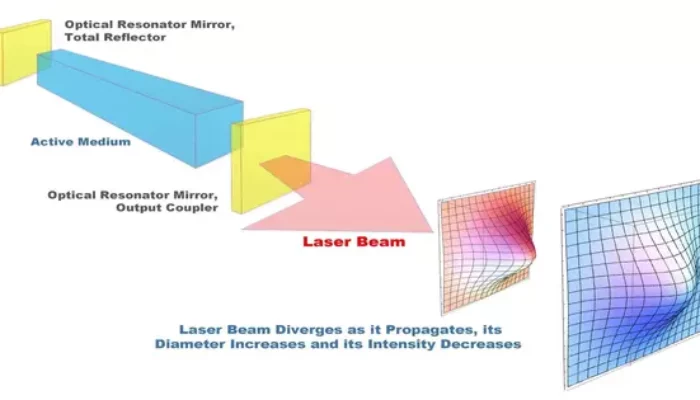
An active medium, often referred to as a gain medium, is a fundamental component in laser systems responsible for amplifying light. It consists of atoms, ions, or molecules capable of being excited to higher energy levels. When these excited particles return to their lower energy states, they emit photons, which are coherent light particles essential for laser operation. This process of stimulated emission within the active medium is the cornerstone of laser functionality, influencing the laser’s output characteristics.
Types of Active Media
Active media are broadly categorized into three types based on their physical state: solid, liquid, and gas. Each type offers distinct advantages and challenges that affect laser performance and application.
- Solid-State Active Media:
These typically involve rare-earth or transition metal ions doped into a solid host material. Solid-state lasers are known for their high energy efficiency and excellent thermal conductivity, making them ideal for industrial uses such as cutting, welding, and medical treatments. However, managing heat buildup is critical to maintain performance and prevent damage. - Gas Active Media:
Gas lasers, including helium-neon and carbon dioxide lasers, utilize ionized gases as the active medium. These systems benefit from simpler cooling and gas handling but require complex electrical discharge mechanisms to excite the gas molecules. Achieving a stable and efficient discharge, especially over extended distances, remains a technical challenge. - Liquid Active Media:
Dye lasers represent liquid active media, notable for their tunable emission wavelengths. This flexibility allows for a wide range of applications in research and industry. However, the chemical stability of dyes and their degradation over time limit the operational lifespan of these lasers.
Mechanism of Light Amplification in Active Media
The amplification of light in an active medium hinges on the principle of stimulated emission, which requires a condition known as population inversion. Population inversion occurs when more particles occupy an excited energy state than the lower energy state, defying the normal thermal equilibrium described by Boltzmann distribution. Achieving this inversion is essential for efficient laser action and is typically accomplished through methods such as optical pumping or electrical discharge. Maintaining this delicate balance is crucial to prevent energy losses through non-radiative processes.
Interaction Between Active Medium and Laser Cavity
The active medium does not operate in isolation; it works in conjunction with the laser cavity, which contains mirrors and lenses that reflect and amplify the light. The optical properties of both the active medium and the cavity components significantly influence the laser’s efficiency and output power. Proper alignment and configuration of these elements create a feedback loop that enhances stimulated emission, making the design and integration of the active medium a vital aspect of overall laser architecture.
Influence of Active Medium on Laser Characteristics
The specific nature of the active medium directly affects the laser’s output properties, including wavelength, intensity, and coherence. For example, semiconductor lasers rely on electron excitation within solid materials, whereas gas lasers depend on ionized gas molecules. These differences determine the color and quality of the emitted laser light, tailoring lasers for diverse applications.
Challenges and Innovations in Active Medium Development
Despite significant progress, ongoing challenges remain in enhancing the efficiency, stability, and durability of active media. Researchers are exploring hybrid systems that combine the strengths of various media types to overcome individual limitations. These innovations aim to push the boundaries of laser performance, opening new possibilities for technological advancement.
Significance of Active Media in Laser Technology
Understanding the role and properties of active media is crucial for advancing laser technology. The interplay between material characteristics, light generation, and system design determines the effectiveness and versatility of lasers in scientific, industrial, and medical fields. Continued exploration and optimization of active media promise to drive future breakthroughs, shaping how we harness and manipulate light.
FAQ
What is an active medium in laser technology?
An active medium, or gain medium, is a material that amplifies light through the process of stimulated emission in laser systems.
What are the types of active media?
Active media can be classified into solid, liquid, and gas types, each with specific advantages and challenges.
How does stimulated emission work?
Stimulated emission occurs when excited particles emit photons as they transition to lower energy states, essential for laser operation.





Leave a Reply