
Short Answer
Understanding Alternatives to Quantum Computing
Quantum computing is often celebrated as the next major leap in computational power, promising to revolutionize problem-solving and data processing with exponential speedups. However, alongside this excitement, there is growing interest in exploring other computational paradigms that offer distinct advantages and practical applications. This article examines key alternatives to quantum computing, including advancements in classical computing, neuromorphic computing, and optical computing, each contributing uniquely to the evolving computational landscape.
Classical Computing: The Enduring Backbone
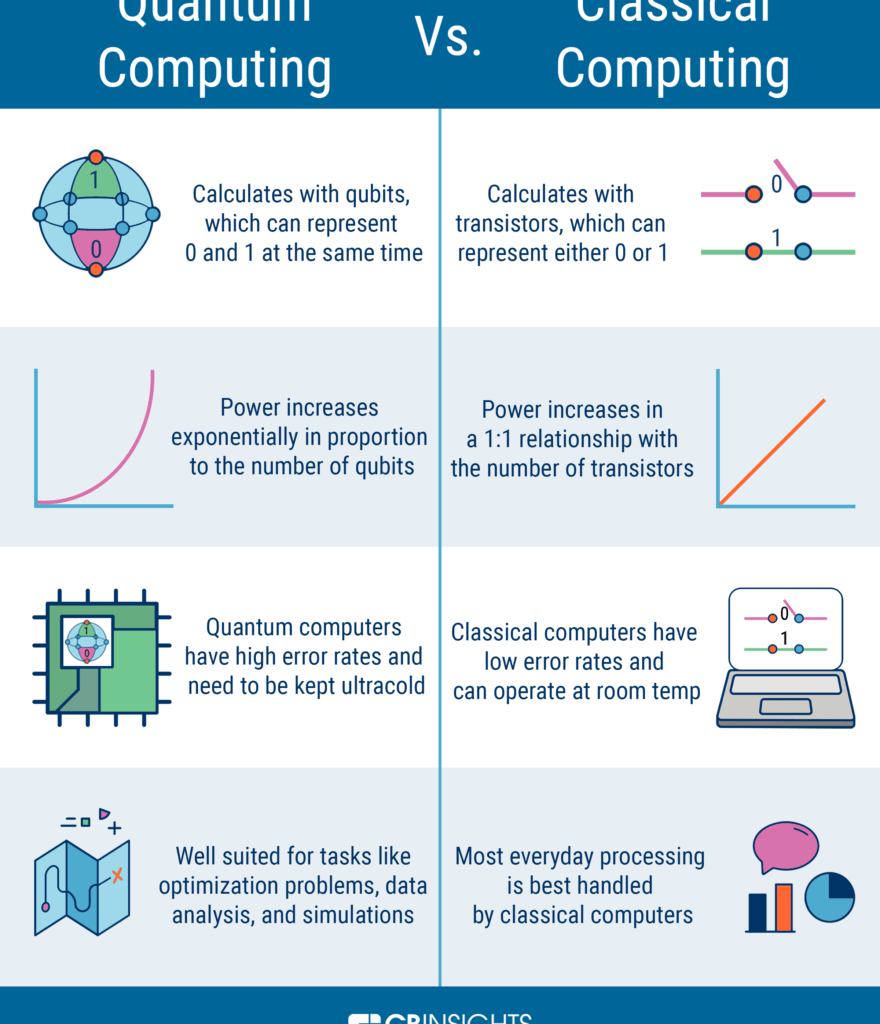
Despite the hype surrounding quantum technologies, classical computing remains a vital and highly adaptable framework. Modern classical computers have made remarkable strides through innovations in semiconductor fabrication and multicore processor designs. Techniques such as parallel processing, out-of-order instruction execution, and enhanced cache management have significantly boosted their ability to handle complex and large-scale computations efficiently.
Moreover, classical computing forms the foundation for many contemporary breakthroughs in machine learning and artificial intelligence. As the volume of digital data continues to surge, classical architectures excel at managing and analyzing vast datasets, enabling predictive analytics and pattern recognition across diverse sectors like healthcare, finance, and more. The emergence of specialized hardware accelerators, including Graphics Processing Units (GPUs) and Tensor Processing Units (TPUs), further amplifies the computational power of classical systems, allowing them to perform intricate calculations with greater speed and energy efficiency.
Neuromorphic Computing: Emulating the Brain
Neuromorphic computing represents a cutting-edge approach inspired by the structure and function of biological neural networks. By replicating the brain’s method of processing information, these systems aim to deliver highly efficient computation for tasks involving adaptive learning and cognitive functions. Neuromorphic architectures utilize spiking neural networks that simulate synaptic activity, enabling energy-efficient and dynamic information processing.
This field not only advances practical computing capabilities but also invites deeper philosophical questions about the nature of intelligence and learning. By mimicking human neural processes, neuromorphic computing offers insights into cognitive mechanisms, potentially bridging the gap between artificial and natural intelligence. This dual focus on application and theory positions neuromorphic systems as a promising frontier in computational research.
Optical Computing: Harnessing Light for Speed
Optical computing leverages photons instead of electrons to perform computations, offering the potential for ultra-fast processing speeds and reduced thermal output compared to traditional electronic circuits. Because light can travel simultaneously through multiple channels, optical systems are inherently suited for parallel processing tasks, which are increasingly important in handling large-scale data operations.
Beyond computational speed, optical computing holds transformative potential for telecommunications and data transmission. The use of optical fibers to carry vast amounts of information at high speeds, combined with rapid optical processing, could dramatically enhance global connectivity infrastructure. Thus, optical computing is not only a pathway to faster computation but also a foundational technology for future data networks.
Interconnections Among Computing Paradigms
It is important to recognize that these computational approaches do not exist in isolation. Advances in classical computing provide the essential groundwork that supports the development of neuromorphic and optical technologies. Together, these paradigms form a complementary ecosystem, each addressing different computational challenges and contributing to a broader understanding of what is possible in computing.
The synergy among these technologies suggests that the future of computation will be shaped by a diverse array of methods rather than a single dominant approach. This interconnectedness fosters innovation and may ultimately enable solutions to problems currently beyond reach.
Philosophical and Practical Implications
The exploration of alternatives to quantum computing extends beyond technical innovation to touch on fundamental questions about information and intelligence. While the concept of a universal quantum computer inspires theoretical inquiry, the tangible progress in classical, neuromorphic, and optical computing grounds this vision in practical reality.
These technologies collectively deepen our understanding of computation’s role in society and its relationship with human cognition. They highlight a future where diverse computational models coexist and collaborate, enriching both technological capabilities and philosophical perspectives.
Summary: A Multifaceted Future of Computing
Although quantum computing holds tremendous promise, the ongoing evolution of classical computing, neuromorphic systems, and optical computing significantly enhances our computational toolkit. Each paradigm addresses specific needs and challenges, while also encouraging reflection on the interplay between technology, intelligence, and human experience.
The convergence of these approaches paints a compelling picture of a future rich with innovation and discovery. By embracing this multifaceted landscape, we move closer to unlocking new computational possibilities that will shape science, industry, and society for years to come.
FAQ
What are the main alternatives to quantum computing?
The main alternatives include classical computing, neuromorphic computing, and optical computing.
Why is classical computing still relevant?
Classical computing remains crucial due to its advancements in processing power and its foundational role in technologies like AI.






Leave a Reply