
Short Answer
Understanding Alternatives to Quantum Computing
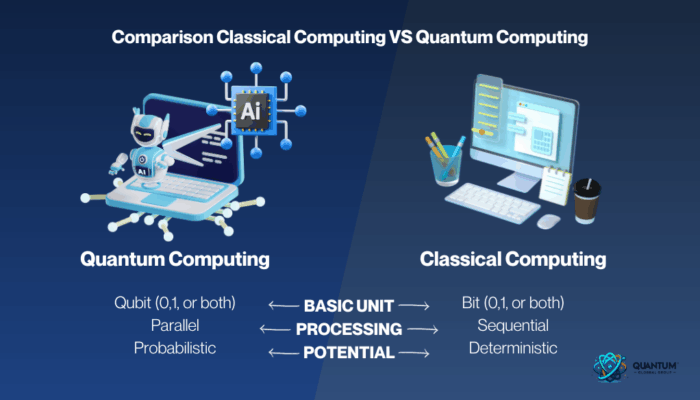
Quantum computing is often celebrated as a groundbreaking shift in computational technology, promising extraordinary speed and efficiency in solving problems that stump classical computers. Yet, the practical challenges of developing scalable quantum systems prompt an important inquiry: what viable alternatives exist that can tackle complex computational problems without delving into the complexities of quantum mechanics? Exploring these alternatives is crucial as the quantum computing landscape continues to evolve.
Classical Machine Learning: A Powerful Conventional Approach
One prominent alternative to quantum computing lies in the realm of classical machine learning. Unlike quantum algorithms, classical machine learning employs statistical methods and computational resources to analyze vast datasets, detect patterns, and generate predictions. Advances in techniques such as deep learning and reinforcement learning have significantly expanded the problem-solving capabilities of classical computing, enabling applications across diverse sectors including finance, healthcare, and more.
However, the question remains whether machine learning alone can meet the escalating computational demands anticipated in the future. Certain problems, especially those involving optimization in high-dimensional spaces-such as logistics planning or drug discovery-require not only rapid computation but also innovative strategies that may surpass the reach of traditional algorithms and hardware.
High Performance Computing (HPC): Harnessing Massive Parallelism
High Performance Computing (HPC) represents another formidable alternative by combining the power of multiple classical computing systems to perform large-scale calculations. HPC systems utilize parallel processing architectures and sophisticated algorithms to simulate complex phenomena, model environmental systems, and analyze extensive datasets efficiently. This parallelism allows HPC to overcome many limitations faced by quantum computing, delivering impressive computational outcomes without the need for quantum hardware.
Despite its strengths, HPC faces challenges such as high costs for hardware and infrastructure, which can limit accessibility. Additionally, as computational problems grow in complexity, HPC systems may encounter bottlenecks related to data transfer and communication overhead, potentially constraining their scalability.
Cloud and Edge Computing: Flexible and Distributed Solutions
Cloud computing has revolutionized access to computational resources by offering “compute on demand” capabilities. This model enables users to tap into vast processing power without the upfront investment in physical infrastructure. Innovations like serverless computing and containerization have further enhanced cloud flexibility, allowing organizations to dynamically scale resources based on workload fluctuations-ideal for industries with variable demands such as web services and seasonal analytics.
Complementing cloud computing, edge computing processes data closer to its origin, reducing latency and improving real-time responsiveness. This approach is particularly impactful in the Internet of Things (IoT) ecosystem, where immediate data analysis is critical for applications like industrial automation, smart city management, and autonomous vehicles. However, as the number of connected devices and data volumes surge, maintaining a resilient and adaptable computational framework remains a significant challenge.
Natural Language Processing (NLP): Enhancing Communication and Analysis
Natural Language Processing (NLP) technologies have become increasingly vital in automating and streamlining tasks that involve human language understanding. Transformer-based models such as BERT and GPT have demonstrated exceptional capabilities in interpreting and generating language, making them indispensable in customer support, content creation, and legal document analysis. Nevertheless, as global communication intensifies, the scalability and evolution of classical NLP systems will be tested to meet the growing complexity of nuanced human interactions.
Specialized Hardware: Accelerating Specific Computational Tasks
Specialized hardware like Graphics Processing Units (GPUs) and Application-Specific Integrated Circuits (ASICs) offer remarkable efficiency for targeted computational tasks. Their parallel processing architectures enable significant speed improvements over traditional Central Processing Units (CPUs), especially in areas such as graphics rendering and numerical simulations. However, this specialization can limit their versatility, potentially restricting their applicability across a broad range of industries and problem types.
Hybrid Computing Approaches: Combining Strengths for Innovation
Innovative hybrid computing strategies seek to merge classical computing methods with emerging technologies such as quantum annealing and neuromorphic computing. By leveraging the complementary advantages of each paradigm, researchers aim to develop novel solutions for complex computational challenges. This interdisciplinary approach requires rethinking traditional methodologies and overcoming resistance from proponents of isolated computing disciplines, fostering collaboration to unlock new potentials.
Why Exploring Alternatives to Quantum Computing Is Crucial
While quantum computing holds promise as a transformative technology, the pursuit of practical alternatives reveals a diverse array of powerful tools capable of addressing today’s and tomorrow’s computational needs. Classical machine learning, HPC, cloud and edge computing, NLP, specialized hardware, and hybrid models each contribute unique benefits and face distinct challenges. A comprehensive and adaptive approach to these technologies will be essential to meet and surpass the growing demands of an increasingly complex digital world.
FAQ
What are the main alternatives to quantum computing?
The main alternatives to quantum computing include classical machine learning, high-performance computing, cloud and edge computing, natural language processing, specialized hardware, and hybrid computing approaches.
How does classical machine learning compare to quantum computing?
Classical machine learning uses statistical methods and computational resources to analyze data, while quantum computing leverages quantum mechanics for potentially faster problem-solving. Each has unique advantages and challenges.
What role does high-performance computing play?
High-performance computing combines multiple classical systems to perform large-scale calculations efficiently, overcoming some limitations faced by quantum systems.






Leave a Reply