
Short Answer
Definition of Measuring Rulers
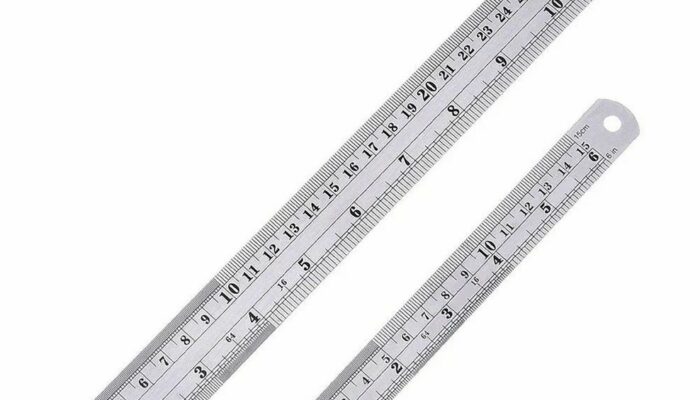
A measuring ruler is a fundamental instrument used to determine length, width, and height with precision. Crafted from materials such as wood, plastic, or metal, it serves as a tangible link between abstract dimensions and physical reality. Beyond simple measurement, rulers facilitate spatial comprehension, enabling users to engage with the world through exactitude.
Varieties of Measuring Rulers
Measuring rulers come in diverse forms, each tailored to specific applications and environments:
- Standard Flat Ruler:
Typically one meter or longer, this linear tool is widely used in educational, professional, and workshop settings for straightforward measurement tasks. - Folding Ruler:
Designed for portability, this segmented ruler folds into a compact size, making it ideal for builders and craftsmen working in varied locations. - Marked Ruler:
Often featuring specialized scales, these rulers assist artists and designers by providing guidelines that enhance precision and aesthetic quality. - Digital Measuring Tape:
Incorporating electronic displays and memory functions, these modern rulers merge traditional measurement with digital technology for enhanced accuracy and convenience.
Historical Development of Measuring Rulers
The concept of measurement dates back to ancient civilizations, where early rulers were rudimentary yet pivotal tools. Egyptians utilized simple rod-like devices, while Mesopotamians inscribed measurements on clay tablets using cuneiform script. These early systems reflect humanity’s initial efforts to quantify and understand physical space.
As societies advanced, measurement tools evolved into cultural symbols, representing technological achievements and societal values. The measuring ruler, therefore, is not only a practical device but also a historical artifact embodying the aspirations and ingenuity of past civilizations.
Applications Across Various Fields
Measuring rulers play crucial roles in numerous disciplines, each leveraging their precision for distinct purposes:
- Architecture:
Architects rely on rulers to translate conceptual designs into detailed blueprints, shaping the built environment and human habitats. - Sewing and Crafting:
In textile arts, rulers ensure accurate fabric cutting and pattern drafting, supporting creative expression and craftsmanship. - Scientific Research:
Laboratories use rulers to define experimental parameters, emphasizing accuracy as a cornerstone of empirical investigation in fields like chemistry, biology, and physics.
How Measuring Rulers Function
At their core, measuring rulers operate by providing a standardized scale against which objects can be compared. The user aligns the ruler’s zero point with one end of the object and reads the measurement at the opposite end. The precision depends on the ruler’s gradations, which may be marked in metric or imperial units, and, in digital models, enhanced by electronic sensors and displays.
Mathematical Explanation and Units
Measurements obtained from rulers are typically expressed in units of length, such as millimeters (mm), centimeters (cm), inches (in), or feet (ft). The fundamental formula for length measurement is:
Length = Position of endpoint – Position of starting point
Where:
- Position of starting point: The zero mark or reference point on the ruler aligned with one end of the object.
- Position of endpoint: The mark on the ruler aligned with the other end of the object.
In digital rulers, sensors convert physical distances into numerical values displayed electronically, often allowing for unit conversion and data storage.
Common Misunderstandings About Measuring Rulers
- Misconception: All rulers provide the same level of accuracy.
Correction: Accuracy varies depending on the ruler’s material, scale precision, and design; digital rulers often offer higher precision than standard flat rulers. - Misconception: Measurement units are interchangeable without conversion.
Correction: Units such as inches and centimeters require proper conversion to maintain accuracy in measurement.
Significance of Measuring Rulers
Measuring rulers are indispensable tools that underpin precision in science, technology, art, and daily life. They enable the accurate quantification of space, which is essential for construction, manufacturing, scientific experimentation, and creative endeavors. By bridging abstract concepts of dimension with physical reality, rulers facilitate innovation, quality control, and effective communication across disciplines.
Conclusion: The Multifaceted Role of Measuring Rulers
Far from being mere instruments, measuring rulers embody a rich interplay of history, culture, and technology. They serve as silent guides in the pursuit of accuracy, catalysts for creativity, and foundational tools in scientific inquiry. Through their evolution and diverse applications, rulers continue to shape our understanding of the physical world, reflecting humanity’s enduring quest to measure, comprehend, and create within the dimensions of existence.
FAQ
What materials are measuring rulers made from?
Measuring rulers can be made from wood, plastic, or metal, each serving different purposes and environments.
How do you read a measuring ruler accurately?
To read a measuring ruler, align the zero mark with one end of the object and read the measurement at the opposite end.
What are the common misconceptions about measuring rulers?
Common misconceptions include that all rulers provide the same level of accuracy and that measurement units are interchangeable without conversion.



Leave a Reply