
Short Answer
Definition of the Hydrogen Atom
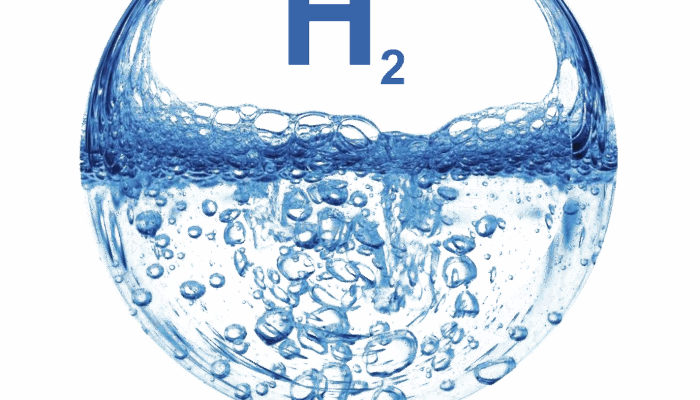
The hydrogen atom is recognized as the simplest and most plentiful element in the cosmos, serving as a fundamental constituent of matter. It consists of a nucleus containing a single proton, around which a solitary electron moves. Despite its apparent simplicity, the hydrogen atom embodies complex quantum and subatomic phenomena that are essential to understanding atomic structure and the nature of matter.
Fundamental Components of the Hydrogen Atom
At the heart of the hydrogen atom lies one proton, a positively charged particle forming the nucleus, and one electron, a negatively charged particle that orbits the nucleus. The electron does not follow a fixed path but exists within a probabilistic cloud defined by quantum mechanics. This arrangement exemplifies the basic atomic model: a central nucleus surrounded by an electron cloud.
Proton Composition and Quarks
The proton itself is not an indivisible particle but is composed of smaller elementary particles called quarks. Specifically, a proton contains two up quarks and one down quark, which are bound together by the strong nuclear force mediated by gluons. This substructure reveals the intricate layers within atomic nuclei and highlights the fundamental forces that govern particle interactions.
Quantum Behavior of the Electron
The electron in a hydrogen atom exhibits wave-particle duality, a cornerstone of quantum mechanics. Unlike classical particles, electrons do not have precise locations but are described by a probability distribution indicating where they are likely to be found. This uncertainty challenges traditional physics and requires a quantum mechanical framework to accurately describe electron behavior.
Atomic Orbitals and Electron Configuration
Electrons occupy specific regions around the nucleus called atomic orbitals, which have distinct shapes and energy levels determined by quantum numbers. In hydrogen, the electron typically resides in the lowest energy state, known as the ground state. The spatial distribution of these orbitals influences how hydrogen interacts chemically with other elements, affecting bond formation and molecular structure.
Isotopes of Hydrogen
Hydrogen exists in several isotopic forms, differing in the number of neutrons within the nucleus:
- Protium:
The most common isotope, consisting of one proton and no neutrons. - Deuterium:
Contains one proton and one neutron, making it heavier and more stable in certain reactions. - Tritium:
Comprises one proton and two neutrons, radioactive and less stable than the other isotopes.
These isotopes exhibit variations in mass and nuclear properties, influencing their chemical behavior and applications in fields such as nuclear energy and medical diagnostics.
Hydrogen in Cosmic and Chemical Contexts
Hydrogen plays a critical role in the universe, particularly in stellar processes. In stars, hydrogen nuclei undergo nuclear fusion, combining to form helium and releasing vast amounts of energy that power stars and influence cosmic evolution. On Earth, hydrogen’s ability to bond with various elements leads to the formation of essential compounds like water (H2O), hydrocarbons, and acids, underscoring its versatility in chemistry and biology.
Technological Applications of Hydrogen
Advancements in technology have harnessed hydrogen’s properties for practical uses, notably in hydrogen fuel cells. These devices convert hydrogen’s chemical energy into electricity, offering a promising clean energy source. The development of hydrogen-based energy solutions is pivotal in addressing environmental challenges and transitioning to sustainable energy systems.
Common Misconceptions About Hydrogen
Hydrogen is just a simple atom with no internal structure.
The proton within hydrogen is composed of quarks, revealing a complex subatomic structure.
Electrons orbit the nucleus in fixed paths like planets around the sun.
Electrons exist in probabilistic clouds described by quantum mechanics, not fixed orbits.
All hydrogen atoms are identical.
Hydrogen has isotopes with different neutron numbers, affecting their properties and uses.
Significance of Hydrogen in Science and Daily Life
Hydrogen’s importance spans multiple scientific disciplines and everyday applications. Its fundamental role in atomic theory aids in understanding matter’s building blocks, while its involvement in stellar fusion processes illuminates cosmic phenomena. Chemically, hydrogen’s bonding capabilities are vital for life and industry. Moreover, its potential as a clean energy carrier positions hydrogen at the forefront of sustainable technology development, making it indispensable for future scientific and environmental advancements.
FAQ
What is a hydrogen atom composed of?
It consists of a single proton in the nucleus and one electron orbiting around it.
What are quarks?
Quarks are fundamental particles that make up protons and neutrons; specifically, a proton contains two up quarks and one down quark.
How does the electron behave in a hydrogen atom?
The electron exists in a probabilistic cloud around the nucleus, described by quantum mechanics rather than fixed orbits.
What are hydrogen's isotopes and why are they important?
Isotopes like deuterium and tritium have additional neutrons and are important in nuclear reactions and scientific applications.
Why is hydrogen important in stars?
Hydrogen nuclei fuse to form helium in stars, releasing the energy that powers stars.
What practical uses does hydrogen have?
Hydrogen is used in fuel cells to generate clean energy and forms essential compounds like water.



Leave a Reply