
Short Answer
Definition of the Higgs Boson
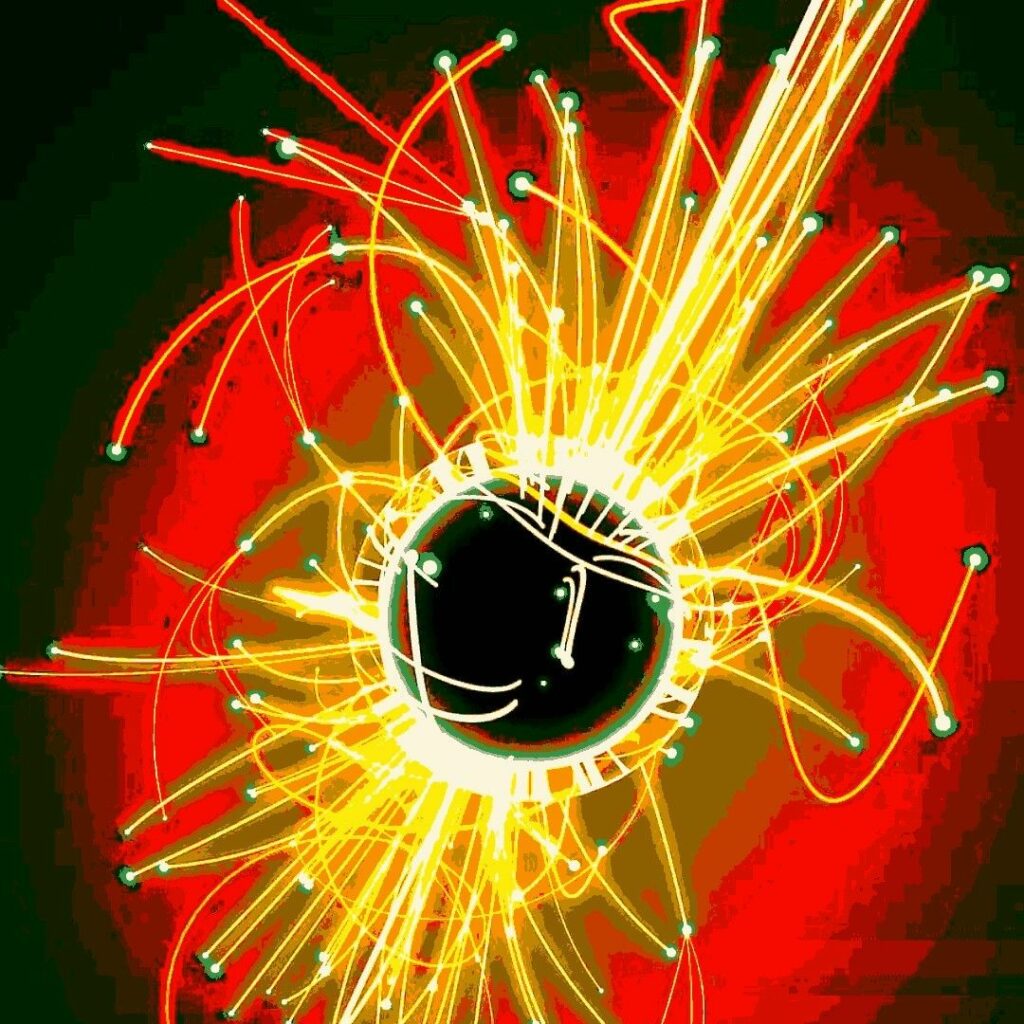
The Higgs boson is a fundamental particle integral to the Standard Model of particle physics. It is linked to the Higgs field, a pervasive quantum field that exists throughout the universe. This particle was first theorized in the 1960s by physicists including Peter Higgs, François Englert, and Robert Brout. The Higgs boson plays a crucial role in explaining how particles acquire mass, making it a cornerstone in our understanding of the universe’s fundamental structure.
The Role of the Higgs Boson in Particle Mass
Mass is a defining property of matter, and the Higgs boson is central to the mechanism that endows elementary particles with mass. Without mass, particles would move at the speed of light, preventing the formation of atoms, stars, and galaxies. The Higgs field interacts with particles such as quarks and leptons, slowing them down in a manner comparable to a person moving through a crowded room experiencing resistance. This interaction imparts mass, enabling the material universe to exist as we know it.
Selective Mass Acquisition
Not all particles gain mass through the Higgs field. For example, photons remain massless, allowing light to travel at the universe’s ultimate speed limit-approximately 299,792 kilometers per second. Conversely, particles like the W and Z bosons gain substantial mass, influencing their behavior and the range of the weak nuclear force. This selective mass acquisition raises profound questions about the underlying principles governing particle physics.
Discovery and Experimental Confirmation
Although hypothesized for decades, the Higgs boson was experimentally confirmed in 2012 at CERN’s Large Hadron Collider (LHC). This landmark discovery validated the existence of the Higgs boson and reinforced the Standard Model’s framework. Despite this breakthrough, many questions remain about the particle’s properties, its interactions, and its implications for physics beyond the Standard Model, sparking ongoing research and debate within the scientific community.
Physical Characteristics of the Higgs Boson
- Electric Charge:
The Higgs boson is electrically neutral. - Mass:
It has a mass of approximately 125 giga-electronvolts (GeV), about 130 times heavier than a proton. - Spin:
As a scalar boson, it possesses no intrinsic spin, distinguishing it from many other fundamental particles.
Symmetry Breaking and Fundamental Forces
The Higgs boson is intimately connected to the concept of spontaneous symmetry breaking, a process that explains why certain forces, such as the weak nuclear force, have a limited range and why their carrier particles have mass. Without the Higgs field, the universe’s fundamental forces and particles would behave very differently, potentially altering the fabric of reality itself. This connection has led physicists to explore theories beyond the Standard Model, including supersymmetry and string theory, which attempt to address the Higgs boson’s deeper mysteries.
Implications for Cosmology and Dark Matter
While the Higgs boson answers critical questions about mass, it also opens new avenues of inquiry regarding the universe’s unseen components, such as dark matter and dark energy. These mysterious substances constitute about 95% of the cosmos but remain undetected directly. The relationship between the Higgs boson and these enigmatic phenomena is still unclear, offering potential clues to the universe’s ultimate fate and composition.
The Hierarchy Problem and Future Prospects
The Higgs boson’s mass appears finely tuned, leading to the so-called “hierarchy problem” in physics. This issue questions why the Higgs mass is stable and not influenced by higher energy scales, suggesting that new physics might exist beyond current experimental reach. The possibility that undiscovered particles or forces could emerge from further study of the Higgs boson fuels ongoing research and technological advancements in particle physics.
Why the Higgs Boson Is Essential
The Higgs boson is more than just a particle; it is a gateway to understanding the universe’s fundamental nature. It anchors the Standard Model, explains the origin of mass, and challenges scientists with profound questions about the cosmos. Its discovery marked a pivotal moment in science, yet it also highlights the vast unknowns that remain. As research continues, the Higgs boson will undoubtedly shape the future of physics and deepen our comprehension of reality’s underlying principles.
FAQ
What does the Higgs boson do?
The Higgs boson is essential for explaining how other particles acquire mass through the Higgs field.
When was the Higgs boson discovered?
The Higgs boson was discovered in 2012 at CERN’s Large Hadron Collider.
Why is the Higgs boson important?
It is critical for the Standard Model of particle physics and helps explain fundamental aspects of the universe.





Leave a Reply