
Short Answer
Definition of Gamma Ray Emission in Supernovae
A supernova represents the dramatic and final phase in the life cycle of a star, marked by a colossal explosion that disperses vast amounts of energy and matter into space. Among the various emissions produced during this event, gamma rays stand out as highly energetic photons that surpass visible light in energy by billions of times. These gamma rays are crucial indicators of the extreme physical phenomena occurring during and after the star’s explosive demise, providing invaluable insights into the universe’s most violent processes.
Mechanisms Behind Gamma Ray Production in Supernovae
The generation of gamma rays in a supernova begins almost immediately after the star’s core collapses under immense gravitational forces. This collapse triggers shockwaves that violently disrupt the star’s interior and propel its outer layers outward. Gamma rays emerge from several key processes:
- Radioactive Decay:
Newly formed heavy elements such as nickel-56 and cobalt-56 undergo radioactive decay, releasing gamma photons. - Particle Acceleration:
Shock fronts accelerate charged particles to near-light speeds, producing gamma radiation. - Magnetic Reconnection:
Rapid changes in magnetic field configurations release energy that contributes to gamma ray emission.
These diverse origins make gamma rays unique messengers that encode information about nuclear synthesis, particle physics, and magnetic environments within the supernova remnant.
Interaction of Gamma Rays with Surrounding Matter
As gamma rays travel outward from the explosion site, they encounter dense and turbulent material in the nascent supernova remnant. This interaction initiates a complex sequence of events:
- Particle Collisions and Secondary Emissions:
Gamma photons collide with particles, generating secondary radiation such as X-rays and radio waves through synchrotron emission. - Electron-Positron Pair Production:
High-energy gamma rays can create electron-positron pairs, introducing exotic matter into the environment. - Energy Redistribution:
The kinetic energy injected by gamma rays sculpts the surrounding interstellar medium, forming expanding cavities and influencing cloud dynamics.
Gamma Rays and Cosmic Ray Formation
Gamma rays from supernovae play a pivotal role in the genesis of cosmic rays-high-velocity particles that permeate the galaxy and impact planetary atmospheres and magnetic fields. These cosmic rays have a dual effect:
- Inhibiting Star Formation:
By damaging molecular clouds, cosmic rays can suppress the birth of new stars in certain regions. - Facilitating Chemical Reactions:
They also catalyze reactions essential for the formation of complex molecules, potentially influencing the precursors of life.
Thus, gamma rays indirectly contribute to the chemical and physical evolution of the cosmos, linking stellar death to the broader galactic ecosystem.
Challenges in Detecting Gamma Rays from Supernovae
Observing gamma rays emitted by supernovae is a formidable task due to Earth’s atmosphere, which absorbs these high-energy photons. To overcome this, scientists rely on sophisticated space-based observatories equipped with sensitive gamma-ray detectors. Data collected from these instruments have revolutionized astrophysical models by:
- Confirming the synthesis of heavy elements like nickel-56 and cobalt-56.
- Revealing the intricate structure of supernova remnants.
- Detecting ultra-relativistic particles and informing theories on neutrino interactions and dark matter behavior.
Gamma-Ray Bursts and Their Cosmological Significance
Some supernovae are associated with gamma-ray bursts (GRBs), which are among the brightest phenomena observed in the universe. These bursts, lasting only seconds, can outshine entire galaxies and be detected across billions of light-years. The study of GRBs challenges existing theories on energy production and relativistic jet formation, pushing the boundaries of our understanding of astrophysical explosions and the fundamental laws governing them.
Gamma Rays as Probes of Extreme Physics
The environments within gamma-ray-emitting supernova remnants serve as natural laboratories for studying physics under extreme conditions. These include:
- Intense Magnetic Fields:
Fields trillions of times stronger than Earth’s magnetic field influence particle behavior. - Powerful Shock Waves:
Rapid nuclear reactions and shock fronts create conditions conducive to exotic phenomena such as quark-gluon plasma formation. - Exotic Particle Creation:
The extreme environment allows for the generation of particles rarely observed elsewhere, enhancing our understanding of matter shortly after the Big Bang.
Role of Gamma Rays in Galactic Evolution
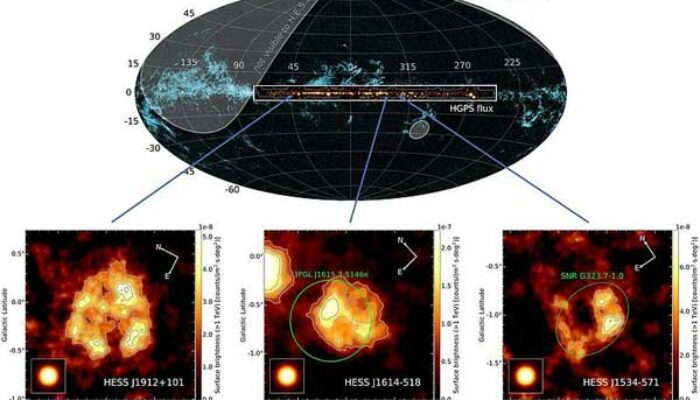
Gamma-ray astronomy has unveiled the connection between supernova remnants and the acceleration of cosmic rays. Shock waves within remnants act as long-lived particle accelerators, propelling charged particles to near-light speeds. This process not only influences the local interstellar medium but also contributes to the dynamic evolution of galaxies, linking the death of stars to the broader narrative of cosmic development.
Common Misconceptions About Gamma Rays from Supernovae
Gamma rays from supernovae are just a byproduct with little scientific value.
Gamma rays provide critical information about nuclear processes, particle physics, and magnetic fields, making them essential for understanding stellar explosions and cosmic evolution.
Gamma-ray bursts are unrelated to supernovae.
Certain types of supernovae are directly linked to gamma-ray bursts, which are among the most energetic events in the universe.
Importance of Gamma Ray Emission in Astrophysics
The emission of gamma rays during a supernova is far more than a transient cosmic event; it is a phenomenon that reshapes our comprehension of the universe. These energetic photons act as beacons illuminating the processes of elemental creation, particle acceleration, and interstellar dynamics. Their study not only advances scientific knowledge but also deepens philosophical reflections on the interconnectedness of cosmic phenomena and humanity’s place within the vast expanse of space.
Summary: The Transformative Impact of Gamma Rays from Supernovae
In essence, gamma rays released by supernovae encapsulate a narrative of destruction and creation, elemental transformation, and cosmic evolution. They challenge static perceptions of stars, revealing them as dynamic contributors to the galactic environment. These high-energy emissions carry encoded histories of the universe’s most profound processes, inspiring ongoing exploration and expanding the horizons of astrophysical research.
FAQ
What causes gamma rays to be emitted during a supernova?
Gamma rays are emitted due to processes like radioactive decay of heavy elements and the acceleration of charged particles during the supernova explosion.
Why are gamma rays significant in astrophysics?
Gamma rays provide crucial information about the physical processes in supernovae, helping scientists understand stellar evolution and the dynamics of the universe.

Leave a Reply