
Short Answer
Understanding Dark Matter
Dark matter is a mysterious and invisible component of the cosmos, making up about 27% of the universe’s total mass-energy content. Unlike ordinary matter, it does not emit, absorb, or reflect light, making it undetectable by traditional telescopes. Despite its invisibility, dark matter exerts a powerful gravitational influence, governing the motion of galaxies and the formation of large-scale cosmic structures. Its elusive nature has made it one of the most compelling puzzles in modern astrophysics and particle physics.
Key Candidates for Dark Matter
Weakly Interacting Massive Particles (WIMPs)
WIMPs are among the most extensively studied hypothetical particles proposed as dark matter constituents. These particles are thought to have masses ranging from about 10 to 1,000 times that of a proton. Their defining characteristic is their extremely weak interaction with ordinary matter, avoiding detection except through rare and subtle collisions in highly sensitive underground detectors.
- Origin:
WIMPs naturally arise in supersymmetry theories, where every known particle has a heavier partner. The lightest of these partners could be stable and abundant enough to account for dark matter. - Detection Efforts:
Experiments such as LUX and XENON have been designed to capture the faint signals of WIMPs interacting with atomic nuclei, but so far, no definitive evidence has been found.
Axions
Axions are ultralight particles originally proposed to resolve inconsistencies in quantum chromodynamics, the theory describing strong nuclear forces. They are hypothesized to form a pervasive, low-mass field throughout space, potentially creating large-scale Bose-Einstein condensates that could explain dark matter’s gravitational effects without the need for heavy particles.
- Unique Properties:
Axions can convert into photons when exposed to magnetic fields, a feature exploited by experiments like ADMX to detect their presence. - Cosmic Role:
Their subtle interactions and light mass make axions a compelling candidate for a diffuse, whisper-like form of dark matter originating from the early universe.
Sterile Neutrinos
Sterile neutrinos extend the family of neutrinos by hypothesizing particles that interact solely through gravity, lacking the weak force interactions of their active neutrino counterparts. This makes them even more challenging to detect but potentially significant in explaining both neutrino mass and dark matter.
- Cosmological Significance:
Sterile neutrinos could simultaneously address several outstanding questions in cosmology, including the nature of dark matter and the origin of neutrino masses. - Detection Clues:
Their decay might emit faint X-rays, which astronomers search for as indirect evidence of their existence.
Primordial Black Holes (PBHs)
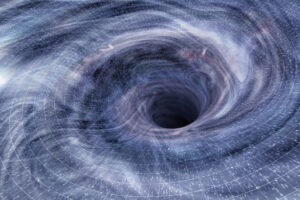
Unlike particle candidates, primordial black holes are compact objects formed from density fluctuations in the early universe, shortly after the Big Bang. These black holes could vary widely in mass, from tiny fractions of a gram to several times the mass of the Sun.
- Formation:
PBHs originated from regions of high density in the infant universe, collapsing under their own gravity. - Detection Methods:
Scientists look for gravitational lensing effects and gravitational waves from black hole mergers to identify PBHs. - Implications:
If PBHs constitute a significant portion of dark matter, they offer a non-particle explanation linking cosmology and gravity.
Dark Photons
Dark photons are theoretical particles analogous to photons but belonging to a hidden sector of the universe. They may mediate forces that interact weakly with ordinary matter, potentially bridging the visible universe and a shadowy realm of unknown particles and forces.
- Interaction Mechanism:
Dark photons might mix kinetically with standard photons, allowing subtle interactions detectable through precision experiments. - Scientific Impact:
Discovering dark photons would revolutionize our understanding of the universe, revealing a layered cosmic structure with hidden symmetries.
Mechanisms Behind Dark Matter Candidates
Each dark matter candidate operates through distinct physical principles:
- WIMPs: Their weak interactions with normal matter make them detectable only through rare scattering events.
- Axions: Their ability to convert into photons in magnetic fields provides a unique detection pathway.
- Sterile Neutrinos: Their gravitational influence and potential decay signatures offer indirect detection methods.
- Primordial Black Holes: Their gravitational effects, such as lensing and wave emissions, serve as observational clues.
- Dark Photons: Their kinetic mixing with photons could reveal hidden forces influencing dark matter behavior.
Mathematical Framework and Detection Principles
While the detailed mathematics varies by candidate, some general principles apply:
- WIMP Interaction Rate:
The expected event rate ( R ) in a detector is given by:
( R = N_T times Phi times sigma ), where ( N_T ) is the number of target nuclei, ( Phi ) is the WIMP flux, and ( sigma ) is the interaction cross-section. - Axion-Photon Conversion:
The probability ( P_{a to gamma} ) of axion to photon conversion in a magnetic field ( B ) over length ( L ) is:
( P_{a to gamma} propto g_{agamma}^2 B^2 L^2 ), where ( g_{agamma} ) is the axion-photon coupling constant. - Gravitational Lensing by PBHs:
The lensing effect depends on the mass ( M ) of the black hole and the alignment with background light sources, described by Einstein’s radius ( R_E ).
Practical Illustrations of Dark Matter Research
Real-world efforts to uncover dark matter include:
- Direct Detection Experiments: Facilities like LUX-ZEPLIN and XENONnT aim to capture rare WIMP interactions deep underground.
- Axion Searches: The Axion Dark Matter Experiment (ADMX) uses strong magnetic fields to detect axion-photon conversions.
- Astrophysical Observations: X-ray telescopes scan for sterile neutrino decay signals, while gravitational wave observatories monitor black hole mergers.
- Collider Experiments: Particle accelerators like the Large Hadron Collider search for signs of dark photons and other exotic particles.
Common Misunderstandings About Dark Matter
- Misconception: Dark matter is just ordinary matter that is invisible.
Correction: Dark matter is fundamentally different from ordinary matter, interacting primarily through gravity and not electromagnetic forces. - Misconception: Dark matter particles have been directly detected.
Correction: Despite extensive searches, no direct detection of dark matter particles has been confirmed to date. - Misconception: Primordial black holes are the same as black holes formed from stars.
Correction: Primordial black holes formed in the early universe from density fluctuations, unlike stellar black holes which result from collapsing stars.
The Significance of Dark Matter Research
Understanding dark matter is crucial for comprehending the universe’s structure and evolution. It influences galaxy formation, cosmic expansion, and the overall dynamics of the cosmos. Unraveling its nature could unlock new physics beyond the Standard Model, potentially revealing hidden forces and particles. This pursuit not only deepens our grasp of fundamental science but also inspires technological advancements in detection methods and theoretical modeling, driving progress across multiple scientific disciplines.
FAQ
What is dark matter?
Dark matter is an invisible component of the universe, comprising about 27% of its total mass-energy, and it interacts primarily through gravity.
What are WIMPs?
Weakly Interacting Massive Particles (WIMPs) are hypothetical particles that are extensively studied as potential dark matter candidates.
How do scientists search for dark matter?
Scientists conduct various experiments, including direct detection methods, astrophysical observations, and collider experiments to search for signs of dark matter.

Leave a Reply