
Short Answer
Definition of Dark Energy
Dark energy is a mysterious and invisible force that permeates the universe, driving its accelerated expansion. It constitutes roughly 68% of the total energy content of the cosmos, making it the dominant component of the universe’s composition. Despite its vast presence, dark energy remains elusive, challenging scientists to uncover its true nature and role in cosmic evolution.
Understanding the Cosmic Expansion
Imagine the universe as a vast ocean, with galaxies acting as ships drifting apart. Dark energy functions like an unseen current beneath the surface, persistently pushing these galactic islands away from one another at an increasing pace. This acceleration contradicts earlier expectations that gravity would slow the expansion, revealing a new dynamic in the universe’s growth.
Key Observational Evidence
Cosmic Microwave Background Radiation
The cosmic microwave background (CMB) is the oldest light detectable, emitted approximately 380,000 years after the Big Bang. It serves as a snapshot of the early universe, containing subtle temperature and polarization variations. By studying these fluctuations with highly sensitive satellite instruments, cosmologists have reconstructed the universe’s initial conditions and geometry. This analysis unveiled the presence of an unknown energy component-dark energy-within the cosmic energy budget.
Large-Scale Structure Surveys
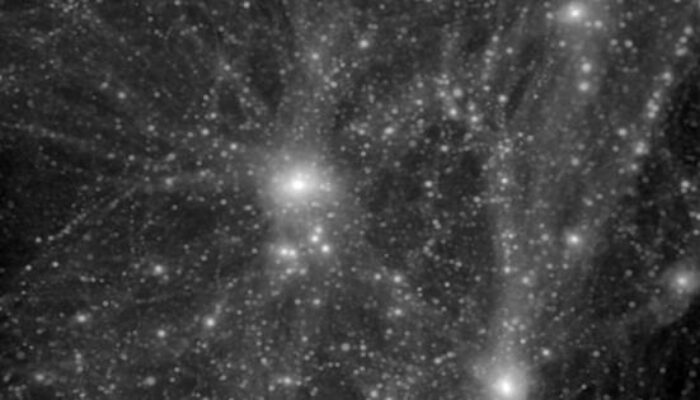
Galaxies are arranged in a complex cosmic web of clusters, filaments, and voids rather than being randomly distributed. By mapping the positions and redshifts of galaxies, scientists track how these structures have evolved over billions of years. The rate at which cosmic structures grow is influenced by the repulsive effect of dark energy, enabling researchers to estimate its density and impact on the universe’s expansion.
Type Ia Supernovae as Standard Candles
Type Ia supernovae are powerful stellar explosions with a consistent intrinsic brightness, making them reliable “standard candles” for measuring cosmic distances. Observations revealed that distant supernovae appeared dimmer than expected, indicating that the universe’s expansion is accelerating rather than decelerating. This discovery provided direct and compelling evidence for the existence of dark energy.
Cosmological Models and Data Analysis
The Lambda Cold Dark Matter (ΛCDM) model is the prevailing theoretical framework used to describe the universe’s composition and evolution. In this model, the cosmological constant (Λ) represents dark energy. To integrate diverse observational data, scientists employ advanced statistical methods such as Bayesian inference and Markov Chain Monte Carlo simulations. These techniques combine measurements from the CMB, large-scale structure, and supernovae to precisely determine that dark energy accounts for about 68% of the universe’s total energy density.
Implications for the Universe’s Fate
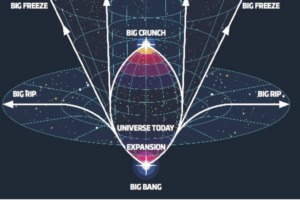
Dark energy acts as a form of anti-gravity, counteracting the attractive force of matter and dark matter. This repulsive influence drives an era of accelerated cosmic expansion, suggesting a future where galaxies move beyond each other’s observable horizons. Over time, this leads to a cold, isolated universe, profoundly shaping the ultimate destiny of cosmic structures.
Technological and Theoretical Advances
The precise measurement of dark energy’s contribution is a testament to the synergy between cutting-edge technology and theoretical innovation. Satellite observatories and ground-based telescopes have collected vast amounts of high-quality data, while supercomputers have simulated numerous cosmological scenarios. These combined efforts have transformed complex cosmic phenomena into comprehensible models, deepening our understanding of the universe.
Ongoing Mysteries and Future Research
Despite significant progress, the fundamental nature of dark energy remains uncertain. Is it a constant property of spacetime, or does it represent a dynamic field that evolves over time? Current and upcoming surveys utilize techniques such as gravitational lensing and baryon acoustic oscillations to probe dark energy’s characteristics with greater precision. Each new observation refines our knowledge and brings us closer to unraveling this cosmic enigma.
Why Measuring Dark Energy Matters
The quantification of dark energy’s dominance is one of modern cosmology’s most profound achievements. It reshapes our understanding of the universe’s composition, expansion, and ultimate fate. Beyond its scientific significance, this discovery exemplifies humanity’s relentless curiosity and the power of collaborative inquiry, inspiring ongoing exploration into the deepest mysteries of existence.
FAQ
What is dark energy?
Dark energy is a mysterious force that makes up about 68% of the universe and drives its accelerated expansion.
How do scientists measure dark energy?
Scientists measure dark energy using various methods, including observations of cosmic microwave background radiation, large-scale structure surveys, and Type Ia supernovae.
What is the significance of measuring dark energy?
Measuring dark energy helps us understand the universe's composition, expansion, and ultimate fate.

Leave a Reply