
Short Answer
Definition of Chemical Bonding
Chemical bonding refers to the process by which atoms connect to form molecules and compounds, creating the diverse matter that constitutes the physical world. This fundamental concept in chemistry explains how atoms interact and combine, resulting in substances with distinct properties and behaviors.
Types of Chemical Bonds
Chemical bonds are primarily categorized into three main types: ionic, covalent, and metallic bonds. Each type exhibits unique formation mechanisms and characteristics that influence the nature and properties of the resulting compounds.
Ionic Bonds
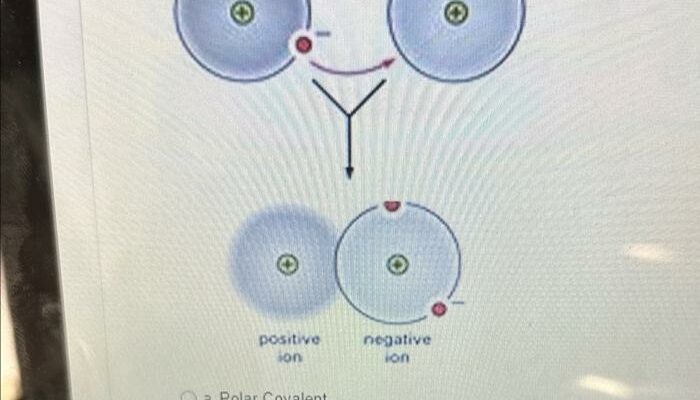
Ionic bonding arises when electrons are transferred from one atom to another, leading to the creation of charged ions. This typically occurs between a metal and a non-metal. Metals, which have relatively low electronegativity, lose electrons to achieve a stable electron configuration similar to noble gases, becoming positively charged cations. Conversely, non-metals gain these electrons due to their higher electronegativity, forming negatively charged anions.
The electrostatic attraction between these oppositely charged ions forms a strong ionic bond. A classic example is sodium chloride (NaCl), where sodium donates an electron to chlorine. The resulting ionic lattice structure imparts characteristic properties such as high melting and boiling points, electrical conductivity when dissolved in water, and brittleness.
Covalent Bonds
Covalent bonding involves the sharing of electron pairs between atoms, predominantly non-metals, allowing each atom to complete its valence shell. This mutual sharing stabilizes the atoms involved.
These shared electrons can form single, double, or triple bonds, depending on whether one, two, or three pairs of electrons are shared. For instance, in water (H2O), each hydrogen atom shares an electron with oxygen, resulting in a bent molecular shape that contributes to water’s unique properties such as high specific heat capacity and excellent solvent abilities.
Additionally, covalent bonds can be polar or nonpolar. Polar covalent bonds occur when there is a significant difference in electronegativity between the bonded atoms, creating a dipole moment. An example is hydrogen chloride (HCl), where the electron density is unevenly distributed.
Metallic Bonds
Metallic bonding is characterized by a lattice of metal cations immersed in a ‘sea of delocalized electrons.’ Metal atoms release their valence electrons into this shared electron pool, which binds the positively charged ions together.
This bonding type explains many metallic properties, including electrical and thermal conductivity, malleability, and ductility. The free movement of electrons allows metals to conduct electricity efficiently, while the ability of metal ions to slide past each other without disrupting the bond accounts for their malleability.
Energy Dynamics in Chemical Bonding
The formation and breaking of chemical bonds involve significant energy changes. Bond formation typically releases energy, making it an exothermic process, whereas breaking bonds requires energy input, an endothermic process.
This energy exchange is quantified by bond enthalpy, which measures the strength of a bond. Bonds with higher bond enthalpy values are stronger and more resistant to breaking under heat or mechanical stress, while those with lower values are more easily disrupted.
Impact of Bonding on Physical Properties
The nature of chemical bonds profoundly influences the physical state and characteristics of substances. Covalent compounds can exist as gases, liquids, or solids at room temperature, depending on intermolecular forces such as hydrogen bonding, dipole-dipole interactions, or van der Waals forces.
In contrast, ionic compounds form rigid crystalline lattices, resulting in solids with defined geometric structures, like halite and quartz. These structures affect properties such as hardness, solubility, and melting points.
Significance of Chemical Bonding
Chemical bonding is essential for understanding the interactions between atoms and the formation of the vast array of substances in the universe. It underpins biological macromolecules critical to life and the development of advanced materials driving technological progress.
By studying ionic, covalent, and metallic bonds, scientists gain insight into the behavior and properties of matter, which is fundamental across all scientific disciplines and industrial applications.
Summary
The study of chemical bonds reveals the complex yet vital processes that govern how atoms unite to form compounds. Recognizing the distinctions and implications of ionic, covalent, and metallic bonds provides a comprehensive framework for exploring molecular interactions and advancing innovations in chemistry and related fields.
FAQ
What are the main types of chemical bonds?
The main types of chemical bonds are ionic, covalent, and metallic bonds, each with distinct characteristics.
How does energy change during bond formation?
Bond formation generally releases energy, making it exothermic, while breaking bonds requires energy input, making it endothermic.






Leave a Reply