
Short Answer
Definition of Galaxy Clusters and Dark Energy
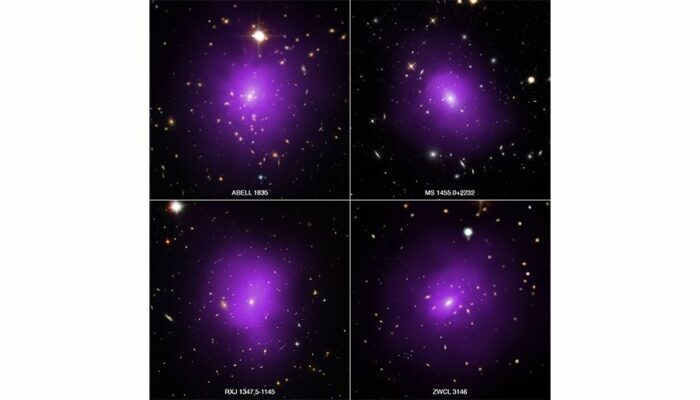
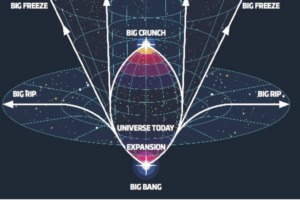
Galaxy clusters are enormous assemblies consisting of hundreds to thousands of galaxies, bound together by the force of gravity. These massive structures are not only collections of stars and gas but also contain vast amounts of dark matter, an invisible substance that outweighs ordinary matter by a significant margin. Dark energy, on the other hand, is a mysterious form of energy that permeates space and drives the accelerated expansion of the universe. Together, galaxy clusters and dark energy play crucial roles in shaping the large-scale structure and evolution of the cosmos.
- Galaxy Clusters:
Gravitationally bound groups of galaxies, dark matter, and hot gas forming the largest known structures in the universe. - Dark Energy:
A pervasive, enigmatic force responsible for the observed acceleration in the universe’s expansion.
Role of Galaxy Clusters in Cosmology
Galaxy clusters act as cosmic laboratories that provide vital clues about the universe’s expansion history and the nature of dark energy. Their abundance, spatial distribution, and internal dynamics are sensitive indicators of the underlying cosmological parameters. By studying these properties, scientists can infer how dark energy influences the growth of cosmic structures over billions of years.
Gravitational Binding and Dark Matter
The immense mass of galaxy clusters is largely dominated by dark matter, which forms a gravitational scaffold holding the clusters together against the expansive force of dark energy. This gravitational binding is a key factor in understanding the balance between matter’s pull and dark energy’s push, as the clusters’ evolution reflects this ongoing cosmic tug-of-war.
Hierarchical Formation of Clusters
Galaxy clusters form through a process called hierarchical assembly, where smaller groups of galaxies merge under gravity to create larger structures. This growth is influenced by the rate of cosmic expansion, which is modulated by dark energy. A universe without dark energy would see clusters forming more rapidly, whereas the presence of dark energy slows down this process, leaving distinct signatures in the cluster population across different epochs.
Cosmic Web and Cluster Distribution
The large-scale arrangement of galaxy clusters reveals a complex, web-like pattern known as the cosmic web. This network is shaped by the interplay of dark matter, ordinary matter, and dark energy over cosmic time. Analyzing how clusters cluster together-referred to as the “clustering of clusters”-allows researchers to extract valuable information about the universe’s composition and the properties of dark energy.
Correlation Functions and Density Fluctuations
Fluctuations in the density of galaxy clusters and their spatial correlations are key observables in cosmology. These measurements help determine the dark energy equation of state, which describes how dark energy affects the acceleration of the universe’s expansion.
Gravitational Lensing as a Probe
One of the most striking phenomena associated with galaxy clusters is gravitational lensing. The massive dark matter halos of clusters bend and distort light from more distant galaxies, acting as natural cosmic lenses. This effect enables astronomers to map the total mass distribution within clusters and provides a sensitive probe of the universe’s geometry and expansion history.
- Mass Mapping:
Lensing reveals the distribution of both visible and dark matter in clusters. - Cosmic Distances:
The degree of lensing depends on the relative distances between the observer, the cluster, and background galaxies, which are influenced by cosmic expansion.
Intracluster Medium and X-ray Observations
Galaxy clusters contain hot gas that emits X-rays, known as the intracluster medium. Observations of this gas provide critical data on cluster mass and temperature, which are essential for understanding cluster growth and evolution. Dark energy subtly influences the heating and compression of this gas by affecting the timing and environment of cluster formation.
Simulations and Theoretical Models
Advanced computer simulations of galaxy cluster formation are indispensable tools for interpreting observational data. By modeling cosmic evolution under different dark energy scenarios, researchers can isolate the effects of dark energy from other astrophysical processes. These simulations translate complex cluster properties into meaningful cosmological parameters, enhancing our understanding of dark energy’s role.
Comparison with Other Cosmological Probes
While methods such as supernova brightness measurements and cosmic microwave background studies provide complementary insights into dark energy, galaxy clusters offer a unique advantage. They provide a continuous record of structure formation over a wide range of cosmic time, bridging the gap between the largest cosmic scales and fundamental physics.
Significance of Galaxy Clusters in Understanding Dark Energy
Galaxy clusters serve as monumental markers in the universe, encapsulating matter and illuminating the elusive nature of dark energy. Their existence and evolving properties reflect a dynamic cosmos shaped by competing forces of gravity and accelerated expansion. Through detailed study of their growth, distribution, and gravitational effects, scientists are gradually unveiling the mysteries of dark energy, bringing us closer to comprehending the fundamental workings of the universe.
Future Prospects
As observational technologies advance and theoretical frameworks become more sophisticated, galaxy clusters will remain pivotal in cosmological research. Each cluster acts as a gravitational stronghold rich with information, inviting ongoing exploration to decode the profound narrative of cosmic evolution driven by dark energy’s invisible influence.
FAQ
What are galaxy clusters?
Galaxy clusters are massive groups of galaxies bound together by gravity, containing dark matter and hot gas.
How do galaxy clusters relate to dark energy?
Galaxy clusters provide insights into dark energy by revealing how it influences the expansion and structure formation of the universe.

Leave a Reply