
Short Answer
Definition of the Biggest Cosmic Mystery
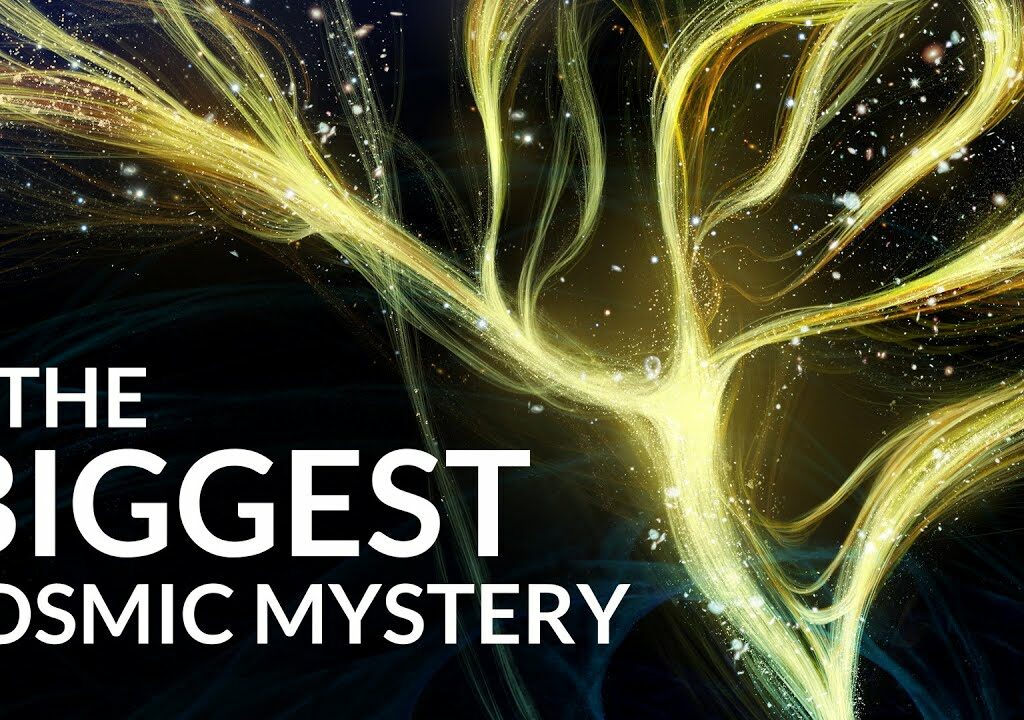
The biggest cosmic mystery encompasses a collection of profound questions about the universe’s origin, composition, and ultimate destiny. It represents an intricate puzzle that has challenged human understanding from ancient philosophical inquiries to modern astrophysical research. Far from a single enigma, it includes multiple interconnected phenomena that continue to evade complete scientific explanation, inviting ongoing exploration and debate.
Key Components of the Cosmic Enigma
Understanding the biggest cosmic mystery requires examining several fundamental aspects of the universe that remain largely unexplained:
- Origin of the Universe:
Theories such as the Big Bang describe the universe’s birth from an extremely dense singularity, followed by rapid expansion and formation of matter and galaxies. - Dark Matter and Dark Energy:
These invisible substances constitute about 95% of the universe’s mass-energy but are detected only through their gravitational effects and influence on cosmic expansion. - Black Holes:
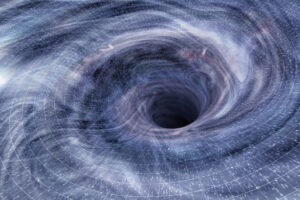
Regions of spacetime with gravitational forces so strong that nothing, including light, can escape, posing paradoxes that challenge current physics. - Multiverse Hypotheses:
Speculative ideas suggesting our universe is one among many, each with different physical laws and constants. - Cosmic Fate:
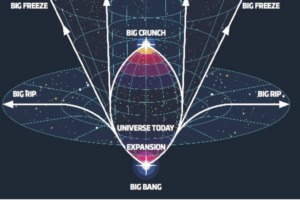
Various models predict different endings for the universe, such as eternal expansion, collapse, or disintegration driven by dark energy.
Origins and Early Universe
The story of the universe’s beginning is primarily framed by the Big Bang theory, which posits that all matter and energy emerged from a singularity-a point of infinite density and temperature. Following this event, a phase called cosmic inflation caused an exponential expansion, smoothing and cooling the universe. This era led to the formation of fundamental particles and eventually galaxies. Key evidence supporting this narrative includes the cosmic microwave background radiation, a faint glow permeating space that serves as a relic of the early universe’s conditions.
Invisible Forces: Dark Matter and Dark Energy
Dark matter and dark energy dominate the universe’s mass-energy budget but remain elusive to direct detection. Dark matter reveals itself through gravitational effects, such as the unexpected rotational speeds of galaxies, implying the presence of unseen mass. Dark energy, on the other hand, is theorized to drive the accelerating expansion of the cosmos, counteracting gravitational attraction. Research into these phenomena involves astrophysical observations, particle physics experiments, and cosmological modeling, including the widely accepted Lambda-CDM framework that integrates these components into the standard model of cosmology.
The Enigma of Black Holes
Black holes are extraordinary cosmic objects formed from the gravitational collapse of massive stars or through the merging of smaller black holes. Their intense gravity warps spacetime to such an extent that escape becomes impossible. Recent advances, such as gravitational wave detection and imaging by the Event Horizon Telescope, have provided unprecedented insights into their properties. Theoretical challenges include reconciling black hole behavior with quantum mechanics and addressing the information paradox, which questions what happens to information swallowed by black holes.
Speculative Cosmology: Multiverse and Anthropic Considerations
Beyond observable phenomena, some theories propose the existence of multiple universes, collectively known as the multiverse. These universes may differ in fundamental constants and physical laws, raising philosophical questions about existence and probability. The anthropic principle, often discussed in this context, suggests that the universe’s properties are as they are because they allow for the emergence of observers like us. This intersection of science and philosophy expands the scope of cosmic inquiry into metaphysical realms.
Possible Endings of the Universe
Scientists have proposed several scenarios for the universe’s ultimate fate, each dependent on factors like the rate of expansion, dark energy’s nature, and thermodynamic principles:
- Big Freeze:
The universe continues expanding, cooling until stars burn out and matter reaches maximum entropy, resulting in a cold, dark cosmos. - Big Crunch:
Gravitational forces eventually halt expansion and reverse it, causing the universe to collapse back into a dense state. - Big Rip:
Dark energy’s influence grows so strong that it tears apart galaxies, stars, planets, and eventually atomic structures.
These models provide frameworks for understanding cosmic impermanence and the long-term evolution of all matter and energy.
Advanced Theoretical Frameworks: Quantum Cosmology and String Theory
Efforts to unify the laws governing the very large (general relativity) and the very small (quantum mechanics) have led to sophisticated theories such as quantum cosmology and string theory. These approaches introduce concepts like extra spatial dimensions and brane worlds, aiming to reveal the universe’s fundamental structure. Although mathematically complex and experimentally challenging, these theories represent cutting-edge attempts to decode the cosmic blueprint and resolve longstanding paradoxes.
Visualization and Multimedia in Cosmic Exploration
Modern technology enables the translation of abstract cosmic concepts into vivid visual experiences. High-resolution astrophotography, immersive simulations, and detailed documentaries help convey the scale and complexity of the universe. These tools make distant galaxies, black holes, and theoretical constructs accessible and emotionally engaging, enhancing public understanding and appreciation of cosmic mysteries.
Significance of the Biggest Cosmic Mystery
The quest to unravel the universe’s deepest secrets is a testament to human curiosity and intellectual ambition. It drives scientific innovation, philosophical reflection, and artistic expression, shaping our understanding of reality and our place within it. As observational instruments and theoretical models improve, the veil over these cosmic enigmas may gradually lift, yet the vastness of the unknown ensures that exploration remains an enduring and inspiring journey.
FAQ
What is the biggest cosmic mystery?
It refers to profound questions about the universe's origin, composition, and ultimate destiny, including dark matter and dark energy.
What role does dark matter play in the universe?
Dark matter constitutes a significant portion of the universe's mass-energy, detectable through its gravitational effects.
What are the possible endings of the universe?
Scenarios include the Big Freeze, Big Crunch, and Big Rip, depending on factors like dark energy and expansion rates.

Leave a Reply