

Short Answer
Definition of Curcumin and Its Molecular Orbitals
Curcumin is the primary curcuminoid compound extracted from turmeric, widely recognized not only for its bright yellow color and culinary uses but also for its intricate molecular architecture. The study of its molecular orbitals (MOs) offers profound insights into the electronic characteristics that underpin its biological functions. Molecular orbitals represent the quantum mechanical wave functions of electrons within a molecule, revealing the distribution and behavior of electrons that govern chemical reactivity and stability.
Structural Features of Curcumin
Curcumin’s chemical composition is denoted by the formula C21H20O6. It contains a conjugated system of alternating double bonds, which enhances electron delocalization and resonance throughout the molecule. Key functional groups include phenolic hydroxyl groups and a β-diketo moiety, both of which play significant roles in shaping the molecule’s electronic properties. These structural elements contribute to the formation of distinct molecular orbitals that can be visualized through computational chemistry techniques.
Classification and Characteristics of Molecular Orbitals in Curcumin
- Bonding Orbitals:
These orbitals are lower in energy and represent regions where electrons are most likely to be found. In curcumin, bonding orbitals arise from sigma (σ) bonds between carbon and oxygen atoms and pi (π) bonds within the conjugated system. The π orbitals facilitate electron delocalization, which stabilizes the molecule and contributes to its characteristic color through resonance effects. - Antibonding Orbitals:
Higher in energy, antibonding orbitals correspond to less stable electron configurations. Electrons occupying these orbitals indicate potential reactivity, making them critical in understanding curcumin’s interactions with biological targets. These orbitals can act as precursors to reactive intermediates involved in biochemical pathways. - Non-Bonding Orbitals:
These orbitals do not participate directly in bonding but are essential for molecular function. Typically associated with lone pairs on oxygen atoms in hydroxyl groups, non-bonding orbitals influence curcumin’s ability to form hydrogen bonds, affecting its solubility and transport within biological environments.
Computational Visualization of Curcumin’s Molecular Orbitals
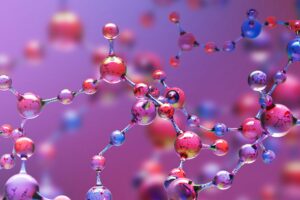
Advanced quantum mechanical methods, such as Density Functional Theory (DFT), enable the detailed mapping of curcumin’s molecular orbitals. These visualizations depict electron density as colorful, cloud-like regions that highlight areas of positive and negative phase. The nodal patterns within these orbitals resemble intricate natural designs, reflecting the complex yet orderly nature of electron distribution in the molecule.
Energy Considerations: The HOMO-LUMO Gap
The energy difference between the highest occupied molecular orbital (HOMO) and the lowest unoccupied molecular orbital (LUMO) is a fundamental parameter in molecular chemistry. In curcumin, this gap is relatively small, indicating a propensity for electron transfer and chemical reactivity. This characteristic underlies curcumin’s potent antioxidant activity, as it can readily donate electrons to neutralize harmful free radicals, thereby protecting cells from oxidative damage.
Biological Interactions Mediated by Molecular Orbitals
The spatial orientation and energy levels of curcumin’s molecular orbitals dictate how it interacts with various biomolecules, including enzymes, proteins, and nucleic acids. These interactions are crucial for its therapeutic effects, as the molecular orbitals facilitate binding and influence biochemical pathways. The dynamic interplay between curcumin’s electronic structure and biological targets can be likened to an artist shaping clay, where subtle changes in form lead to significant functional outcomes.
Chemical Versatility and Pharmaceutical Implications
Curcumin’s molecular orbitals also enable it to act as a chelating agent and ligand, binding metal ions and other molecules. This versatility is exploited in drug design, where synthetic analogs of curcumin are developed to modify its electronic properties for enhanced therapeutic efficacy. By altering the electronic framework, researchers aim to optimize curcumin derivatives for improved bioavailability and targeted biological activity.
Why Understanding Curcumin’s Molecular Orbitals Is Important
Exploring the molecular orbitals of curcumin bridges the gap between its chemical structure and biological function, providing a comprehensive understanding of how this natural compound exerts its effects. This knowledge is vital for advancing applications in medicine, nutrition, and pharmacology, highlighting the profound connection between quantum chemistry and life sciences. Ultimately, the study of curcumin’s molecular orbitals exemplifies the elegance and complexity of molecular interactions that sustain health and inspire innovation.
FAQ
What do the molecular orbitals of curcumin represent?
They represent the quantum mechanical electron distributions that determine curcumin's chemical and biological behavior.
Why are molecular orbitals important for curcumin's antioxidant activity?
Because the HOMO-LUMO gap and electron delocalization in these orbitals facilitate electron donation, enhancing antioxidant properties.
How are molecular orbitals of curcumin visualized?
Using computational chemistry methods like Density Functional Theory that model electron distributions.
What roles do bonding and antibonding orbitals play in curcumin?
Bonding orbitals stabilize the molecule, while antibonding orbitals indicate reactive sites important for biological interactions.

Leave a Reply