
Short Answer
Definition of Nucleons
Nucleons are the fundamental particles residing within the atomic nucleus, comprising protons and neutrons. These particles form the core foundation of all matter, playing a crucial role in defining the properties and stability of atoms. Together, nucleons govern the structure of elements and influence the chemical behavior of substances.
- Protons:
Positively charged particles that determine the atomic number and thus the identity of an element. - Neutrons:
Electrically neutral particles that contribute to the atomic mass and define isotopes by varying in number.
Structure and Composition of the Atomic Nucleus
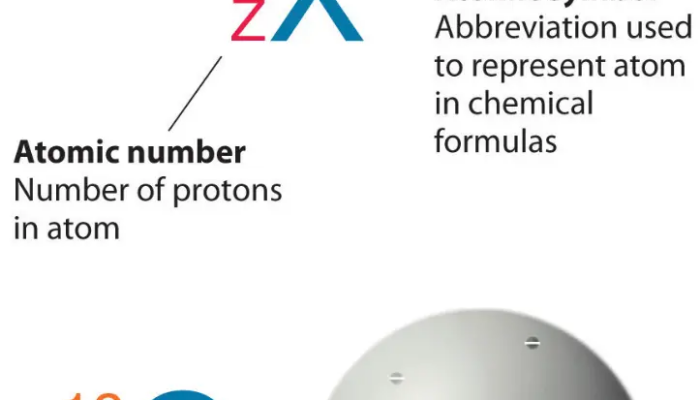
At the center of every atom lies the nucleus, a compact and dense region where nucleons are tightly packed. Protons and neutrons coexist in this core, with protons carrying a positive charge and neutrons being neutral. The number of protons establishes the element’s identity, while the total count of nucleons (protons plus neutrons) determines the isotope, which can exhibit distinct physical and chemical characteristics.
Forces Governing Nucleon Interactions
The behavior and cohesion of nucleons within the nucleus are primarily governed by the strong nuclear force. This powerful interaction binds protons and neutrons together, overcoming the electromagnetic repulsion between positively charged protons. Although the strong force is incredibly potent, it operates effectively only over very short distances, creating a delicate equilibrium that maintains nuclear stability.
Isotopes and Their Significance
Isotopes arise from variations in the number of neutrons within the nucleus while maintaining the same number of protons. This neutron-to-proton ratio influences the stability and properties of the isotope, leading to diverse applications across science and technology.
- Carbon-14:
A radioactive isotope used extensively in radiocarbon dating to determine the age of archaeological artifacts. - Medical and Energy Applications:
Certain isotopes are utilized in medical diagnostics, treatment, and as fuel in nuclear reactors.
Nuclear Stability and Radioactive Decay
Heavy nuclei with large numbers of nucleons often face instability due to the complex interplay of forces within the nucleus. This instability can result in radioactive decay, where the nucleus emits particles or radiation to achieve a more stable configuration. Common decay modes include alpha decay (emission of helium nuclei), beta decay (conversion of neutrons to protons or vice versa), and gamma radiation (high-energy photons).
Nuclear Reactions Involving Nucleons
Nucleons are central to nuclear reactions that release or absorb vast amounts of energy. Two primary types of nuclear reactions are:
- Fission:
The splitting of a heavy nucleus into lighter nuclei, releasing energy utilized in nuclear power and weapons. - Fusion:
The merging of light nuclei to form heavier nuclei, a process that powers stars, including the sun, and holds promise for future clean energy sources.
Role of Nucleons in Modern Physics
Beyond their role in atomic structure, nucleons are pivotal in advanced fields such as particle physics and cosmology. High-energy particle accelerators collide nucleons at near-light speeds to probe the fundamental forces and constituents of matter. These experiments contribute to the development of the Standard Model and enhance our understanding of phenomena like dark matter and the origins of the universe.
Interaction Between Nucleons and Electrons
Nucleons and electrons form an intricate system within the atom. While nucleons provide the dense, stable nucleus, electrons orbit this core, engaging in electromagnetic interactions that dictate chemical bonding and reactivity. This dynamic balance between the nucleus and electron cloud underpins the complexity of matter and the diversity of chemical phenomena.
Why Understanding Nucleons Is Essential
Grasping the nature and behavior of nucleons is fundamental to multiple scientific disciplines and practical applications. From explaining the stability of matter and the processes powering stars to enabling technologies in medicine and energy, nucleons are central to both our comprehension of the universe and the advancement of human society.
Summary
Nucleons-protons and neutrons-are the cornerstone particles within atomic nuclei, essential for defining elemental identity, isotope variation, and nuclear stability. Their interactions, governed by the strong nuclear force, facilitate nuclear reactions that shape the cosmos and fuel technological innovations. Studying nucleons not only deepens our understanding of matter at the smallest scales but also connects us to the grand mechanisms of the universe.
FAQ
What are nucleons?
Nucleons are the particles, protons and neutrons, that make up the atomic nucleus.
How do nucleons affect the stability of atoms?
The balance of protons and neutrons determines the nucleus's stability and whether it may undergo radioactive decay.
What is the strong nuclear force?
It is the fundamental force that binds nucleons tightly together within the atomic nucleus.
Why are nucleons important in nuclear reactions?
Nucleons participate in fission and fusion reactions, processes that release significant energy powering stars and nuclear technology.
How are nucleons studied in physics?
Particle accelerators collide nucleons to explore fundamental particles and forces, advancing knowledge in particle physics and cosmology.






Leave a Reply