
Short Answer
Definition of Chemical Properties of Atoms
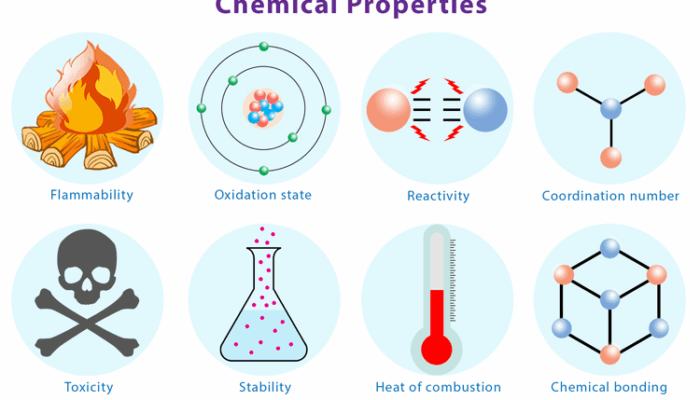
Chemical properties refer to the characteristics of atoms that determine their behavior during chemical reactions. These properties are fundamentally influenced by the atom’s internal structure, particularly the arrangement and interactions of subatomic particles such as electrons, protons, and neutrons. Understanding these properties provides insight into how atoms combine, react, and form the diverse substances that compose the material world.
Electron Configuration and Its Role
The primary factor shaping an atom’s chemical properties is its electron configuration-the specific distribution of electrons in energy levels or shells around the nucleus. Electrons carry a negative charge and occupy defined orbitals, with the outermost electrons, known as valence electrons, playing a crucial role in chemical reactivity.
- Valence Electrons:
These electrons determine an atom’s ability to form bonds. Atoms with full valence shells tend to be chemically inert, while those with incomplete outer shells actively seek to gain, lose, or share electrons to achieve stability. - Energy Levels:
Electrons reside in shells of increasing energy, and the arrangement within these shells influences how atoms interact with one another.
Periodic Table and Periodic Trends
The periodic table organizes elements based on their atomic number and electron configurations, revealing recurring patterns known as periodic trends. These trends help predict chemical behavior across different elements.
- Electronegativity:
This is the tendency of an atom to attract electrons in a chemical bond. Electronegativity generally increases across a period from left to right and decreases down a group. - Atomic Radius:
The size of an atom, which affects how closely it can approach other atoms and thus influences bonding. - Ionization Energy:
The energy required to remove an electron from an atom, which varies predictably across the periodic table and affects the formation of ions.
Atomic Mass and Its Influence
Atomic mass, primarily determined by the number of protons and neutrons in the nucleus, impacts an atom’s size and the strength of intermolecular forces such as van der Waals interactions. Heavier atoms tend to have larger radii and greater polarizability, which can affect molecular geometry and chemical properties like solubility and bonding behavior.
Ionization Energy and Oxidation States
Ionization energy is a critical parameter that defines how easily an atom can lose electrons to form positively charged ions (cations). Elements with low ionization energies readily form cations, facilitating ionic bond formation. Conversely, atoms with high ionization energies are less likely to lose electrons and may instead gain electrons to form anions.
Oxidation states represent the degree of electron loss or gain an atom experiences in compounds, influencing its chemical reactivity and bonding patterns. For example, iron exhibits multiple oxidation states, which result in varied chemical behaviors such as rust formation.
Intermolecular Forces and Molecular Interactions
Beyond individual atoms, chemical properties are also shaped by intermolecular forces that govern interactions between molecules. These include:
- Hydrogen Bonding:
A strong dipole-dipole attraction occurring when hydrogen is bonded to highly electronegative atoms like oxygen or nitrogen. - Van der Waals Forces:
Weak attractions arising from temporary dipoles in molecules, influenced by atomic size and polarizability.
These forces affect physical properties such as boiling and melting points, solubility, and the overall stability of molecular assemblies.
Isotopes and Their Chemical Implications
Isotopes are variants of elements that differ in neutron number but share the same number of protons and electrons, resulting in identical chemical properties but differing physical characteristics. The variation in nuclear stability among isotopes has practical applications, including radiometric dating and medical imaging.
Types of Chemical Bonds and Their Effects
The nature of chemical bonds formed by atoms significantly influences their chemical properties:
- Covalent Bonds:
Formed by the sharing of electrons between atoms, covalent bonds create molecules with specific shapes, polarities, and reactivities. - Ionic Bonds:
Result from the transfer of electrons, producing charged ions that attract each other through electrostatic forces, affecting solubility and electrical conductivity.
Why Understanding Chemical Properties Is Essential
Grasping the factors that define an atom’s chemical properties is vital across multiple scientific disciplines. It enables the prediction of chemical reactions, the design of new materials, and the comprehension of biological processes. This knowledge underpins advancements in fields such as pharmacology, materials science, and environmental chemistry, highlighting the profound impact of atomic behavior on both technology and everyday life.
FAQ
What primarily determines the chemical properties of an atom?
The electron configuration, especially the arrangement of valence electrons, primarily determines an atom’s chemical properties.
How does the periodic table help predict chemical properties?
The periodic table reveals periodic trends such as electronegativity, atomic radius, and ionization energy, which help predict chemical behavior across elements.
What is the role of oxidation states in chemical properties?
Oxidation states indicate the degree of electron loss or gain in compounds, influencing chemical reactivity and bonding patterns.
Do isotopes affect the chemical properties of atoms?
Isotopes have identical chemical properties because they have the same number of protons and electrons, but they differ in physical characteristics.
Why is understanding chemical properties important?
Understanding chemical properties enables prediction of chemical reactions, material design, and comprehension of biological and environmental processes.






Leave a Reply