
Short Answer
Understanding Quantum Mechanics
Quantum mechanics stands as a cornerstone theory in modern physics, unraveling the intricate behaviors of matter and energy at the smallest scales. It challenges conventional perceptions by revealing a world where particles behave in ways that defy classical logic. This field invites us to reconsider everyday phenomena through a lens that is both perplexing and profoundly insightful, pushing the boundaries of human cognition and philosophical thought.
Fundamental Concepts and Principles
At its essence, quantum mechanics investigates the dynamics of particles such as electrons and atoms, operating at atomic and subatomic levels. Unlike classical physics, which predicts outcomes with certainty, quantum theory embraces a probabilistic framework. This shift introduces several groundbreaking ideas:
- Wave-Particle Duality:
Particles exhibit dual characteristics, behaving as both waves and discrete particles depending on the experimental setup. - Superposition:
A particle can simultaneously exist in multiple states until an observation collapses it into a definite state. - Entanglement:
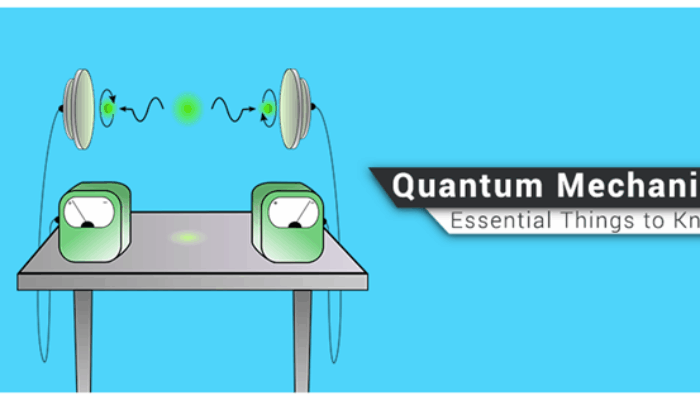
Two or more particles become linked such that the state of one instantaneously influences the state of another, regardless of the distance between them.
The Probabilistic Nature of Quantum Mechanics
One of the most striking departures from classical physics is the inherent uncertainty embedded in quantum systems. Instead of deterministic predictions, quantum mechanics provides probabilities for various outcomes. This probabilistic approach is exemplified by the superposition principle, where particles do not possess definite properties until measured. Such phenomena compel a reevaluation of what constitutes reality and observation.
Quantum Entanglement and Its Implications
Entanglement represents a profound quantum phenomenon where particles become interconnected in such a way that the measurement of one instantly determines the state of the other, no matter how far apart they are. This non-local connection challenges classical ideas about communication and causality, opening avenues for revolutionary technologies like quantum computing and ultra-secure communication networks.
Mathematical Framework of Quantum Mechanics
The theoretical backbone of quantum mechanics is deeply rooted in advanced mathematics. Key components include:
- Hilbert Space:
A complex vector space where quantum states are represented as vectors. - Linear Algebra:
Essential for manipulating quantum states and operators. - Schrödinger Equation:
A fundamental differential equation describing how quantum states evolve over time within potential fields.
Mastering these mathematical tools is crucial for interpreting and predicting quantum phenomena, fostering analytical and critical thinking skills.
Educational Approaches to Quantum Mechanics
Teaching quantum mechanics poses unique challenges due to its abstract and counterintuitive nature. To facilitate comprehension, educators employ innovative methods such as interactive simulations, visual tutorials, and collaborative learning environments. These strategies not only demystify complex concepts but also encourage active engagement and peer discussion, transforming the learning process into a dynamic intellectual experience.
Applications and Technological Impact
Quantum mechanics is far from a purely theoretical pursuit; its principles underpin numerous cutting-edge technologies:
- Quantum Computing:
Harnesses quantum bits (qubits) to perform computations far beyond classical capabilities. - Quantum Optics:
Studies light-matter interactions, leading to advancements in imaging and communication. - Medical Imaging:
Techniques like MRI benefit from quantum principles to enhance diagnostic precision. - Materials Science:
Quantum theories guide the development of novel materials with unique properties.
Philosophical Reflections and the Nature of Reality
Beyond its scientific framework, quantum mechanics invites profound philosophical inquiry. It challenges deterministic views of the universe, suggesting that unpredictability and probability are fundamental aspects of reality. This raises questions about the limits of human knowledge and the true nature of existence, blending physics with metaphysical exploration.
Common Misunderstandings About Quantum Mechanics
- Misconception: Quantum mechanics implies that observation creates reality.
Correction: Observation affects the state of a quantum system, but it does not imply consciousness creates reality; rather, it reflects the interaction between measurement and system. - Misconception: Particles physically exist in multiple places at once.
Correction: Superposition describes a probability distribution of states, not literal simultaneous presence in multiple locations.
Significance of Quantum Mechanics in Modern Science
The study of quantum mechanics is pivotal for advancing scientific knowledge and technological innovation. It provides the foundation for understanding the microscopic world, enabling breakthroughs that impact computing, communication, healthcare, and materials engineering. Moreover, it cultivates a mindset of inquiry and adaptability essential for tackling complex scientific challenges.
Embarking on the Quantum Journey
Engaging with quantum mechanics is both a formidable challenge and a rewarding intellectual adventure. It demands openness to paradoxes and a willingness to question deeply held assumptions about reality. For those ready to explore, quantum mechanics offers not only insights into the universe’s fundamental workings but also a profound appreciation for the curiosity that drives human progress.
FAQ
What is the principle of superposition in quantum mechanics?
Superposition is the principle that a quantum particle can exist in multiple states simultaneously until measured, at which point the state collapses to a definite outcome.
How does entanglement challenge classical physics?
Entanglement links particles so their states are instantaneously correlated regardless of distance, challenging classical ideas about locality and causality.
What mathematical framework supports quantum mechanics?
Quantum mechanics relies on advanced mathematics including Hilbert spaces, linear algebra, and differential equations like the Schrödinger equation to describe and predict quantum states.
Why is quantum mechanics important for modern technology?
It forms the basis for emerging technologies such as quantum computing and advanced medical imaging, enabling capabilities beyond classical approaches.
What are common misunderstandings about quantum mechanics?
Misunderstandings include the idea that observation creates reality or that particles literally exist in multiple places at once; these are simplifications of more nuanced quantum principles.






Leave a Reply