
Short Answer
Definition of Mathematical Modeling
Mathematical modeling is a fundamental discipline within contemporary science and engineering that connects abstract theoretical concepts with tangible real-world applications. It involves the creation of mathematical representations to simulate, analyze, and predict the behavior of complex systems across various fields. This process enables researchers and practitioners to translate intricate phenomena into structured frameworks that can be systematically studied and manipulated.
Essential Literature for Mastering Mathematical Modeling
Gaining proficiency in mathematical modeling requires engagement with authoritative texts that blend theory with practical insights. The following books are widely regarded as foundational resources, each offering unique perspectives and methodologies to deepen understanding and enhance modeling skills.
Core Texts and Their Contributions
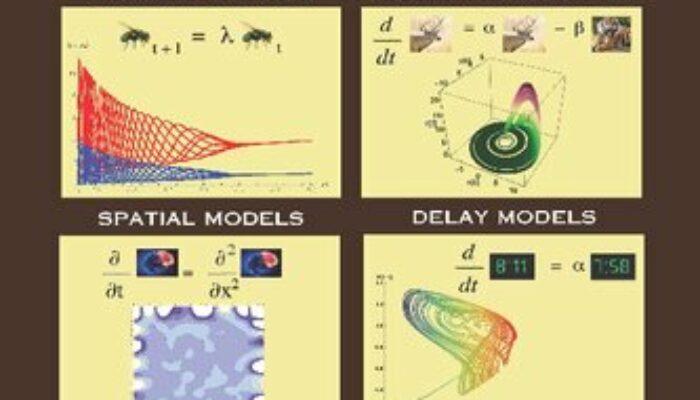
- Solutions for Mathematical Modeling: Models, Analysis and Applications:
This seminal work lays the groundwork for beginners by presenting a balanced integration of theoretical principles and practical examples. It guides readers through systematic approaches to model construction and solution analysis, emphasizing the interplay between mathematical frameworks and real-world contexts. - Mathematical Models: Mechanical Vibrations, Population Dynamics, and Traffic Flow by J. David Logan:
Logan’s text highlights the interdisciplinary nature of mathematical modeling by exploring applications in mechanics, biology, and transportation. It offers a comprehensive approach to building and analyzing models that capture dynamic processes across diverse scientific domains. - Ordinary Differential Equations by Morris Tenenbaum and Harry Pollard:
This reference is indispensable for understanding differential equations, a cornerstone of many modeling techniques. The authors provide clear explanations and practical exercises that reinforce theoretical knowledge and its application in various modeling scenarios. - Modeling with Data: Tools and Techniques for Statistical Analysis by Daniel J. Myers and A. F. Johnson:
Focusing on the integration of statistics and modeling, this book equips readers with essential tools for data-driven model validation and refinement. It underscores the importance of empirical evidence and iterative assessment in the modeling process. - Mathematical Biology: I. An Introduction by J. D. Murray:
Murray’s comprehensive text delves into the modeling of biological systems, covering topics such as population dynamics, epidemiology, and evolutionary biology. It bridges mathematical theory with biological insights, making complex concepts accessible without compromising depth. - Applied Numerical Methods with MATLAB for Engineers and Scientists by Steven C. Chapra:
This guide integrates numerical techniques with engineering applications, emphasizing computational proficiency through MATLAB. Chapra’s approach strengthens the connection between numerical analysis and practical modeling challenges in engineering. - Stochastic Modeling: Analysis and Simulation by A. A. L. B. Papoulis:
Papoulis offers an in-depth exploration of stochastic processes, essential for modeling uncertainty and randomness. The text covers applications ranging from financial risk to environmental systems, fostering a nuanced understanding of probabilistic modeling. - Complex Systems: A Survey by John H. Holland:
Holland’s work introduces the study of complex adaptive systems, highlighting the interconnectedness and emergent behaviors within multifaceted models. This resource is vital for those interested in the dynamics of systems characterized by intricate interactions.
How Mathematical Modeling Functions
Mathematical modeling operates by abstracting real-world phenomena into mathematical language, typically through equations, algorithms, or simulations. This abstraction allows for the systematic analysis of system behavior under various conditions, enabling predictions and optimizations. Models often incorporate differential equations, statistical methods, numerical techniques, or stochastic processes depending on the nature of the problem.
Mathematical Foundations and Techniques
Key mathematical tools underpinning modeling include:
- Differential Equations:
Describe how quantities change over time or space, fundamental in dynamic system modeling. - Statistical Analysis:
Facilitates model validation and refinement through data interpretation and hypothesis testing. - Numerical Methods:
Provide computational algorithms to approximate solutions where analytical methods are infeasible. - Stochastic Processes:
Model randomness and uncertainty inherent in many natural and engineered systems.
Practical Applications of Mathematical Modeling
Mathematical modeling finds extensive use across numerous disciplines:
- Biology:
Modeling population growth, disease spread, and evolutionary dynamics. - Engineering:
Designing control systems, analyzing mechanical vibrations, and optimizing processes. - Transportation:
Simulating traffic flow and infrastructure planning. - Finance and Environmental Science:
Assessing risk, forecasting market trends, and modeling ecological systems.
Common Misunderstandings About Mathematical Modeling
- Misconception: Mathematical models provide exact predictions.
Correction: Models offer approximations that depend on assumptions and data quality; they are tools for insight rather than absolute forecasts. - Misconception: Modeling is purely theoretical and lacks practical relevance.
Correction: Mathematical modeling is deeply practical, enabling problem-solving and decision-making in real-world contexts.
Significance of Mathematical Modeling
The importance of mathematical modeling lies in its ability to transform complex systems into understandable and manageable forms. It drives innovation and informed decision-making in science, technology, and everyday life by providing frameworks to analyze, predict, and optimize diverse phenomena. Mastery of modeling techniques empowers professionals to address challenges ranging from healthcare to engineering design, ultimately advancing knowledge and societal progress.
FAQ
What is mathematical modeling?
Mathematical modeling is the process of representing real-world phenomena through mathematical language to analyze and predict system behaviors.
Why are these books important for learning mathematical modeling?
They provide foundational knowledge, practical examples, and methodologies essential for developing modeling skills across various scientific and engineering domains.
How does mathematical modeling benefit practical applications?
It enables understanding, predicting, and optimizing complex systems in areas such as biology, engineering, transportation, and environmental science.
What should I be aware of when using mathematical models?
Models are approximations dependent on assumptions and data quality; they are tools for insight, not exact predictions.





Leave a Reply