
Short Answer
Understanding Force and Its Measurement
Force is a core principle in physics, essential for comprehending motion, energy transfer, and the interactions between objects. Accurately quantifying force is vital across numerous scientific and engineering fields, from structural design to astrophysics. This article explores various instruments used to measure force, detailing their working principles, practical uses, and the intriguing role force measurement plays in both theoretical research and applied sciences.
Definition of Force Measurement Instruments
Force measurement devices are tools designed to quantify the magnitude of force applied to an object or system. These instruments vary widely in complexity and application, ranging from simple mechanical devices to advanced electronic sensors.
- Spring Scales:
Devices that measure force based on the extension of a spring, following Hooke’s Law. - Force Sensors (Load Cells):
Electronic transducers that convert mechanical force into electrical signals for precise measurement. - Dynamometers:
Instruments that assess force, torque, or power, especially in engines and mechanical systems. - Tension Gauges:
Tools specialized in measuring tensile forces applied to materials. - Force Plates:
Platforms equipped with sensors to measure forces exerted by bodies in contact with surfaces, commonly used in biomechanics. - Pressure Sensors:
Devices primarily measuring pressure but capable of inferring force through pressure-area relationships. - Seismic Sensors:
Instruments detecting ground motion and forces generated by seismic activity. - Friction Measurement Devices:
Tools like tribometers that evaluate frictional forces between surfaces.
Principles Behind Force Measurement Tools
Each force measurement instrument operates on distinct physical principles tailored to its specific application:
- Hooke’s Law in Spring Scales:
The force exerted by a spring is proportional to its displacement from equilibrium, enabling direct force readings. - Transduction in Force Sensors:
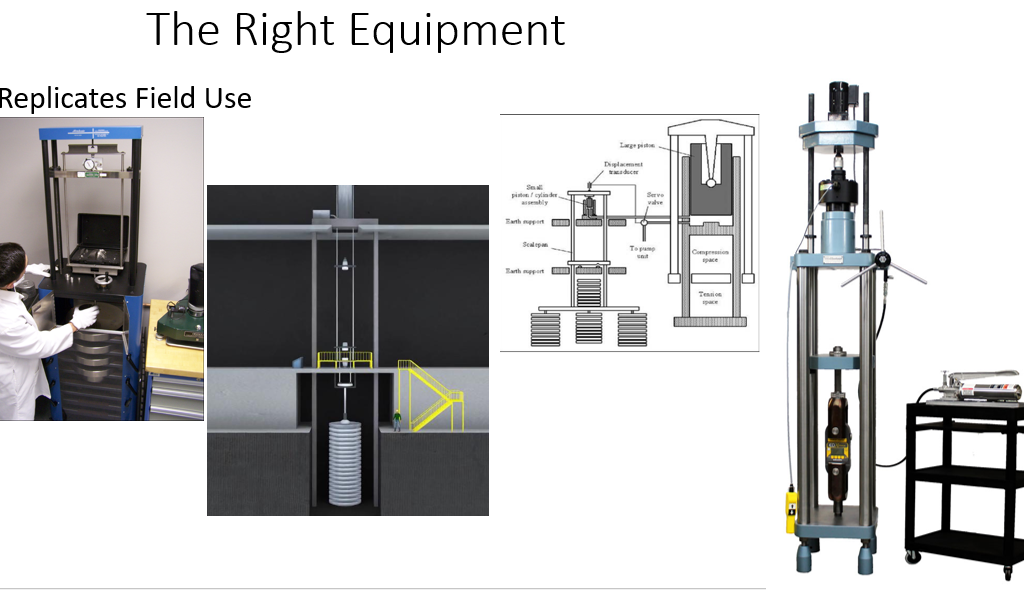
Load cells use strain gauges, piezoelectric elements, or hydraulic mechanisms to convert mechanical force into electrical signals. - Energy Conversion in Dynamometers:
These devices translate rotational forces into measurable linear forces to evaluate torque and power output. - Tensile Force Application in Tension Gauges:
These gauges apply and measure stretching forces to determine material strength. - Multi-Directional Sensing in Force Plates:
Arrays of sensors capture forces in vertical, horizontal, and lateral directions during movement. - Pressure-Force Relationship in Pressure Sensors:
Force is derived by multiplying measured pressure by the surface area over which it acts. - Vibration Detection in Seismic Sensors:
Mass-spring systems or accelerometers detect ground motion and convert it into electrical signals. - Surface Interaction in Friction Devices:
Tribometers measure resistance between surfaces to quantify frictional forces.
Mathematical Foundations of Force Measurement
Force measurement often relies on fundamental equations and relationships:
- Hooke’s Law:
F = k × x
Where F is the force, k is the spring constant, and x is the displacement. - Pressure-Force Relationship:
F = P × A
Where F is force, P is pressure, and A is the area over which pressure is applied. - Torque Measurement in Dynamometers:
τ = r × F
Where τ is torque, r is the lever arm distance, and F is the applied force.
Applications and Practical Examples
Force measurement tools find extensive use in diverse fields:
- Educational Demonstrations:
Spring scales are commonly used in classrooms to illustrate basic physics concepts. - Industrial Weighing and Monitoring:
Load cells are integral to scales, manufacturing equipment, and robotic systems requiring precise force data. - Automotive Testing:
Dynamometers assess engine torque and power, aiding in vehicle performance optimization. - Material Testing:
Tension gauges evaluate tensile strength, guiding material selection and structural engineering. - Biomechanics and Sports Science:
Force plates analyze gait and athletic movements to improve rehabilitation and performance. - Hydraulic and Pneumatic Systems:
Pressure sensors help infer forces within fluid-driven mechanisms in aerospace and automotive sectors. - Seismology and Earthquake Engineering:
Seismic sensors monitor ground forces to inform building design and disaster preparedness. - Tribology and Mechanical Design:
Friction measurement devices assist in optimizing component durability and efficiency.
Common Misunderstandings About Force Measurement
- Misconception: Spring scales always provide perfectly accurate force readings.
Correction: Their accuracy depends on proper calibration and stable environmental conditions, such as temperature. - Misconception: Pressure sensors directly measure force.
Correction: They measure pressure, and force must be calculated by considering the area over which pressure acts. - Misconception: All dynamometers measure the same type of force.
Correction: Different dynamometer types (absorption, transmission, eddy current) serve distinct purposes and measure various force-related parameters.
Significance of Force Measurement in Science and Technology
Accurate force measurement is indispensable for advancing scientific knowledge and technological innovation. It enables engineers to design safer structures, helps scientists understand natural phenomena, and supports medical professionals in improving human health through biomechanical analysis. The ability to quantify force bridges theoretical physics with practical applications, fostering progress across multiple disciplines and enhancing everyday life.
FAQ
What is a load cell?
A load cell is an electronic transducer that converts mechanical force into electrical signals for precise measurement.
How does a spring scale work?
A spring scale measures force based on the extension of a spring, following Hooke’s Law.
What are dynamometers used for?
Dynamometers assess force, torque, or power in engines and mechanical systems.

Leave a Reply