
Short Answer
Definition of Cosmic Rays
Cosmic rays are highly energetic particles originating from outer space that continuously bombard the Earth’s atmosphere. These particles, primarily composed of protons, but also including heavier atomic nuclei and electrons, possess energies that far exceed those produced by human-made accelerators. Their study provides critical insights into astrophysical phenomena and the fundamental nature of the universe.
- Composition:
Mainly protons, with a smaller fraction of heavier nuclei and electrons. - Energy Levels:
Some cosmic rays carry energies millions of times greater than those achievable in terrestrial particle accelerators. - Origin:
They are generated by powerful cosmic events such as supernovae and active galactic nuclei.
Sources and Origins of Cosmic Rays
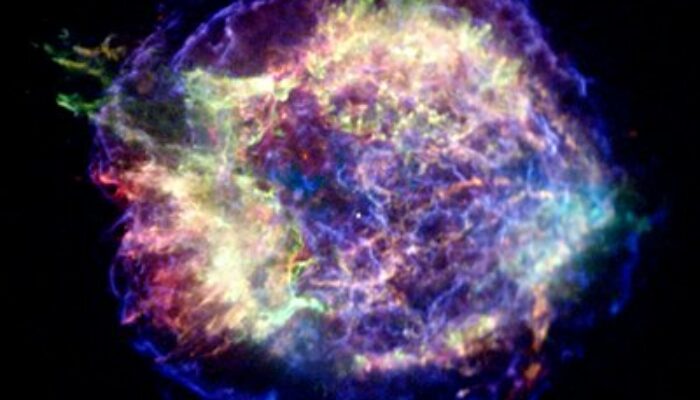
The genesis of cosmic rays is linked to some of the most violent and energetic processes in the cosmos. Supernova explosions, where massive stars end their life cycles, are considered primary accelerators of these particles. Additionally, active galactic nuclei-regions surrounding supermassive black holes at the centers of galaxies-emit intense gravitational and magnetic forces that propel particles to near-light speeds.
Other potential sources include pulsars, neutron star mergers, and gamma-ray bursts, each contributing to the cosmic ray population through extreme radiative and kinetic processes. These origins highlight the dynamic and often catastrophic nature of the universe’s energetic landscape.
Interaction with Earth’s Atmosphere
Upon reaching Earth, cosmic rays encounter the planet’s atmospheric shield, where they collide with atmospheric molecules, initiating a cascade of secondary particles known as extensive air showers. These showers can be detected by ground-based observatories, enabling indirect study of the primary cosmic rays.
This interaction not only allows scientists to analyze cosmic ray properties but also has practical implications, such as understanding radiation exposure risks for astronauts and the effects on electronic systems in space missions.
Distribution and Isotropy of Cosmic Rays
Cosmic rays exhibit a remarkably uniform distribution across the sky, a phenomenon known as isotropy. This suggests that their sources are widespread and scattered throughout the universe rather than concentrated in specific regions. The isotropic nature challenges existing models of cosmic structure and prompts ongoing research into the spatial distribution of cosmic ray origins.
Role in Astrobiology and Prebiotic Chemistry
Cosmic rays influence biological and chemical processes on Earth by interacting with atmospheric gases and terrestrial matter. These high-energy particles contribute to the formation of isotopes and can induce chemical reactions in soil, potentially affecting the synthesis of organic compounds essential for life.
Such interactions are significant in astrobiology, as they may shed light on the chemical pathways that led to the emergence of life and inform our understanding of how life might adapt or originate in extraterrestrial environments.
Cosmic Rays and Fundamental Physics
Research on cosmic rays extends beyond astrophysics into the realm of particle physics. Observations of cosmic ray events provide valuable data to test and refine the Standard Model, explore the properties of dark matter, and investigate matter-antimatter asymmetries.
Notable cosmic events, such as the supernova SN 1998bw, have produced intense bursts of cosmic rays that serve as natural laboratories for probing fundamental forces and particles under extreme conditions unattainable on Earth.
Technological Advances in Cosmic Ray Detection
Recent technological progress has significantly enhanced the detection and analysis of cosmic rays. Sophisticated instruments, including space-based observatories and extensive ground arrays, have improved sensitivity and resolution.
Major projects like the Pierre Auger Observatory and the IceCube Neutrino Observatory exemplify these advancements, enabling detailed studies of cosmic ray origins, energy spectra, and interaction mechanisms with unprecedented precision.
Challenges in Cosmic Ray Research
- Unpredictability:
The sporadic and random nature of cosmic ray arrivals complicates consistent data collection. - Secondary Particle Interference:
The cascade of secondary particles generated in the atmosphere can obscure the characteristics of the original cosmic ray, making source identification difficult.
Despite these obstacles, ongoing research continues to push the boundaries of our understanding, driven by the quest to unravel the mysteries embedded in cosmic ray phenomena.
Significance of Cosmic Rays in Science and Society
Cosmic rays are pivotal to multiple scientific disciplines, from astrophysics and particle physics to astrobiology. Their study enhances our comprehension of the universe’s energetic processes, the fundamental laws governing matter and energy, and the potential risks and opportunities for human space exploration.
Moreover, cosmic rays provoke profound philosophical inquiries about the nature of existence and the limits of human knowledge, underscoring their enduring allure in both scientific and cultural contexts.
FAQ
What are cosmic rays?
Cosmic rays are highly energetic particles originating from outer space that continuously bombard Earth’s atmosphere.
What causes cosmic rays?
They are produced by powerful cosmic events like supernova explosions and active galactic nuclei.
How do cosmic rays interact with Earth?
They collide with atmospheric molecules causing cascades of secondary particles, detectable by various observatories.
Why study cosmic rays?
Studying cosmic rays helps understand high-energy astrophysics, particle physics, and potential effects on space missions and astrobiology.
What are the challenges in cosmic ray detection?
Unpredictability of arrivals and interference from secondary particles make detection and source identification difficult.




Leave a Reply