
Short Answer
Definition of Ultracold Quartets
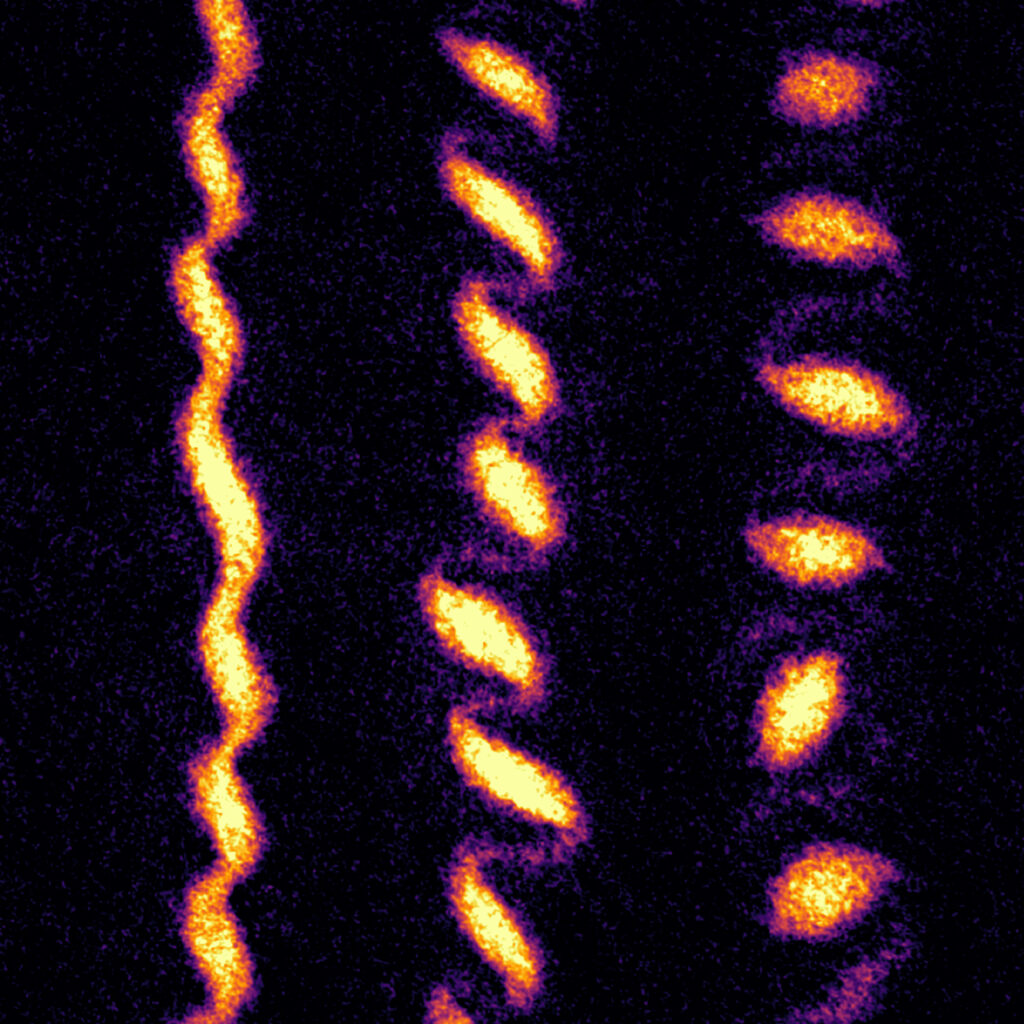
Ultracold quartets refer to a system of four atoms cooled to temperatures near absolute zero, where quantum mechanical effects dominate their behavior. These atoms interact coherently, forming a collective quantum state that exhibits unique properties not observable at higher temperatures. This configuration serves as a fundamental model for studying complex quantum phenomena such as entanglement, superposition, and novel phases of matter.
Fundamentals of Ultracold Atoms
Atoms cooled to ultralow temperatures-typically fractions of a microkelvin-experience drastically reduced thermal motion, allowing quantum effects to emerge prominently. Achieving such temperatures involves advanced techniques like laser cooling and evaporative cooling. In this regime, atoms can undergo transitions into exotic states such as Bose-Einstein condensates or Fermi degenerate gases, where collective quantum behaviors become evident.
- Laser Cooling:
Uses photon momentum to slow down atoms, reducing their kinetic energy. - Evaporative Cooling:
Removes higher-energy atoms from a trap, lowering the average temperature of the remaining ensemble.
Interactions Within the Ultracold Quartet
The quartet of ultracold atoms exhibits intricate interatomic interactions that govern their collective quantum state. These interactions can be broadly categorized into short-range and long-range forces:
- Short-Range Interactions:
Responsible for the formation of bound states and molecular-like structures within the quartet. - Long-Range Interactions:
Facilitate coherence across the entire system, influencing collective phenomena such as superfluidity and quantum phase coherence.
Understanding these potentials is crucial for manipulating the quartet’s quantum states and exploring emergent behaviors.
Quantum Phenomena in Ultracold Quartets
Two hallmark quantum effects-entanglement and superposition-play pivotal roles in the dynamics of ultracold quartets:
- Quantum Entanglement:
The quantum states of individual atoms become interlinked, creating correlations that defy classical explanation. This entanglement is sensitive to environmental perturbations, making the quartet an ideal platform for studying quantum coherence and decoherence. - Superposition:
Atoms simultaneously occupy multiple quantum states, enabling interference effects that are foundational to quantum technologies such as cryptography and computation.
These phenomena enable the quartet to exhibit complex behaviors, including quantum phase transitions where the system shifts between distinct quantum states under varying external conditions like magnetic fields or interaction strengths.
Role in Condensed Matter Physics and Quantum Dynamics
The ultracold quartet serves as a simplified yet powerful model for exploring many-body quantum physics and condensed matter phenomena. It allows researchers to investigate:
- Quantum Fluctuations:
Variations in quantum states that influence material properties at microscopic scales. - Many-Body Interactions:
Collective effects arising from multiple interacting particles, essential for understanding superconductivity and magnetism. - Excitation Propagation:
How disturbances travel through quantum systems, shedding light on transport phenomena.
Moreover, the quartet’s temporal evolution reveals complex quantum trajectories characterized by phenomena such as revivals and collapses, which are critical for developing robust quantum information protocols resistant to environmental noise.
Experimental Realization and Techniques
Ultracold quartets have been experimentally realized using atomic species like rubidium and lithium confined in optical lattices-periodic potentials created by intersecting laser beams. These setups allow precise control over atomic positions and interactions. Key experimental tools include:
- Optical Lattices:
Provide spatial confinement and tunability of interatomic forces. - High-Resolution Imaging:
Enables observation of individual atoms and their quantum states. - Atom Interferometry:
Measures phase differences arising from quantum superpositions, crucial for probing coherence.
Applications and Technological Significance
The study of ultracold quartets extends beyond theoretical interest, offering practical applications in emerging quantum technologies. Their collective quantum properties enhance the sensitivity of quantum sensors used in fields such as fundamental physics experiments and geophysical measurements. Additionally, insights gained from these systems contribute to the development of quantum computing architectures and quantum communication protocols, promising advances in precision measurement and information processing.
Common Misconceptions About Ultracold Quartets
Ultracold atoms behave like classical particles at low temperatures.
At ultracold temperatures, atoms exhibit pronounced quantum behavior, including wave-like properties and entanglement, which are fundamentally non-classical.
Only large ensembles of atoms can demonstrate collective quantum phenomena.
Even small groups, such as quartets, can display rich collective quantum effects, making them valuable for detailed studies of quantum mechanics.
Why Ultracold Quartets Are Important
Ultracold quartets represent a critical intersection of quantum mechanics and condensed matter physics, providing a controlled environment to explore fundamental atomic interactions and quantum coherence. Their study advances our understanding of many-body physics, quantum entanglement, and phase transitions, which are essential for the future of quantum technologies. As experimental techniques continue to evolve, ultracold quartets will remain at the forefront of research, driving innovations in quantum computing, sensing, and information science.
FAQ
What are ultracold quartets?
Ultracold quartets refer to a system of four atoms that are cooled to temperatures near absolute zero, where quantum mechanical effects dominate their behavior.
Why are ultracold quartets important?
They provide a controlled environment for exploring fundamental quantum interactions and have significant implications for advancements in quantum technologies.




Leave a Reply