
Short Answer
Definition of Space Exploration Missions
Space exploration missions are scientific and technological endeavors designed to investigate outer space, celestial bodies, and cosmic phenomena beyond Earth’s atmosphere. These missions aim to expand human knowledge about the universe, uncover the origins of planetary systems, and assess the potential for life beyond our planet. They involve deploying spacecraft, telescopes, and robotic explorers to gather data, images, and samples from distant environments.
Notable Space Missions and Their Contributions
The Cassini-Huygens Mission: Unveiling Saturn’s Mysteries
The Cassini-Huygens mission is renowned for its extensive study of Saturn and its moons over more than a decade. Orbiting the gas giant, Cassini provided detailed observations of Saturn’s intricate ring system and dynamic magnetosphere. The mission’s discoveries included spectacular geysers ejecting water vapor from Enceladus and vast hydrocarbon lakes on Titan, revealing environments that challenge our understanding of habitability within the solar system. This mission significantly advanced planetary science by highlighting the complex interactions and potential for life-supporting conditions beyond Earth.
Mars Rovers: Tracing the Red Planet’s Past
The fleet of Mars rovers-Spirit, Opportunity, Curiosity, and Perseverance-have methodically explored the Martian surface, acting as robotic geologists and chemists. These rovers have analyzed soil, rocks, and atmospheric samples, uncovering evidence that Mars once had a wetter climate capable of supporting microbial life. Perseverance, the most advanced rover, is equipped to collect samples for future return to Earth, marking a pivotal step toward interplanetary sample analysis. These missions extend human presence remotely, transforming Mars from a distant enigma into a well-studied world.
The Hubble Space Telescope: A Window to the Cosmos
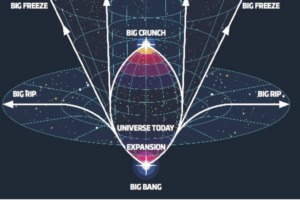
Positioned above Earth’s atmosphere, the Hubble Space Telescope has revolutionized astronomy by capturing high-resolution images of distant galaxies, nebulae, and star-forming regions. Its observations have provided critical insights into the life cycles of stars, the structure of the universe, and the accelerating expansion driven by dark energy. Hubble’s data have refined cosmological models and inspired both scientists and the public with breathtaking views of the universe’s grandeur.
Voyager 1 and 2: Pioneers of Interstellar Space
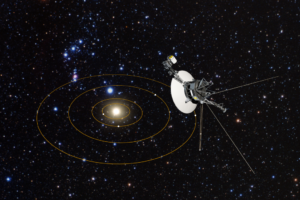
Launched in the late 1970s, Voyager 1 and Voyager 2 embarked on a historic journey through the outer planets and beyond the heliosphere into interstellar space. Carrying the Golden Record-a symbolic message encapsulating Earth’s cultural diversity-these spacecraft continue to transmit invaluable information about solar winds, magnetic fields, and cosmic rays. Their mission exemplifies humanity’s drive to explore the unknown and serves as a poignant reminder of our planet’s fragility within the vast cosmos.
The James Webb Space Telescope: Exploring the Universe’s Origins
As the successor to Hubble, the James Webb Space Telescope (JWST) employs advanced infrared technology to peer deeper into the universe’s past than ever before. JWST functions as a cosmic time machine, observing the earliest galaxies formed after the Big Bang and investigating star and planetary system formation. Its unprecedented sensitivity promises to shed light on the chemical precursors of life and expand our understanding of cosmic evolution.
How Space Missions Advance Scientific Knowledge
Space missions operate by deploying specialized instruments and technologies to collect data from environments inaccessible to humans. Orbiters, landers, and telescopes gather electromagnetic signals, physical samples, and imagery, which scientists analyze to understand planetary atmospheres, geology, magnetic fields, and cosmic phenomena. These missions often involve international collaboration, combining expertise and resources to maximize scientific return and technological innovation.
Scientific Principles and Technologies Behind Space Exploration
Space exploration relies on principles from physics, engineering, and astronomy. Key technologies include propulsion systems for spacecraft navigation, remote sensing instruments for data acquisition, and communication arrays for transmitting information back to Earth. Observatories like Hubble and JWST utilize optics and detectors sensitive to various wavelengths, enabling the study of phenomena invisible to the naked eye.
Real-World Impact and Applications
Beyond expanding cosmic knowledge, space missions have practical benefits. Technologies developed for these missions have led to advancements in materials science, telecommunications, and medical imaging. Understanding planetary environments aids in assessing Earth’s climate and potential hazards. Moreover, the inspiration drawn from space exploration fuels education, innovation, and international cooperation.
Common Misconceptions About Space Exploration
Space missions are purely for scientific curiosity.
While expanding knowledge is a primary goal, space missions also drive technological innovation, economic growth, and inspire global collaboration.
Human spaceflight is the only valuable form of exploration.
Robotic missions provide critical data from environments too distant or hostile for humans, often at lower cost and risk.
Space exploration is a recent endeavor.
Humanity’s quest to understand space dates back centuries, with modern missions building on decades of scientific progress.
Significance of Space Exploration in Modern Society
Space exploration embodies humanity’s innate desire to understand our place in the universe. It drives scientific breakthroughs, fosters technological advancements, and cultivates a sense of shared destiny on a planetary scale. By pushing the boundaries of knowledge and capability, these missions inspire future generations and contribute to solving global challenges through innovation and international partnership.
FAQ
What are space exploration missions?
Space exploration missions are scientific and technological endeavors designed to investigate outer space, celestial bodies, and cosmic phenomena.
What is the significance of the James Webb Space Telescope?
The James Webb Space Telescope explores the universe's origins by observing the earliest galaxies and investigating star formation.
How do space missions benefit society?
Space missions drive technological innovation and provide insights that can help assess Earth's climate and potential hazards.


Leave a Reply