
Short Answer
Definition of Molecular Motors and Their Frictional Challenges
Molecular motors are nanoscale biological machines that convert chemical energy into mechanical motion, playing vital roles in processes such as intracellular transport and muscle contraction. Operating at dimensions where classical physics often fails to fully explain behavior, these motors encounter unique frictional forces that influence their movement. Understanding these frictional interactions is crucial, as they govern the efficiency and regulation of motor function within the cellular environment.
Fundamental Mechanisms of Molecular Motor Function
At their core, molecular motors function similarly to macroscopic engines by transforming energy into directed motion. However, the frictional forces they experience arise from complex intermolecular interactions rather than simple mechanical contact. These forces include van der Waals attractions, electrostatic effects, and steric hindrance, all contributing to the resistance that motors must overcome. Rather than being purely obstructive, friction plays an integral role in modulating motor activity and ensuring precise control over their mechanical output.
Energy Barriers and Thermal Activation
Molecular motors demonstrate remarkable resilience, performing numerous operational cycles despite frictional resistance. This is partly due to their ability to surmount energy barriers through thermal fluctuations, a process known as thermal activation. By harnessing ambient thermal energy, motors can transition between conformational states, enabling movement even in the presence of frictional constraints. This dynamic balance between energy input and dissipative forces allows motors to select optimal pathways that maximize efficiency.
Influence of the Biochemical Environment on Motor Dynamics
The biochemical surroundings of molecular motors significantly affect their frictional behavior and overall function. Adenosine triphosphate (ATP), the primary cellular energy source, fuels motor activity by driving conformational changes through hydrolysis. This chemical reaction not only supplies energy but also alters the frictional landscape by modifying the motor’s interaction with its environment. Additionally, post-translational modifications of motor proteins can change their frictional properties, highlighting the intricate link between biochemical processes and mechanical performance.
Nanoscale Friction: Beyond Classical Models
Traditional friction models, which focus on macroscopic surface contact, fall short when applied to molecular motors. At the nanoscale, friction arises from atomic and molecular interactions that require a specialized approach known as nanoscale tribology. Molecular dynamics simulations have become indispensable tools for exploring these phenomena, revealing atomic-level interactions that govern friction and motor efficiency. These computational studies identify energetically favorable pathways and mechanisms that reduce resistance, providing insights unattainable through classical theories.
Intermittent Motion and Stochastic Behavior of Molecular Motors
Molecular motors often exhibit intermittent movement characterized by alternating phases of active propulsion and pauses. This stochastic pattern introduces variability in the frictional forces experienced, depending on the motor’s operational state. Such behavior complicates the motor’s navigation through mechanical resistance and environmental fluctuations. The interplay between deterministic mechanical forces and random molecular interactions results in emergent behaviors that challenge conventional understanding and require probabilistic models for accurate description.
Self-Organization and Adaptive Responses in Molecular Motor Systems
In biological systems, molecular motors rarely act in isolation. They possess the ability to sense and adapt to their surroundings, forming feedback loops that regulate their speed and direction based on frictional cues. This self-organizing behavior enhances the efficiency of cellular transport and reflects the sophisticated nature of molecular machinery. By dynamically adjusting to frictional forces, motors optimize their performance and contribute to the coordinated functioning of complex biological networks.
Experimental Techniques and Theoretical Integration
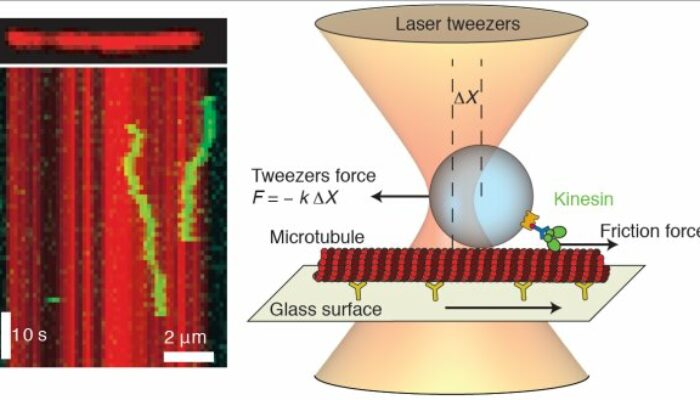
Advancements in experimental methods such as optical tweezers and atomic force microscopy have enabled real-time observation of molecular motor activity. These techniques allow precise measurement of forces, binding kinetics, and frictional responses, providing empirical data that validate and refine theoretical models. The synergy between experimental findings and computational simulations fosters a deeper understanding of the frictional phenomena governing molecular motors, illustrating the iterative progress of scientific research.
Significance of Understanding Molecular Motor Friction
Deciphering the frictional intricacies of molecular motors extends beyond academic curiosity; it holds profound implications for multiple scientific disciplines. Insights into nanoscale friction inform the design of biomimetic devices and nanotechnologies, potentially leading to innovations in targeted drug delivery, synthetic molecular machines, and advanced materials. Moreover, unraveling these mechanisms enriches our comprehension of fundamental biological processes, bridging physics, biology, and materials science in a unified framework.
Common Misconceptions About Molecular Motor Friction
Friction at the molecular level is identical to macroscopic friction.
Molecular friction arises from complex intermolecular forces and thermal fluctuations, differing fundamentally from classical friction models based on surface contact.
Friction only impedes molecular motor function.
Friction also plays a regulatory role, enabling motors to control their movement and adapt to environmental changes.
Conclusion: The Ongoing Quest to Decode Molecular Motor Friction
The friction experienced by molecular motors embodies a multifaceted interplay of chemical, physical, and biological factors that transcend traditional paradigms. Continued exploration combining theoretical modeling, computational simulations, and cutting-edge experimental techniques promises to unravel these complexities. A comprehensive understanding of molecular motor friction not only advances fundamental science but also paves the way for transformative applications in nanotechnology and synthetic biology.
FAQ
What are molecular motors?
Molecular motors are nanoscale biological machines that convert chemical energy into mechanical motion, essential for processes like intracellular transport and muscle contraction.
How does friction affect molecular motors?
Friction influences molecular motors by presenting resistance that they must overcome, but it also plays a regulatory role that allows them to control movement and adapt to environmental changes.


Leave a Reply