
Short Answer
Definition of Dark Matter
Dark matter is a mysterious form of matter that constitutes about 27% of the total mass-energy content of the universe. Unlike ordinary matter, it does not emit, absorb, or reflect light, making it invisible to electromagnetic observations. Its existence is inferred primarily through its gravitational effects on visible matter, radiation, and the large-scale structure of the cosmos.
- Invisible Mass:
Dark matter cannot be detected directly by conventional telescopes because it does not interact with electromagnetic forces. - Cosmic Abundance:
It accounts for a significant portion of the universe’s total mass, influencing the formation and evolution of galaxies and clusters.
Historical Evidence and Observational Foundations
The concept of dark matter emerged from astronomical observations in the 1970s, particularly from the study of galactic rotation curves. Stars and gas clouds at the outskirts of galaxies were found to orbit at speeds that could not be explained by the gravitational pull of visible matter alone. This discrepancy suggested the presence of an unseen mass component exerting gravitational influence.
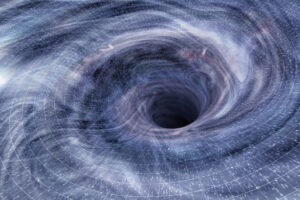
Additional evidence supporting dark matter includes gravitational lensing, where light from distant objects is bent by massive invisible structures, and measurements of the cosmic microwave background radiation, which reveal the universe’s composition and support the existence of dark matter as a fundamental cosmic scaffold.
Particle Candidates and Theoretical Models
Dark matter is widely believed to be composed of particles that interact very weakly with ordinary matter and electromagnetic radiation. The leading candidates have evolved over time as experimental results have refined theoretical expectations.
- Weakly Interacting Massive Particles (WIMPs):
These hypothetical particles were once the primary focus of dark matter research. Thought to have been produced in the early universe, WIMPs interact through gravity and the weak nuclear force but evade detection due to their rarity and weak interactions. - Axions:
Extremely light particles proposed to solve certain problems in quantum chromodynamics, axions are another promising candidate for dark matter, potentially detectable through specialized resonant cavity experiments. - Sterile Neutrinos:
These are hypothetical neutrino types that do not interact via the weak nuclear force, making them difficult to detect but viable as dark matter constituents.
Detection Techniques and Experimental Approaches
Efforts to detect dark matter fall into two broad categories: direct and indirect detection, complemented by collider experiments.
Direct Detection
Direct detection experiments aim to observe dark matter particles interacting with atomic nuclei. These experiments are often conducted deep underground to shield detectors from cosmic radiation and background noise. Despite decades of sensitive searches, no conclusive signals of WIMPs or other candidates have been observed, prompting the exploration of alternative particles and detection methods.
Indirect Detection
Indirect detection strategies focus on identifying secondary signals produced by dark matter annihilation or decay. Researchers analyze astrophysical data for anomalies such as excess gamma rays, unusual positron fluxes, or irregular cosmic ray patterns that could indicate dark matter interactions. These signals are challenging to isolate due to complex astrophysical backgrounds but remain a promising avenue for discovery.
Collider Searches
High-energy particle colliders, notably the Large Hadron Collider (LHC), attempt to produce dark matter particles in controlled laboratory conditions. By examining events with missing energy and momentum, physicists search for evidence of invisible particles escaping detection. Although no definitive dark matter particles have been identified so far, ongoing upgrades aim to enhance sensitivity and detection capabilities.
Emerging Theoretical Perspectives: Dark Sectors
Recent theoretical developments propose the existence of “dark sectors,” complex hidden worlds containing multiple particle species and forces that interact weakly with the Standard Model particles. These dark sectors could provide new mechanisms for dark matter interactions and open novel pathways for detection through subtle “portal” interactions connecting visible and dark matter.
Significance and Implications of Dark Matter Research
Understanding dark matter is crucial for multiple reasons:
- Cosmological Models:
Confirming the nature of dark matter would validate and refine current models of the universe’s evolution and structure formation. - Fundamental Physics:
Discovering dark matter particles could reveal new physics beyond the Standard Model, potentially bridging gaps between quantum mechanics and gravity. - Cosmic History:
Insights into dark matter could illuminate conditions in the early universe and the processes that shaped galaxies and large-scale cosmic structures.
Common Misconceptions About Dark Matter
Dark matter is just ordinary matter that is hidden or dark.
Dark matter is fundamentally different from ordinary matter; it does not interact electromagnetically and cannot be observed through light or other electromagnetic signals.
Dark matter has been directly detected.
To date, dark matter has only been detected indirectly through gravitational effects; direct detection remains an ongoing challenge.
Future Prospects and the Path Forward
With continuous advancements in experimental technology and theoretical frameworks, the scientific community is approaching a critical juncture in dark matter research. Upcoming experiments with enhanced sensitivity, novel detection methods, and refined data analysis techniques hold the promise of finally unveiling the true nature of dark matter. Such a breakthrough would not only solve a fundamental cosmic mystery but also revolutionize our understanding of the universe at both the smallest and largest scales.
FAQ
What is dark matter?
Dark matter is a type of matter that does not interact with electromagnetic forces, making it invisible, but its existence is inferred from its gravitational effects on visible matter.
Why is dark matter important?
Understanding dark matter is crucial for validating cosmological models and potentially discovering new physics.
Has dark matter been detected?
As of now, dark matter has only been detected indirectly; direct detection remains a significant challenge.



Leave a Reply