

Short Answer
Definition of Fundamental Forces
Fundamental forces are the essential interactions that govern the behavior and structure of matter and energy throughout the universe. These forces operate across vastly different scales, from the cosmic level influencing galaxies to the subatomic scale shaping particles. Understanding these forces is crucial for comprehending the physical laws that dictate the universe’s formation, evolution, and ongoing dynamics.
- Gravitational Force:
An attractive force acting between all masses, responsible for the large-scale structure of the cosmos. - Electromagnetic Force:
Governs interactions between charged particles, underpinning electricity, magnetism, and light. - Strong Nuclear Force:
The powerful force that binds protons and neutrons within atomic nuclei. - Weak Nuclear Force:
Facilitates particle decay and nuclear transmutation processes. - Gravitational Waves:
Ripples in spacetime generated by accelerating massive bodies.
Gravitational Force: The Cosmic Architect
Gravity is the most familiar fundamental force, acting as an attractive interaction between masses. Isaac Newton’s law of universal gravitation mathematically describes this force, stating that the gravitational attraction between two objects decreases proportionally to the square of the distance separating them. This inverse-square law is foundational for understanding planetary orbits and the motion of celestial bodies.
Albert Einstein’s general relativity further transformed our perception of gravity by describing it not as a force but as the curvature of spacetime caused by mass and energy. This framework explains phenomena such as the bending of light near massive objects, the existence of black holes, and the propagation of gravitational waves, revealing gravity’s profound influence on both local and cosmic scales.
Electromagnetic Force: Governing Charged Particles
Electromagnetic force arises from the interactions between electric charges and magnetic fields. Maxwell’s equations provide a comprehensive description of these phenomena, uniting electricity and magnetism into a single theoretical framework. This force is responsible for the structure of atoms, chemical bonding, and the transmission of electromagnetic radiation, including visible light.
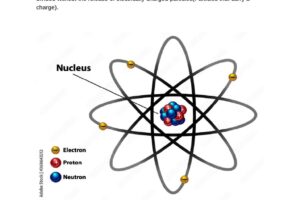
At the atomic level, electromagnetic interactions dictate how electrons orbit nuclei and how atoms combine to form molecules, thereby determining the properties of matter. On a larger scale, electromagnetic forces influence stellar behavior and natural phenomena such as Earth’s auroras, demonstrating their extensive reach across different environments.
Strong Nuclear Force: The Atomic Glue
The strong nuclear force is the most powerful fundamental interaction, acting over extremely short distances to hold protons and neutrons tightly together within atomic nuclei. This force is mediated by gluons, which facilitate the binding of quarks-the elementary particles that compose protons and neutrons.
Quantum chromodynamics (QCD) is the theoretical framework that explains the behavior of quarks and gluons under the strong force. This interaction overcomes the electromagnetic repulsion between positively charged protons, enabling nuclear stability. The strong force also drives nuclear fusion processes in stars, powering their energy output and contributing to the synthesis of heavier elements in the universe.
Weak Nuclear Force: The Driver of Particle Transformation
The weak nuclear force, although less potent than the strong and electromagnetic forces, plays a critical role in particle decay and nuclear reactions. It governs processes such as beta decay, where a neutron transforms into a proton while emitting a beta particle and an antineutrino.
This force operates over a very short range and is mediated by the W and Z bosons, unique gauge particles responsible for weak interactions. The weak force is essential for understanding neutrino behavior and is a key component in high-energy physics experiments and particle accelerator research.
Gravitational Waves: Spacetime’s Vibrations
Predicted by Einstein’s theory of general relativity, gravitational waves are disturbances in the fabric of spacetime caused by accelerating massive objects, such as merging black holes or neutron stars. The first direct detection of these waves by the LIGO observatory marked a milestone in astrophysics, opening a new observational window into the universe.
Gravitational wave astronomy allows scientists to study cosmic events that were previously inaccessible, providing insights into the nature of gravity, the behavior of extreme astrophysical objects, and the conditions of the early universe.
The Quantum Realm: Forces at the Smallest Scales
At the quantum level, force interactions become highly complex and are described by the exchange of gauge bosons within the Standard Model of particle physics. The Higgs field, permeating all space, endows elementary particles with mass, enabling the diverse range of particle behaviors observed.
Quantum phenomena such as entanglement challenge classical ideas of locality and causality, revealing that particles can exhibit correlated properties instantaneously over large distances. These quantum effects complicate traditional force concepts and continue to inspire research into the fundamental nature of reality.
Why Understanding Forces Is Crucial
The study of fundamental forces is vital for advancing our knowledge of the universe, from explaining the motion of galaxies to the stability of atoms. These forces underpin technologies such as nuclear energy, electronics, and medical imaging, and they drive ongoing scientific exploration in fields like astrophysics and particle physics. Grasping the nature of these interactions not only deepens our comprehension of the cosmos but also fuels innovation and discovery in science and technology.
Common Misconceptions About Forces
Gravity is a force like magnetism.
According to general relativity, gravity is the effect of curved spacetime rather than a traditional force.
Electromagnetic force only affects charged particles.
While it primarily acts on charges, electromagnetic fields can influence neutral particles with magnetic moments and affect light propagation.
The strong nuclear force acts over large distances.
The strong force operates only at subatomic scales, binding particles within the nucleus.
Weak nuclear force is insignificant due to its name.
Despite its relative weakness, the weak force is essential for processes like radioactive decay and neutrino interactions.
FAQ
What are the four fundamental forces of nature?
The four fundamental forces are gravitational, electromagnetic, strong nuclear, and weak nuclear forces, each responsible for various interactions in the universe.
How did Einstein’s theory change the concept of gravity?
Einstein’s general relativity redefined gravity as the curvature of spacetime caused by mass, rather than a force acting at a distance.
What is the significance of gravitational waves?
Gravitational waves are ripples in spacetime from massive accelerating objects, helping scientists observe cosmic events like black hole mergers.
Why is the strong nuclear force important?
It holds protons and neutrons together inside atomic nuclei, enabling nuclear stability and processes like fusion.
How do forces operate in the quantum realm?
Forces are mediated by exchange particles in quantum field theories, with phenomena such as entanglement challenging classical physics.




Leave a Reply