
Short Answer
Overview of Georges Charpak’s Contributions
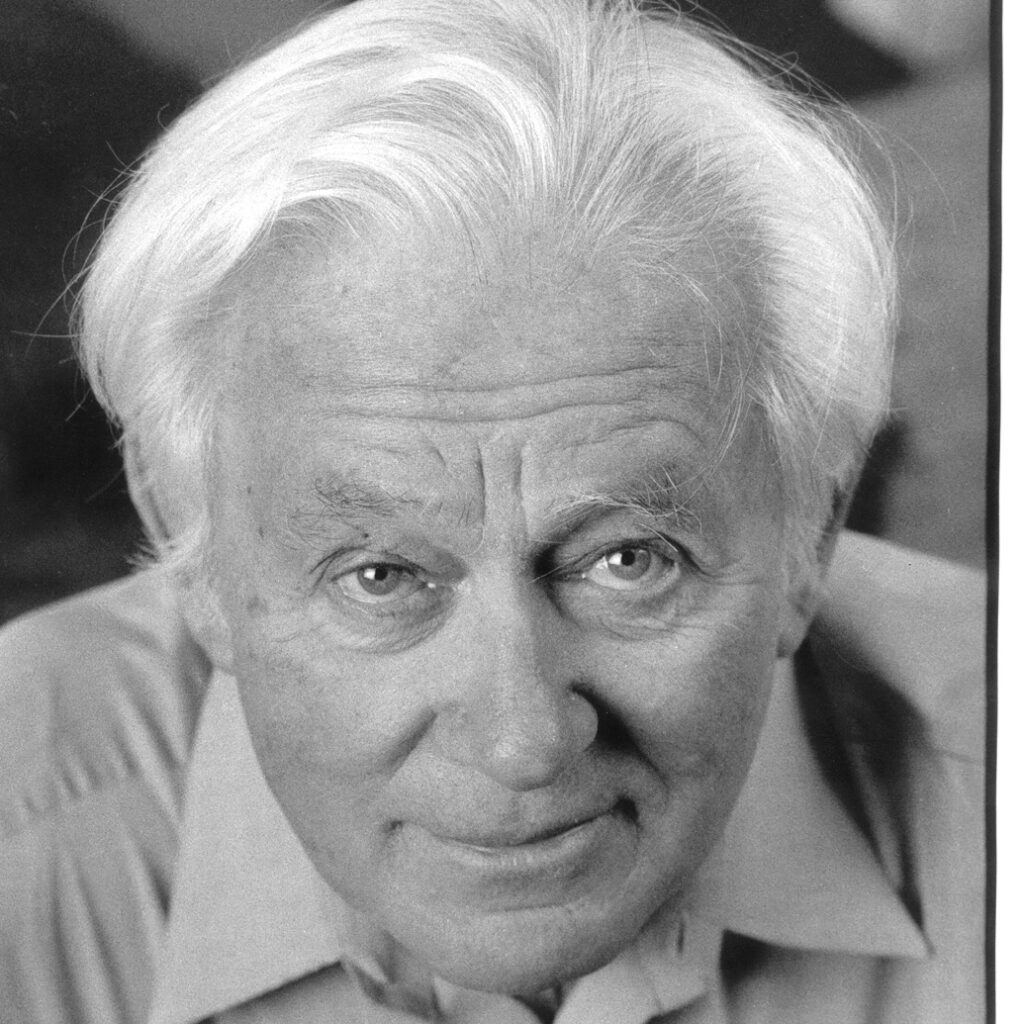
Georges Charpak, a distinguished figure in particle physics, passed away on September 29, 2020, leaving a profound legacy in both scientific research and education. His career, spanning multiple decades, was marked by pioneering innovations and a deep commitment to making science accessible to all. Awarded the Nobel Prize in Physics in 1992, Charpak’s invention of the multiwire proportional chamber revolutionized particle detection, significantly enhancing the study of subatomic particles. Beyond his scientific breakthroughs, he was a dedicated advocate for science education and literacy, striving to democratize knowledge and inspire future generations.
Early Life and Scientific Career
Born on August 8, 1924, in Warsaw, Poland, Charpak’s formative years were shaped by the hardships of World War II, which influenced his views on the societal role of science. After relocating to France and completing his studies, he immersed himself in experimental physics. His work at CERN (the European Organization for Nuclear Research) marked a turning point, where he developed the multiwire proportional chamber. This innovative device allowed for precise tracking of charged particles, vastly improving the resolution and efficiency of particle detectors. Charpak’s invention laid the foundation for many subsequent discoveries in particle physics and transformed experimental methodologies.
Multiwire Proportional Chamber: Definition and Impact
The multiwire proportional chamber is a particle detector that records the paths of charged particles with high precision. It consists of an array of thin wires held at high voltage within a gas-filled chamber. When a charged particle passes through, it ionizes the gas, and the resulting electrons are collected by the wires, producing an electrical signal that maps the particle’s trajectory.
- Functionality:
Enables detailed visualization of particle tracks, improving detection accuracy. - Significance:
Enhanced experimental capabilities in high-energy physics, facilitating discoveries about fundamental particles.
Innovations in Science Education
Charpak was equally passionate about transforming science education. He championed the idea that scientific knowledge should be accessible to everyone, not just specialists. His efforts included founding the Palais de la Découverte in Paris, a science museum designed to spark curiosity and promote understanding of scientific principles among young learners. He emphasized experiential learning, encouraging students to engage directly with scientific experiments and collaborative projects. This hands-on approach nurtures critical thinking and a genuine fascination with the natural world.
Educational Reform and “La Main à la pâte” Initiative
One of Charpak’s most influential contributions to education was his involvement in the “La Main à la pâte” program, which aimed to overhaul science teaching in France. This initiative integrated practical experimentation into the curriculum, allowing students to learn complex scientific concepts through active participation. The program gained international acclaim and has become a model for science education reform globally. Charpak’s vision aligns closely with modern STEM education principles, emphasizing the importance of cultivating a scientifically literate society capable of addressing technological and environmental challenges.
Publications and Mentorship
Throughout his career, Charpak authored numerous articles and books aimed at making scientific ideas comprehensible to a wider audience. His writings bridged the gap between complex scientific theories and public understanding, reflecting his belief that science should be inclusive and accessible. As a mentor, he inspired many young scientists, fostering a culture of curiosity and rigorous inquiry.
Ethics and Social Responsibility in Science
Charpak strongly advocated for the integration of ethical considerations within scientific research. He believed that scientific progress must be accompanied by a sense of responsibility toward society. This perspective is especially relevant today in discussions about climate change, public health, and technological innovation. Charpak emphasized that scientists have a moral duty to engage with the societal impacts of their work and to promote inclusive dialogue involving diverse perspectives. His vision of science as a collaborative and socially conscious endeavor remains vital in bridging the gap between scientific communities and the public.
Legacy and Continuing Influence
The death of Georges Charpak marked the conclusion of a remarkable era characterized by scientific excellence and educational advocacy. His groundbreaking work in particle physics transformed experimental techniques and deepened our understanding of the subatomic world. Simultaneously, his dedication to educational reform has inspired countless students to embrace science, fostering a culture of inquiry and lifelong learning. Charpak’s enduring legacy intertwines rigorous scientific exploration with a profound commitment to social responsibility and education. As the scientific community honors his memory, it is essential to uphold his vision of accessible knowledge and to nurture a scientifically informed population prepared to tackle global challenges.
FAQ
What is Georges Charpak known for?
Georges Charpak is known for his invention of the multiwire proportional chamber and his contributions to science education.
What impact did Charpak have on science education?
Charpak advocated for accessible science education and founded initiatives like 'La Main à la pâte' to reform science teaching.




Leave a Reply