
Short Answer
Overview of the Dirac Medal
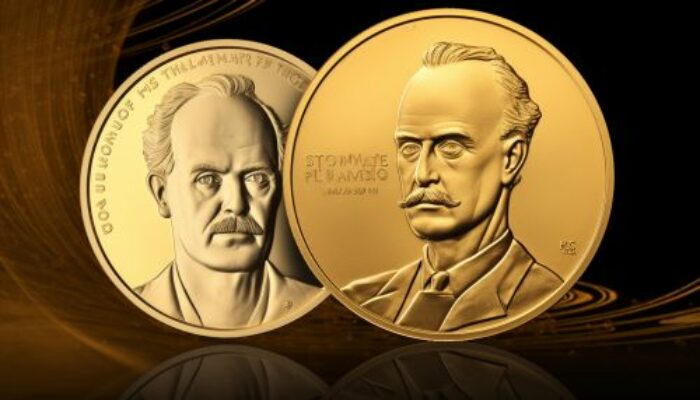
The Dirac Medal is a distinguished honor bestowed by the Institute of Physics, recognizing exceptional achievements in theoretical physics, with a particular focus on quantum mechanics and atomic physics. Named in tribute to Paul Dirac, a pioneering physicist renowned for his foundational contributions to quantum theory and the formulation of the Dirac Equation, this award celebrates individuals whose research continues the transformative legacy established by Dirac during the early to mid-20th century. This article explores the significance of the Dirac Medal, its impact on atomic physics, and its broader influence within the scientific community.
Historical Background and Purpose
Established to acknowledge groundbreaking work in the quantum sciences, the Dirac Medal is awarded every two years to scientists whose innovations resonate deeply with the core principles of quantum theory and its applications. Far beyond a mere accolade, the medal symbolizes a profound appreciation for research that pushes the boundaries of knowledge and contributes to the ongoing evolution of atomic physics. Recipients often represent a diverse spectrum of emerging theories and cutting-edge methodologies that have the potential to redefine scientific paradigms.
Significance in Modern Physics
The importance of the Dirac Medal extends well beyond the honor itself, playing a crucial role in contemporary physics where theoretical insights and experimental validation are intricately linked. As the field advances into specialized areas such as quantum computing and quantum information science, the foundational concepts introduced by Dirac gain even greater relevance. By celebrating researchers who build upon these principles, the medal inspires curiosity and motivates the next generation of physicists to pursue innovative scientific inquiry.
Notable Contributions and Interdisciplinary Impact
Recent laureates of the Dirac Medal exemplify the interdisciplinary nature of modern atomic physics. Their work often transcends traditional boundaries, encompassing advances in quantum optics, qubit dynamics, and the development of quantum technologies. This broad range of research highlights the ongoing vitality of atomic physics as a key domain for understanding the universe’s microscopic complexities.
Additionally, the Dirac Medal recognizes a wide array of topics that collectively deepen our grasp of quantum mechanics. From exploring the role of quantum entanglement in computational frameworks to discovering new materials with quantum computational properties, the award underscores the practical implications of theoretical physics in real-world applications. This recognition fosters further academic exploration and nurtures a collaborative intellectual environment.
Influence on Scientific Discourse and Ethics
One of the profound effects of the Dirac Medal is its ability to shape scientific dialogue beyond pure research. Recipients often provoke discussions about the ethical dimensions of their discoveries, such as the impact of quantum technologies on privacy, security, and sustainable energy solutions. These conversations encourage interdisciplinary collaboration and innovation, extending the influence of the awardees’ work into societal and philosophical realms.
Innovative Research Techniques
Examining the experimental approaches employed by Dirac Medal winners reveals a spectrum of inventive methodologies. Techniques such as atom trapping, laser cooling, and high-precision spectroscopy are frequently utilized to investigate atomic interactions at unprecedented levels of detail. These methods enable researchers to uncover complex phenomena that challenge existing theories and prompt a reevaluation of fundamental concepts related to matter and energy.
Advancing Quantum Mechanics and Its Applications
Themes like quantum entanglement and superposition, central to many award-winning studies, demonstrate the Dirac Medal’s pivotal role in guiding the future direction of research. The commitment to clarifying the principles underlying quantum mechanics not only exemplifies scientific excellence but also aims to translate abstract theories into practical innovations with societal benefits. This dedication fosters a deeper engagement with the fundamental nature of the physical world.
Historical Context and Legacy
The Dirac Medal also encourages reflection on the historical development of quantum mechanics. Rooted in the revolutionary ideas of the early 20th century, contemporary physics maintains a dynamic dialogue with its intellectual heritage. Understanding the evolution of these theories enriches appreciation for the rigorous scientific efforts that have paved the way for today’s technological advancements. Both historians of science and theoreticians draw valuable insights from this ongoing legacy, informing future research and speculation.
Future Directions and Emerging Paradigms
Looking ahead, the research trajectories of Dirac Medal recipients suggest exciting possibilities for the evolution of quantum science. The integration of multidisciplinary approaches, including the convergence of artificial intelligence with quantum theory, promises to reveal new paradigms that could transform the relationship between technology and humanity. These developments highlight the medal’s role in fostering innovative thinking and groundbreaking discoveries.
Conclusion: The Enduring Impact of the Dirac Medal
Ultimately, the Dirac Medal represents more than recognition of individual brilliance; it embodies a sustained dedication to expanding the frontiers of atomic physics and related fields. The award symbolizes a collective ambition to unravel the complexities of quantum phenomena while promoting curiosity and cross-disciplinary collaboration. By honoring Paul Dirac’s foundational principles, the medal inspires future generations to continue exploring the vast and intricate quantum landscape-an endeavor essential not only for scientific progress but also for addressing profound questions about the nature of the cosmos.
FAQ
What is the Dirac Medal?
The Dirac Medal is an award given by the Institute of Physics to recognize exceptional achievements in theoretical physics, particularly in quantum mechanics and atomic physics.
Who is the Dirac Medal named after?
The medal is named after Paul Dirac, a pioneering physicist known for his significant contributions to quantum theory.
How often is the Dirac Medal awarded?
The Dirac Medal is awarded every two years.




Leave a Reply