
Short Answer
Definition of Fluid Dynamics
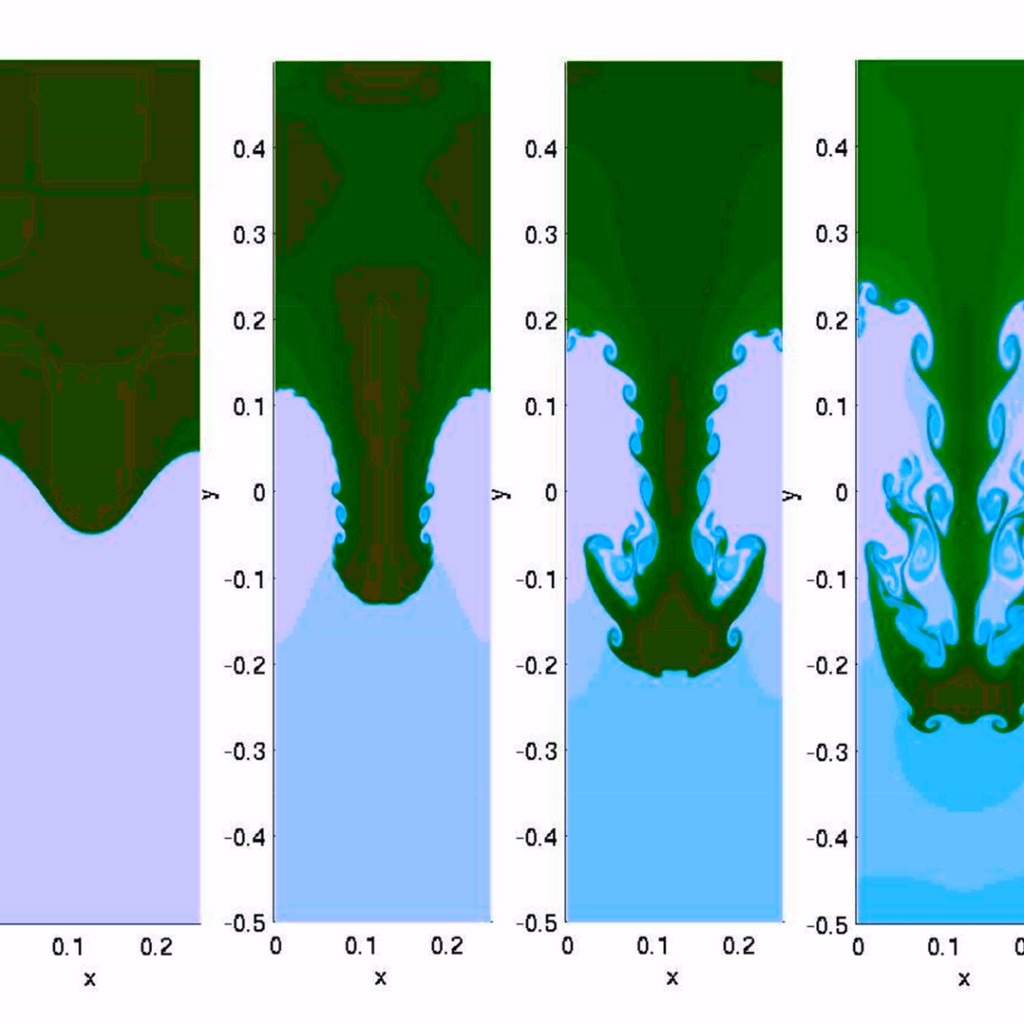
Fluid dynamics is a branch of physics dedicated to studying the movement and behavior of fluids, encompassing both liquids and gases. It explores how these substances respond to various forces and environmental conditions, revealing the underlying principles that govern their motion. This field provides critical insights into natural and engineered systems, from ocean currents and atmospheric phenomena to the flight mechanics of birds and aircraft.
- Fluids:
Substances that continuously deform under shear stress, including liquids and gases. - Scope:
Analysis of fluid flow, pressure, velocity, and density interactions. - Applications:
Encompasses natural phenomena, biological systems, and technological innovations.
Fundamental Principles and Governing Equations
At the heart of fluid dynamics lie the principles of mechanics, particularly the relationships between pressure, velocity, and density within moving fluids. These interactions are mathematically described by the Navier-Stokes equations, which represent the conservation laws of mass, momentum, and energy in fluid systems. These equations form the foundation for predicting and understanding fluid flow behavior under diverse conditions.
Bernoulli’s Principle and Its Significance
One of the cornerstone concepts in fluid dynamics is Bernoulli’s principle, which establishes an inverse correlation between the speed of a fluid and its pressure. When a fluid passes through a narrowed passage, its velocity increases, causing a corresponding drop in pressure. This principle is fundamental to numerous practical applications, such as the aerodynamic design of airplane wings and the functioning of carburetors in engines. It illustrates how fluid motion adapts dynamically to its environment, much like an artist’s brush spreading paint thinly across a canvas.
Turbulence: The Complexity of Fluid Motion
Fluid dynamics also encompasses the study of turbulence, a complex and irregular state of fluid flow characterized by chaotic fluctuations. The transition from smooth, laminar flow to turbulent flow can be compared to a calm river transforming into a powerful waterfall. Despite its apparent disorder, turbulence exhibits patterns of self-organization and plays a vital role in natural and engineered systems, influencing weather dynamics, aircraft performance, and industrial processes.
Interdisciplinary Applications of Fluid Dynamics
Biological Systems and Hemodynamics
In biology, fluid dynamics is essential for understanding blood flow within the cardiovascular system. The subfield of hemodynamics applies fluid principles to analyze how blood moves through vessels, shedding light on conditions such as plaque buildup and the effectiveness of medical devices like stents. This knowledge is crucial for advancing cardiovascular health and treatment strategies.
Meteorology and Atmospheric Phenomena
Fluid dynamics underpins meteorological science by explaining the movement of air masses and the formation of weather patterns. The Coriolis effect, a consequence of Earth’s rotation, influences wind directions and ocean currents, orchestrating the complex interplay of atmospheric forces. This understanding helps predict weather events ranging from gentle breezes to severe storms.
Engineering and Technological Innovations
Engineering disciplines leverage fluid dynamics to optimize the design of structures and vehicles. Wind tunnels simulate airflow to improve aerodynamics, reducing drag and enhancing efficiency in skyscrapers, automobiles, and aircraft. This integration of scientific principles with design aesthetics exemplifies the practical impact of fluid dynamics in modern technology.
Modern Challenges and Computational Advances
Fluid dynamics plays a pivotal role in addressing contemporary global issues such as climate change and water resource management. Effective flood control and sustainable water use depend on a thorough understanding of fluid behavior. Computational Fluid Dynamics (CFD) has revolutionized the field by enabling detailed simulations of complex fluid interactions, providing unprecedented accuracy and facilitating innovative solutions in research and industry.
The Aesthetic and Philosophical Dimensions of Fluid Motion
Beyond its scientific and practical importance, fluid dynamics reveals the inherent beauty of natural motion. The graceful erosion of landscapes by flowing water and the mesmerizing diffusion of smoke illustrate the delicate balance between order and chaos in fluid behavior. This harmony reflects the profound connection between physical laws and the dynamic patterns observed in nature.
Conclusion: The Enduring Relevance of Fluid Dynamics
Fluid dynamics weaves together intricate theories and diverse applications, inviting exploration into the ever-changing world of fluid motion. Its principles illuminate the interconnectedness of natural phenomena and human innovation, demonstrating how even the simplest fluid movements can inspire profound scientific understanding. As research advances, fluid dynamics continues to be a vital field that enriches our comprehension of the physical universe.
FAQ
What is fluid dynamics?
Fluid dynamics is a branch of physics that focuses on the behavior and movement of fluids, including liquids and gases.
What are the Navier-Stokes equations?
The Navier-Stokes equations describe the motion of fluid substances and are fundamental to fluid dynamics.
How is fluid dynamics applied in engineering?
Fluid dynamics is used in engineering to improve designs of structures and vehicles, optimizing aerodynamics and efficiency.





Leave a Reply