
Short Answer
Understanding Giant Space-Based Telescope Arrays
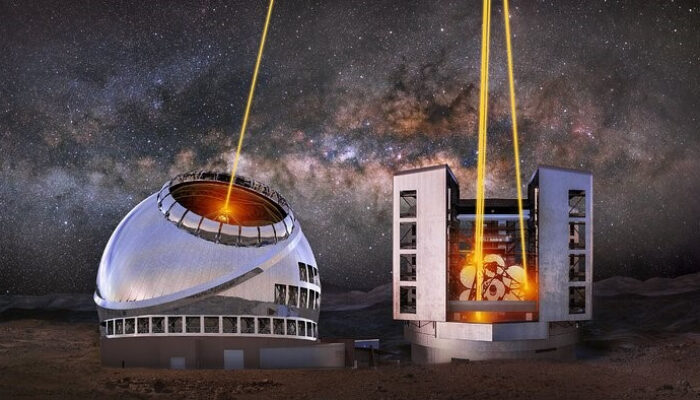
The exploration of the universe has always been closely linked to the evolution of telescopic technology. From the simple lenses used by Galileo to the sophisticated ground-based observatories like the Very Large Telescope (VLT) and the Atacama Large Millimeter/submillimeter Array (ALMA), humanity’s drive to observe the cosmos has continually pushed technological boundaries. However, Earth-bound telescopes face intrinsic challenges due to atmospheric distortion and geographical limitations. This has led to the intriguing concept of constructing expansive telescope arrays in space, which could revolutionize astronomical observations but also present significant engineering and logistical challenges.
Definition and Principles of Space Telescope Arrays
Space-based telescope arrays consist of multiple telescopes operating in unison beyond Earth’s atmosphere. By employing a technique called interferometry, these arrays combine light collected from separate apertures spread over vast distances to simulate a single, enormous telescope. This method enhances angular resolution, allowing astronomers to capture finer details of celestial objects than would be possible with individual telescopes.
- Interferometry:
A technique that merges signals from multiple telescopes to create a virtual aperture equivalent to the maximum distance between them, significantly improving image sharpness. - Baseline:
The distance between individual telescopes in an array, which directly influences the resolving power of the system. - Angular Resolution:
The ability of a telescope to distinguish small details in the observed object, enhanced by increasing the baseline in interferometric arrays.
Advantages of Deploying Telescope Arrays in Space
Positioning telescope arrays in orbit offers several compelling benefits over terrestrial observatories:
- Atmospheric Elimination:
Without Earth’s atmosphere, space telescopes avoid image distortion caused by atmospheric turbulence and absorption, resulting in clearer and more precise observations. - Extended Baselines:
Space allows for much larger separations between telescopes, potentially spanning thousands or even millions of kilometers, vastly improving resolution beyond Earth-bound constraints. - Uninterrupted Observation:
Space-based arrays can observe celestial phenomena continuously without interference from weather or day-night cycles.
Technical Challenges in Building Space Telescope Arrays
Despite their promise, constructing and operating large telescope arrays in space involves overcoming numerous technical obstacles:
- Precision Alignment:
Telescopes must maintain spatial positioning with sub-millimeter accuracy to ensure coherent signal combination. - Synchronization:
Timing coordination between array elements requires nanosecond-level precision to correctly merge incoming light waves. - Data Transmission:
Massive volumes of observational data must be relayed to Earth efficiently, demanding advanced communication systems. - Environmental Extremes:
Instruments must withstand harsh conditions such as microgravity, temperature fluctuations, and cosmic radiation without the possibility of on-site repairs.
Historical and Current Mission Concepts
The scientific community has long been intrigued by space interferometry, leading to several pioneering mission proposals:
- Space Interferometry Mission (SIM):
Aimed to deploy multiple spacecraft flying in precise formation to achieve high-resolution astrometry. - Terrestrial Planet Finder (TPF):
Designed to detect Earth-like exoplanets by combining signals from multiple telescopes in space.
Although these projects were postponed due to funding and technological readiness, they established foundational design principles such as formation flying, laser metrology for position measurement, and coordinated data processing. More recently, advances in small satellite technology and autonomous navigation have revitalized interest in distributed space telescope arrays.
Technological Innovations Enabling Future Arrays
Emerging technologies are paving the way for scalable and efficient space telescope arrays:
- Miniaturization and CubeSats:
Small, cost-effective satellites can operate collaboratively, allowing arrays to grow incrementally by adding or replacing units in orbit. - Onboard Data Processing:
Embedded computational capabilities reduce the need for high-bandwidth data transmission by pre-processing observations locally. - Machine Learning:
Algorithms dynamically optimize alignment and calibration, enhancing system performance without human intervention.
Scientific and Philosophical Significance
The pursuit of giant space telescope arrays is not only a technical challenge but also a profound scientific and cultural endeavor:
- Scientific Impact:
Enhanced resolution could enable detailed studies of star formation, exoplanet atmospheres, and black hole event horizons, pushing the frontiers of astrophysics, planetary science, and astrobiology. - Philosophical Resonance:
These instruments symbolize humanity’s enduring curiosity and desire to understand the universe, connecting us to cosmic origins and inspiring existential reflection.
Economic and Strategic Considerations
While the scientific potential is immense, the high costs and risks associated with space telescope arrays necessitate careful evaluation:
- Resource Allocation:
Funding agencies must balance investments between space observatories, Earth monitoring, communication infrastructure, and deep space missions. - Risk Management:
The complexity of deployment and operation in space demands robust engineering solutions to minimize mission failure.
Future Outlook and Roadmaps
Current and planned missions lay the groundwork for realizing large-scale space telescope arrays:
- James Webb Space Telescope (JWST):
Provides unprecedented infrared observation capabilities, setting a new standard for space telescopes. - Large UV Optical Infrared Surveyor (LUVOIR):
A proposed modular observatory designed to incorporate advanced mirror deployment and formation flying techniques. - Space-Based Very Long Baseline Interferometry (VLBI):
Concepts aiming to extend interferometric baselines into space, combining signals from widely separated spacecraft.
Conclusion: The Path Toward Cosmic Discovery
The endeavor to build colossal telescope arrays in space represents a convergence of multiple scientific and engineering disciplines. It challenges current technological limits while promising transformative insights into the universe. As humanity advances toward this ambitious goal, the resulting leap in observational capability will not only deepen our cosmic understanding but also inspire future generations to explore and innovate beyond existing horizons. Ultimately, these arrays will stand as monumental achievements in our quest to illuminate the mysteries of the cosmos.
FAQ
What is a giant telescope array?
A giant telescope array is a collection of multiple telescopes operating together in space to improve observational capabilities.
What are the benefits of space-based telescopes?
They avoid atmospheric distortion, allow larger separations, and can continuously observe celestial phenomena.
What are the main challenges of building these arrays?
Challenges include precision alignment, synchronization of signals, and the ability to transmit large volumes of data.




Leave a Reply