What term replaced a barn in nuclear physics?

Definition of the Barn and Its Role in Nuclear Physics In nuclear physics, the term “barn” historically referred to a unit of area used to quantify the effective cross-sectional size of nuclear interactions, especially in particle scattering experiments. It was defined as 10-28 square meters and served as a convenient measure to express the likelihood […]

Read More →

Why do nuclear reactions cause radiation?

Definition of Nuclear Reactions and Radiation Nuclear reactions are processes occurring within the atomic nucleus, where alterations in the arrangement or composition of protons and neutrons lead to the release or absorption of significant amounts of energy. These reactions often result in the emission of radiation, a phenomenon intrinsically linked to changes in nuclear stability. […]

Read More →

Boom Science: How Nuclear Weapons Actually Work

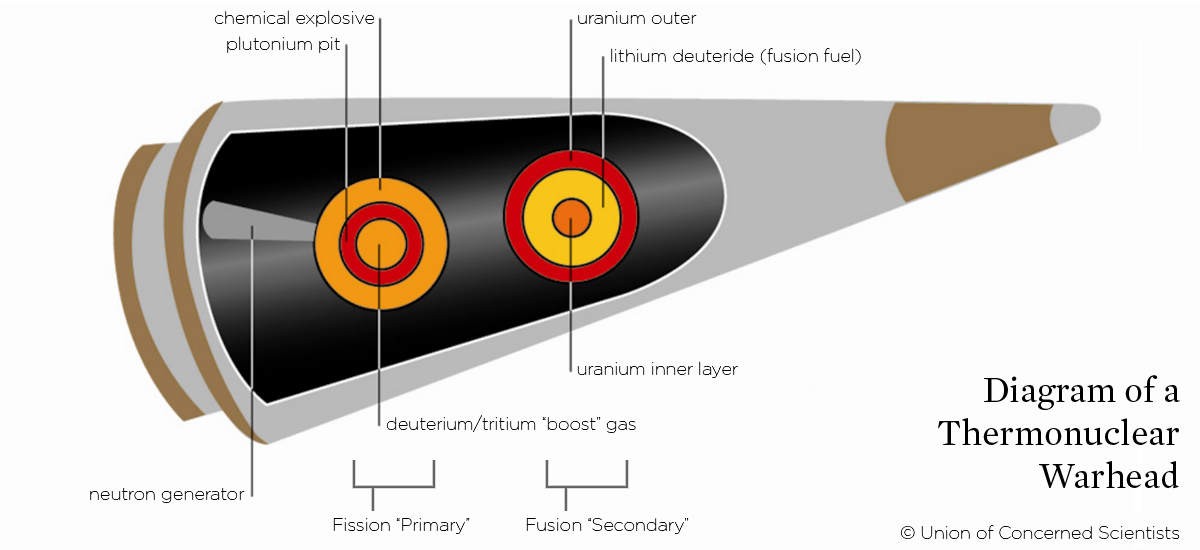
Definition of Nuclear Weapons Nuclear weapons are among the most advanced and devastating technological inventions created by humanity, combining complex scientific principles with profound ethical challenges. These weapons derive their immense destructive power from nuclear reactions, specifically nuclear fission and fusion, which release vast amounts of energy by altering atomic nuclei. Understanding nuclear weapons involves […]

Read More →

How do atomic and nuclear physics relate to each other?

Definition and Scope of Atomic and Nuclear Physics Atomic and nuclear physics are closely linked disciplines within modern physics, each focusing on different aspects of matter at the smallest scales. Atomic physics primarily investigates the structure and behavior of atoms, especially the dynamics of electrons surrounding the nucleus. In contrast, nuclear physics centers on the […]

Read More →

Chasing Nuclear Rainbows: The Spectral Beauty of Atomic Cores

Definition of Nuclear Rainbows The concept of “nuclear rainbows” metaphorically describes the diverse and vivid spectral phenomena that emerge from atomic nuclei during various nuclear processes. These phenomena reflect the complex interactions and emissions of radiation at the atomic scale, producing a spectrum of colors and energies reminiscent of a natural rainbow. This term captures […]

Read More →

How do nuclear reactions work?

Definition of Nuclear Reactions Nuclear reactions are fundamental processes involving changes within atomic nuclei, resulting in the transformation of matter at its most basic level. These reactions entail the rearrangement of protons and neutrons inside the nucleus, often accompanied by the release or absorption of substantial energy. Such processes are pivotal in both natural phenomena […]

Read More →

What is the nucleus force explained? – Physics-Only?

Definition of the Nuclear Force The nuclear force, often referred to as the strong nuclear force, is a fundamental interaction responsible for binding protons and neutrons-collectively called nucleons-within the atomic nucleus. This force operates at the subatomic scale and is essential for maintaining the integrity of matter by overcoming the electromagnetic repulsion between positively charged […]

Read More →

Is nuclear physics similar to chemistry?

Understanding Nuclear Physics and Chemistry The boundary between nuclear physics and chemistry often appears as indistinct as the subatomic particles they investigate. Both fields explore the microscopic realm, akin to examining different facets of a complex gem. To truly grasp their distinctions and connections, it is essential to analyze their core principles, investigative techniques, and […]

Read More →