Gamma-Ray Bursts Unveiled: The Universe’s Biggest Bangs

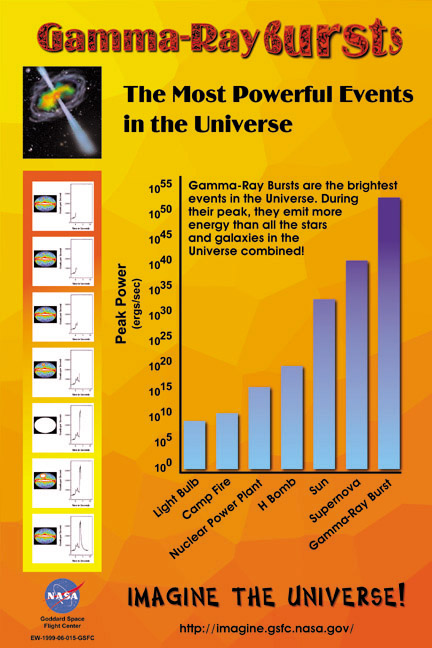
Definition of Gamma-Ray Bursts Gamma-ray bursts (GRBs) are intense, brief flashes of gamma radiation-the highest-energy form of electromagnetic waves-originating from distant cosmic events. These bursts can last from a fraction of a second to several minutes and release an extraordinary amount of energy, often surpassing the total output of our Sun over its entire lifetime […]

Read More →

A New Dawn in Astronomy: The Array That’s Redefining Ground-Based Telescopes

Definition of Telescope Arrays in Astronomy Telescope arrays represent a cutting-edge advancement in ground-based astronomical observation, involving the coordinated use of multiple telescopes to function as a single, larger instrument. This technique enhances the resolution and sensitivity of observations beyond the capabilities of individual telescopes, enabling astronomers to study celestial phenomena with unprecedented detail. Telescope […]

Read More →

An Ancient Star’s Puzzle: Galactic History Gets Complicated

Definition of Ancient Stars Ancient stars are stellar objects that formed in the early epochs of the universe and have survived through cosmic time. These stars act as celestial archives, preserving invaluable information about the conditions and processes that shaped the cosmos during its formative stages. Their study bridges multiple scientific disciplines, including astrophysics, cosmology, […]

Read More →

Astronomical Sense and Nonsense: Separating Cosmic Fact from Fiction

Understanding Astronomy: An Overview Astronomy, the scientific study of celestial bodies and the universe, has fascinated humanity for centuries. It combines empirical research with theoretical frameworks to explore the vast cosmos, unraveling the mysteries of stars, planets, galaxies, and cosmic phenomena. This discipline not only advances our comprehension of the universe’s structure and origins but […]

Read More →

Astronomers Witness the Birth of a Black Hole

Definition of Black Holes and Stellar Evolution Black holes are extraordinary cosmic objects formed from the remnants of massive stars that have undergone gravitational collapse. These entities possess gravitational fields so intense that nothing, not even light, can escape their pull, rendering them invisible to direct observation. The formation of black holes is a critical […]

Read More →

Brown Dwarfs Speak Up: Astronomers Tune In to Faint Signals

Definition of Brown Dwarfs Brown dwarfs are celestial bodies that occupy an intermediate position between the largest gas giant planets and the smallest stars. Often dubbed “failed stars,” these objects possess masses insufficient to sustain the hydrogen fusion that powers true stars. Their unique characteristics challenge traditional classifications in astronomy and provide valuable insights into […]

Read More →