
Short Answer
Definition of Gargantuan Black Holes in Dwarf Galaxies
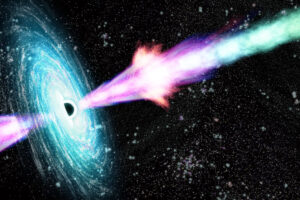
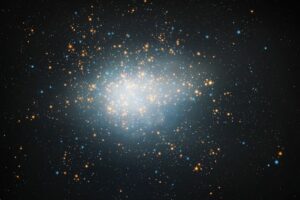
Gargantuan black holes are extraordinarily massive black holes, often millions to billions of times the mass of the Sun. While traditionally associated with the centers of large galaxies, recent discoveries reveal their presence within dwarf galaxies-small galactic systems containing up to a billion stars. These dwarf galaxies are typically faint and gas-poor, making the existence of such massive black holes within them a fascinating cosmic puzzle.
- Dwarf Galaxy:
A small galaxy with significantly fewer stars and lower luminosity compared to larger galaxies. - Gargantuan Black Hole:
A black hole with mass ranging from millions to billions of solar masses, capable of exerting immense gravitational influence.
Formation Mechanisms of Black Holes in Dwarf Galaxies
Black holes generally originate through two main processes: the collapse of massive stars at the end of their life cycles or the coalescence of primordial black holes formed shortly after the Big Bang. In dwarf galaxies, the scarcity of massive stars due to limited gas and low metallicity makes stellar collapse a less likely source for supermassive black holes. Instead, primordial black holes, which emerged in the early universe’s dense regions, may have served as seeds that gradually accumulated mass over billions of years.
Role of Galaxy Mergers
Interactions and mergers between dwarf galaxies significantly influence black hole growth. When dwarf galaxies collide, their dark matter halos merge, causing gravitational disturbances that funnel gas and stars toward the galactic center. This process reduces angular momentum, allowing gas to cool and accumulate, which can trigger star formation and create favorable conditions for black hole accretion and expansion.
Observational Evidence of Massive Black Holes in Dwarf Galaxies
Active galactic nuclei (AGN) signatures in dwarf galaxies provide compelling evidence for the presence of gargantuan black holes. These “active dwarf galaxies” exhibit increased luminosity due to matter accreting onto central black holes. A notable example is the nearby dwarf galaxy NGC 4395, which hosts a black hole estimated to be around 100,000 times the mass of the Sun, demonstrating that even small galaxies can harbor surprisingly massive black holes.
Challenges in Detecting Black Holes in Dwarf Galaxies
Identifying and studying massive black holes in dwarf galaxies is challenging due to their low brightness and subtle observational signatures. Traditional detection methods often fall short, necessitating advanced techniques such as gravitational wave astronomy, which can detect black hole mergers, and high-resolution spectroscopic studies that analyze gas dynamics near the black hole’s vicinity.
Cosmological Significance of Gargantuan Black Holes in Dwarf Galaxies
The presence of massive black holes in dwarf galaxies has profound implications for our understanding of cosmic evolution. Since the early universe was dominated by numerous dwarf galaxies, studying these black holes can illuminate the processes that led to the formation of larger galactic structures. Moreover, their existence challenges conventional hierarchical galaxy formation models, suggesting that dwarf galaxies play a more critical role in the cosmic landscape than previously thought.
Unresolved Questions and Future Research Directions
- Isolated Evolution:
Can gargantuan black holes develop independently within dwarf galaxies, without influence from larger galactic clusters? - Galactic Impact:
How do these black holes affect star formation rates and dark matter distribution within their host galaxies? - Growth Patterns:
Do black holes in dwarf galaxies follow different evolutionary trajectories compared to those in massive galaxies?
Why Understanding Gargantuan Black Holes in Dwarf Galaxies Matters
Exploring the existence and behavior of massive black holes in dwarf galaxies enriches our comprehension of the universe’s structure and history. It bridges multiple scientific disciplines-cosmology, astrophysics, and observational astronomy-offering insights into galaxy formation, black hole growth, and the dynamic interplay between matter and gravity on cosmic scales. This knowledge not only advances scientific inquiry but also inspires public fascination with the mysteries of the cosmos.
FAQ
What are gargantuan black holes?
Gargantuan black holes are extraordinarily massive black holes found in dwarf galaxies, ranging from millions to billions of times the mass of the Sun.
How do black holes form in dwarf galaxies?
They can form through the collapse of massive stars or from primordial black holes formed shortly after the Big Bang, with mergers and interactions in dwarf galaxies aiding their growth.
Why are gargantuan black holes important in astronomy?
They provide insights into cosmic evolution and the processes that shape galaxy formation, challenging existing models.

Leave a Reply