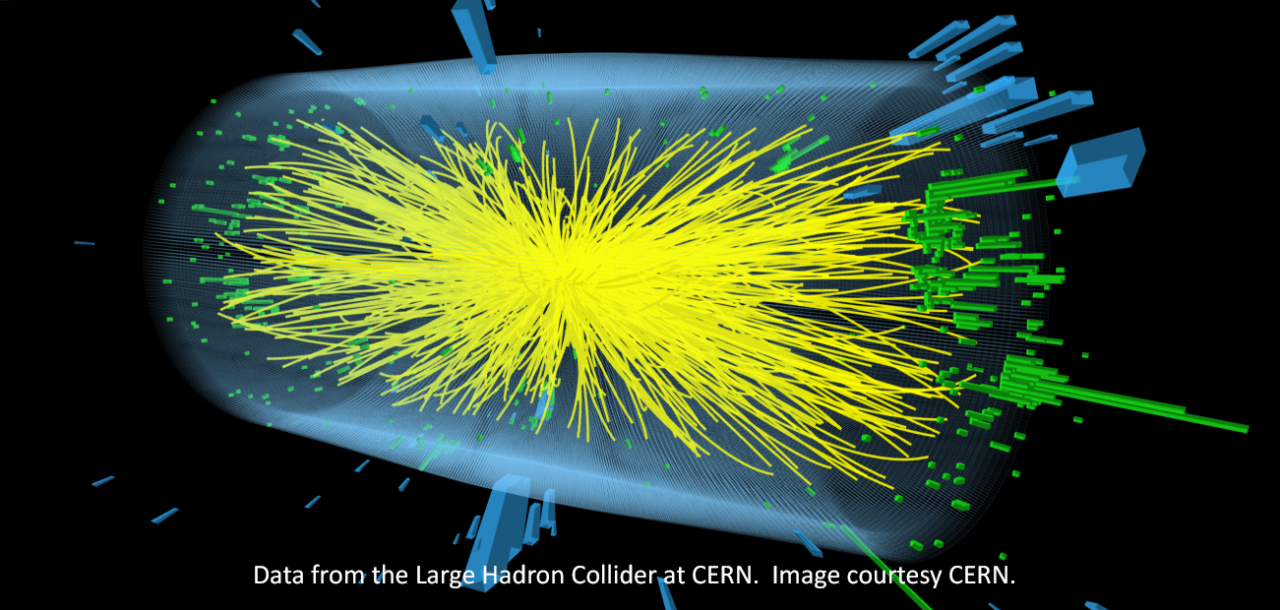
What is a particle collider and how does it work?

Definition of Particle Colliders Particle colliders are highly advanced scientific instruments designed to accelerate charged particles to extremely high velocities and then bring them into collision. These collisions recreate conditions similar to those just after the Big Bang, allowing researchers to investigate the fundamental building blocks of matter and the forces that govern their interactions. […]

Read More →

How to balance radioactive reactions?

Definition of Radioactive Reactions Radioactive reactions refer to the spontaneous processes in which unstable atomic nuclei transform into more stable forms, releasing energy in the form of particles or electromagnetic waves. These nuclear transformations are fundamental to the study of nuclear chemistry and physics, involving changes in elemental identity and the emission of radiation such […]

Read More →

DNA Bricks Build 3D Nanostructures: Complexity from Simplicity

Definition of DNA Nanotechnology DNA nanotechnology is an innovative interdisciplinary field combining biology, chemistry, and engineering principles to design and construct nanoscale structures using DNA molecules. By exploiting the natural base-pairing properties of DNA, scientists can create highly precise and complex three-dimensional (3D) architectures, often referred to as “DNA bricks.” These nanostructures have transformative potential […]

Read More →

How do cosmic rays reach huge energies?

Definition of Cosmic Rays Cosmic rays are highly energetic particles that originate from outer space and travel through the universe at nearly the speed of light. These particles primarily consist of protons, but also include heavier atomic nuclei and electrons. Their energies can surpass those generated by the most powerful human-made particle accelerators, reaching levels […]

Read More →

How are a proton and a neutron almost the same?

Definition of Protons and Neutrons Protons and neutrons are subatomic particles that form the core components of an atom’s nucleus. Collectively known as nucleons, these particles are essential to the structure and stability of matter. While protons carry a positive electric charge, neutrons are electrically neutral. Despite this difference, they share many fundamental properties and […]

Read More →

How are chemical bonds broken?

Definition of Chemical Bond Breaking Chemical bond breaking refers to the process by which the forces holding atoms together within molecules or solids are overcome, resulting in the separation of atoms or ions. These bonds-ionic, covalent, and metallic-are essential for the structure and properties of matter. Understanding how these bonds dissociate is crucial for comprehending […]

Read More →

What is quantum computing’s role and origin?

Definition of Quantum Computing Quantum computing represents a groundbreaking shift in computational technology, aiming to surpass the constraints of classical computing and revolutionize problem-solving methodologies. Rooted in the principles of quantum mechanics-the science that describes the behavior of particles at the atomic and subatomic levels-quantum computing merges the disciplines of physics and computer science. This […]

Read More →

Why are few people so good with mental calculations?

Understanding Mental Calculation Mental calculation refers to the ability to perform arithmetic operations swiftly and accurately in one’s mind without the aid of external tools. This skill often captivates observers due to the impressive speed and precision demonstrated by proficient individuals. However, only a minority exhibit such aptitude, prompting questions about the factors that contribute […]

Read More →