Will quantum computing break SHA-256 encryption?

Understanding SHA-256 Encryption SHA-256, short for Secure Hash Algorithm 256-bit, is a fundamental cryptographic hash function widely employed to ensure data integrity and security. Originating from the National Security Agency (NSA) and standardized under the Federal Information Processing Standards (FIPS), SHA-256 transforms input data of any size into a fixed 256-bit output, known as a […]

Read More →

Should I go for radiology or nuclear medicine?

Definition and Overview of Radiology and Nuclear Medicine Radiology and nuclear medicine are two pivotal medical specialties that play crucial roles in diagnosing and treating various health conditions. While both fields utilize imaging technologies to examine the human body, they differ significantly in their approaches, techniques, and clinical applications. Understanding these distinctions is essential for […]

Read More →

Can computer engineers work on quantum computers?

Understanding Quantum Computing Quantum computing marks a revolutionary shift in the field of computer engineering, diverging fundamentally from classical computing. While traditional computers operate using bits that represent either a 0 or a 1, quantum computers utilize quantum bits, or qubits, which exploit the principles of quantum mechanics. This allows qubits to exist in multiple […]

Read More →

Is a quantum computer in a Bose-Einstein state (BEC)?

Definition of Bose-Einstein Condensate and Quantum Computing Quantum computing signifies a revolutionary shift in computational methods, merging principles from quantum mechanics with computer science. Central to this field is the concept of quantum states, which underpin the operation of quantum computers. A Bose-Einstein Condensate (BEC) is a distinct state of matter formed when bosonic particles […]

Read More →

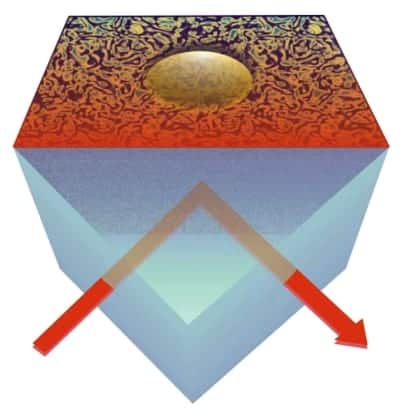
Casimir Effect Goes Classical: When Quantum Forces Behave Normally

Definition of the Casimir Effect The Casimir effect is a distinctive physical phenomenon arising from the principles of quantum mechanics, demonstrating the interaction between microscopic quantum fluctuations and macroscopic objects. It occurs when two uncharged, perfectly conductive plates are positioned extremely close to each other in a vacuum, resulting in an attractive force between them. […]

Read More →

Why do the hoi polloi think climate change is a threat?

Understanding Climate Change Perception Climate change has evolved from a specialized scientific topic into a widely recognized global concern, capturing the attention of the general public. This widespread awareness prompts an important question: why do so many people perceive climate change as an immediate and tangible threat? This article explores the diverse factors shaping this […]

Read More →

How do the molecules in DNA hold biological information?

Definition of DNA and Its Role in Biological Information Deoxyribonucleic acid (DNA) is the fundamental macromolecule that stores genetic instructions essential for the development, functioning, and reproduction of all living organisms. It acts as the molecular blueprint that encodes hereditary information, enabling the transmission of traits from one generation to the next. The study of […]

Read More →

Why are traditional measuring devices not reliable?

Understanding Traditional Measuring Devices Traditional measuring instruments have long been fundamental tools in quantifying various aspects of our environment and experiences. Devices such as rulers, thermometers, and scales are often trusted for their precision and dependability. However, a closer examination reveals that their accuracy is frequently compromised by inherent flaws and situational factors, challenging the […]

Read More →

Exploring quantum computing use cases for logistics?

Definition of Quantum Computing in Logistics Quantum computing represents a groundbreaking computational approach that leverages the principles of quantum mechanics to process information in ways unattainable by classical computers. In the logistics industry, which is characterized by intricate networks, massive data volumes, and a constant need for operational efficiency, quantum computing offers transformative potential. By […]

Read More →