Is Dark Matter the Biggest Mistake in Physics?

Understanding Dark Matter Dark matter is one of the most mysterious and significant components of the universe, accounting for roughly 27% of its total mass-energy content. Unlike ordinary matter, it neither emits nor absorbs light, making it invisible to conventional detection methods. Despite its elusive nature, dark matter plays a crucial role in explaining various […]

Read More →

What Causes Gravitational Waves in Space?

Definition of Gravitational Waves Gravitational waves are ripples in the fabric of spacetime caused by the acceleration of massive objects. These disturbances travel outward at the speed of light, carrying energy across the cosmos. Predicted by Albert Einstein’s General Theory of Relativity over a century ago, gravitational waves represent a dynamic aspect of the universe, […]

Read More →

Can You Study Astrophysics and AI Together?

Definition The combined study of astrophysics and artificial intelligence (AI) represents a cutting-edge interdisciplinary field that merges the exploration of cosmic phenomena with advanced computational techniques. Astrophysics is the branch of science focused on understanding the physical properties and behaviors of celestial bodies and the universe at large. Artificial intelligence, on the other hand, involves […]

Read More →

Are Black Holes the Universe’s Reproduction System?

Understanding Black Holes Black holes are among the most fascinating and perplexing phenomena in the universe. They are regions in spacetime where gravity is so overwhelmingly strong that nothing, including light, can escape their pull. Traditionally, black holes have been viewed as cosmic vacuum cleaners, relentlessly consuming everything nearby. This perception paints them as destructive […]

Read More →

Why Telescopes Let Us See the Past (Mind-Blowing Science)

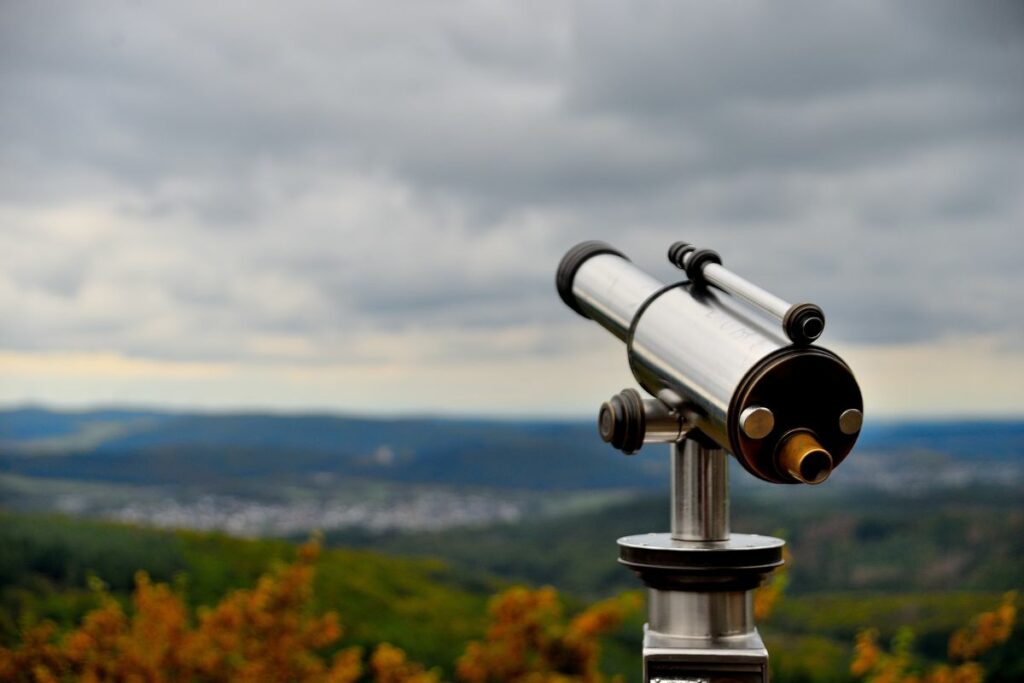
Definition of Telescopes as Time Machines Telescopes are sophisticated optical instruments that allow us to observe distant celestial objects by collecting and magnifying light. Beyond their role as mere visual aids, telescopes function as portals through time, enabling us to see events that occurred in the distant past. This unique capability arises because the light […]

Read More →

The Biggest Mystery in Space Might Change Everything

Understanding the Greatest Cosmic Mystery What if the most profound enigma lurking just beyond the reach of our telescopes fundamentally transforms our comprehension of the universe? Envision a puzzle so deep that it not only challenges the boundaries of modern astrophysics but also compels humanity to rethink its very understanding of reality. This captivating prospect […]

Read More →

Is Dark Matter Actually a Hidden Shadow Universe?

Understanding Dark Matter Dark matter remains one of the most intriguing mysteries in contemporary physics and cosmology. Although invisible to electromagnetic detection, it exerts a significant gravitational influence that shapes the large-scale structure of the universe, including galaxies, galaxy clusters, and the cosmic web. Despite its pervasive presence, dark matter has eluded direct observation, prompting […]

Read More →

Record-Breaking Experiments Are Closing In on Dark Matter

Understanding Dark Matter Dark matter constitutes one of the most mysterious and intriguing components of the universe. Unlike ordinary matter, it neither emits nor absorbs light, rendering it invisible to traditional observational techniques. Despite its elusive nature, dark matter is estimated to make up about 27% of the universe’s total mass-energy content. Its gravitational influence […]

Read More →

How Do Scientists Measure Gravity Across Planets?

Definition of Gravity in Planetary Contexts Gravity is the fundamental force that causes two masses to attract each other. On Earth, this force results in a consistent acceleration of approximately 9.8 meters per second squared, which governs how objects fall and move. When considering other planets, gravity varies depending on factors such as the planet’s […]

Read More →