What are the subatomic particles in the nucleus?

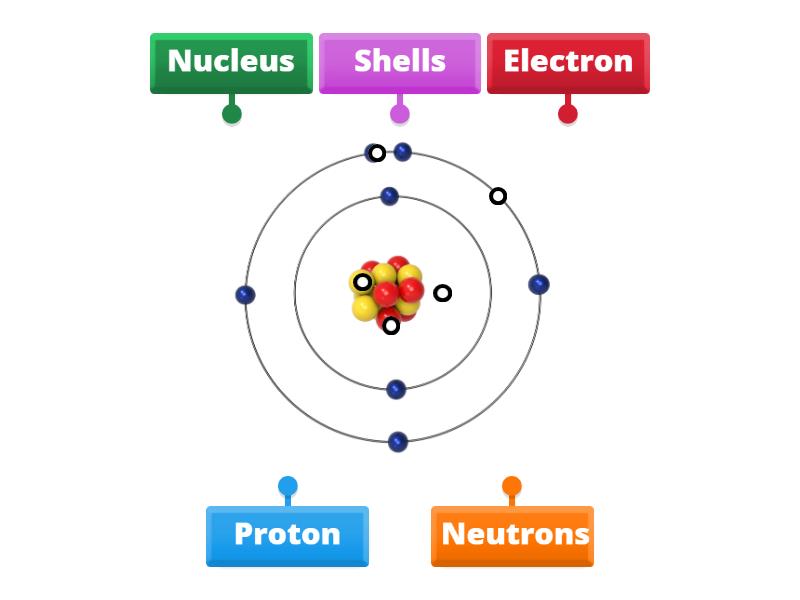
Understanding Atomic Nuclei: An Overview The atom, the fundamental building block of matter, harbors a dense core known as the nucleus. This nucleus contains subatomic particles-protons and neutrons-that are essential in defining the properties and stability of elements. Exploring these particles reveals the intricate forces and structures that govern the very fabric of matter. Definition […]


Read More →

What’s an MRI scan? How will it be?

Definition of Magnetic Resonance Imaging (MRI) Magnetic Resonance Imaging (MRI) is a sophisticated, non-invasive diagnostic technique that produces detailed images of the internal structures of the human body. Utilizing strong magnetic fields and radiofrequency waves, MRI enables clinicians to visualize anatomy and physiological processes without the need for surgical intervention. This technology has become indispensable […]

Read More →

The Hubbard-Holstein Model: When Electrons and Phonons Collide

Definition of the Hubbard-Holstein Model The Hubbard-Holstein model is a fundamental theoretical construct in condensed matter physics that integrates the behavior of electrons with lattice vibrations, or phonons. It serves as a comprehensive framework to study the complex interactions between electron correlations and phonon-induced lattice distortions, providing critical insights into the quantum properties of materials. […]

Read More →

Will 3D interfaces take over the 2D environment?

Understanding Digital Interface Dimensions Digital interfaces have traditionally been dominated by two-dimensional (2D) designs, but the landscape is rapidly shifting toward three-dimensional (3D) interaction models. This evolution reflects a broader trend in technology where digital experiences are becoming more immersive and spatially complex, moving beyond the flat planes of conventional screens. Definition of 2D and […]

Read More →

When will graphene technology take off?

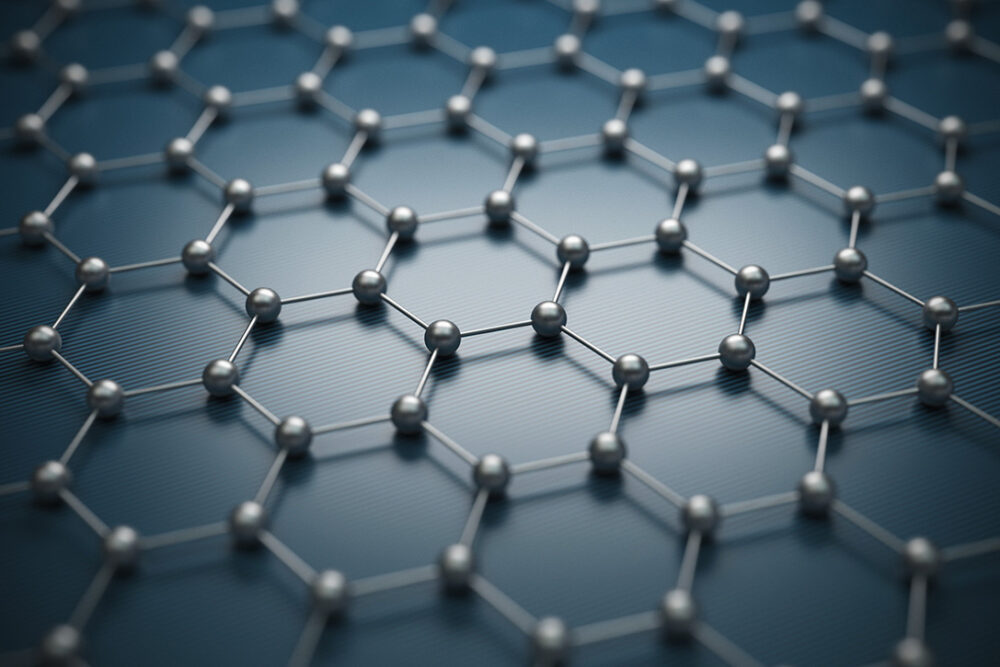
Definition and Overview of Graphene Graphene is a groundbreaking material in the field of materials science, consisting of a single layer of carbon atoms arranged in a two-dimensional hexagonal lattice. This ultra-thin sheet, only one atom thick, exhibits a unique combination of properties that have captured the attention of researchers and industries worldwide. Its extraordinary […]

Read More →

Which math isn’t used in computer science?

Understanding the Relationship Between Mathematics and Computer Science Mathematics and computer science share a deeply intertwined relationship, with many mathematical principles forming the foundation of computational theory and practice. Core areas such as algebra, discrete mathematics, probability, and calculus are integral to the development of algorithms, data structures, and machine learning models. However, despite this […]

Read More →

Farewell Arthur C. Clarke: The Futurist Who Saw Beyond the Stars

Definition and Legacy of Arthur C. Clarke Arthur C. Clarke stands as a towering figure in the domains of science fiction and futurism, whose influence extends well beyond literary circles into scientific and technological discourse. Renowned for blending imaginative speculation with the disciplined approach of the scientific method, Clarke’s work has inspired a wide array […]

Read More →

CERN Names Next Director General: Who Will Guide the Collider?

Overview of CERN’s Leadership Transition The recent announcement regarding the appointment of the new Director General at CERN has sparked widespread interest within the global scientific community. This leadership role extends far beyond administrative duties, serving as a critical driver for the future of particle physics research. As the overseer of the Large Hadron Collider […]

Read More →

How does particle physics explain fundamental forces?

Definition of Fundamental Forces in Particle Physics Particle physics explores the fundamental interactions that govern the behavior of the universe at its most basic level. These interactions, known as the four fundamental forces, are the essential mechanisms that dictate how particles interact, combine, and transform. They form the foundation of all physical phenomena, from the […]

Read More →