Where Does Charge Come From? The Puzzle of the Universe’s Push & Pull

Definition of Electric Charge Electric charge is a fundamental property of matter that governs the interactions between particles and forces within the universe. It acts as an invisible link that holds together atoms and influences the behavior of both microscopic particles and large celestial bodies. This intrinsic characteristic is essential to understanding the structure and […]


Read More →

Is quantum computer hypercomputer?

Understanding Hypercomputation Hypercomputation refers to a theoretical model of computation that transcends the capabilities of classical Turing machines. Unlike Turing machines, which define the limits of algorithmic computability, hypercomputers are conceptual devices that can solve problems deemed unsolvable by traditional computational means. These models often rely on abstract or non-physical principles, such as infinite computational […]

Read More →

Simply the Best: Ranking the Greatest Minds in Science

Definition of Scientific Luminaries Scientific luminaries are individuals whose exceptional intellect and insatiable curiosity have profoundly expanded humanity’s comprehension of the natural world. These pioneers have introduced revolutionary ideas and discoveries that have reshaped various scientific disciplines, enabling progress that was once unimaginable. Recognizing these figures is not simply an academic ranking but a celebration […]

Read More →

What is used to measure thickness?

Understanding Thickness: A Fundamental Measurement Thickness is a vital physical property that connects our sensory experience with the intrinsic characteristics of materials. It represents the dimension between two surfaces of an object, often revealing complex structural and functional details. This parameter is crucial across numerous disciplines such as manufacturing, engineering, and material science, where precise […]

Read More →

Do medical physicists perform surgery?

Understanding the Role of Medical Physicists in Healthcare Medical physicists occupy a unique niche at the crossroads of physics, medicine, and engineering. Their primary mission is to apply physical principles to improve medical care, focusing on patient safety and the optimization of diagnostic and therapeutic procedures. While their work is integral to many clinical settings, […]

Read More →

What is the difference between 2D printing and 3D printing?

Definition of 2D and 3D Printing Printing technologies have evolved significantly, leading to a fundamental question: what distinguishes traditional two-dimensional (2D) printing from the innovative three-dimensional (3D) printing? Understanding these differences requires examining their core principles, materials, processes, and applications. 2D Printing: This process involves creating flat images on surfaces such as paper, fabric, or […]

Read More →

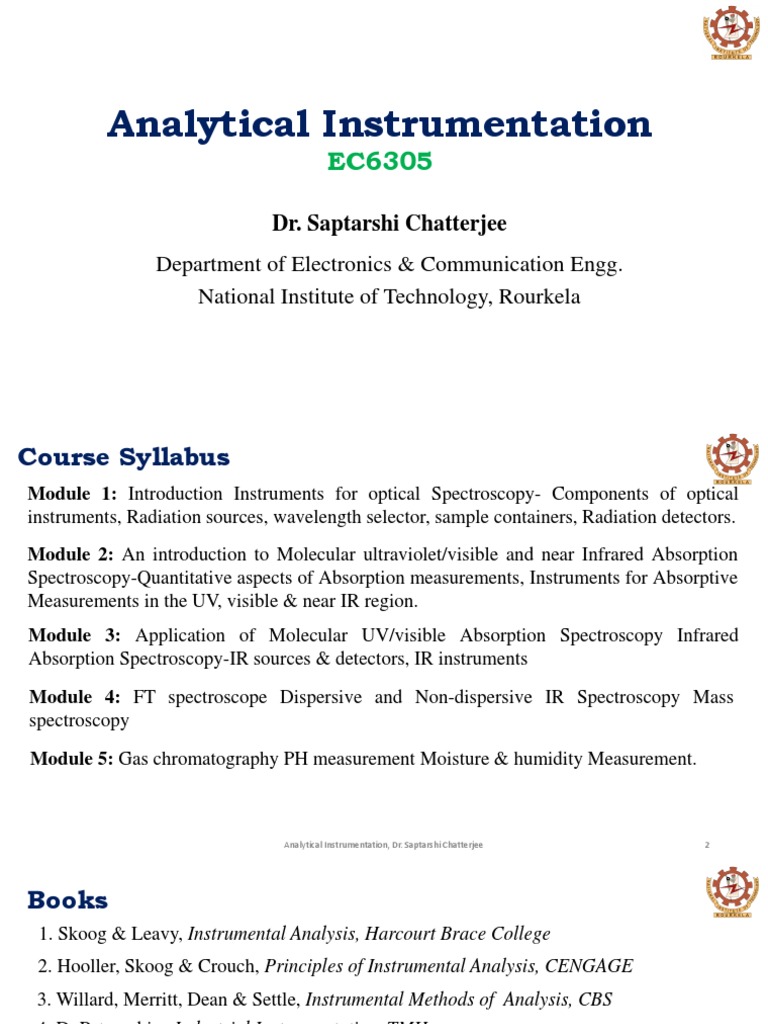
What is analytical instrumentation?

Definition of Analytical Instrumentation Analytical instrumentation refers to the collection of tools and devices used to measure, identify, and quantify the physical and chemical characteristics of substances. These instruments are essential in scientific research, enabling both qualitative and quantitative assessments across diverse fields such as chemistry, biology, environmental science, and materials engineering. By providing precise […]

Read More →

Meet Christina Lee: Breaking Ground in Computational Matter

Overview of Christina Lee’s Contributions to Computational Matter Christina Lee has distinguished herself as a pioneering physicist specializing in computational matter, a field that merges materials science with computational physics. Her research focuses on unraveling the complexities of matter at atomic and molecular scales, driving forward scientific knowledge while inspiring curiosity about the fundamental nature […]

Read More →

Could this illustration be a plausible alternative to QCD?

Definition of Quantum Chromodynamics (QCD) Quantum Chromodynamics (QCD) is the fundamental theory describing the strong nuclear force, one of the four fundamental interactions in nature. It explains how quarks and gluons-the elementary particles that constitute protons, neutrons, and other hadrons-interact through a property known as color charge. QCD is essential for understanding the forces that […]

Read More →