
Short Answer
Understanding Thickness: A Fundamental Measurement
Thickness is a vital physical property that connects our sensory experience with the intrinsic characteristics of materials. It represents the dimension between two surfaces of an object, often revealing complex structural and functional details. This parameter is crucial across numerous disciplines such as manufacturing, engineering, and material science, where precise quantification of thickness influences quality, safety, and performance.
Applications and Contexts of Thickness Measurement
The scope of thickness measurement spans a wide array of materials and environments. Whether assessing the fragile layer of paper or the sturdy cross-section of steel beams, the techniques and tools employed must adapt to the specific nature of the material and its operational context. Understanding these diverse applications is essential for selecting the appropriate measurement approach.
Precision Tools for Thickness Measurement
Calipers: Versatile Precision Instruments
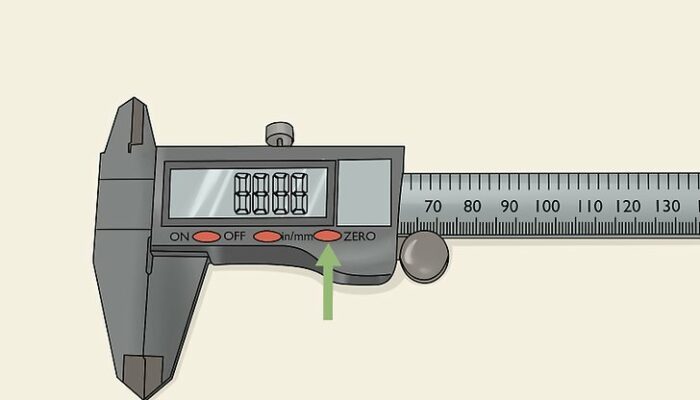
Calipers are indispensable tools in precision measurement, prized for their adaptability and accuracy. Available in both analog and digital formats, calipers utilize two jaws-one fixed and one movable-to measure internal and external dimensions, including thickness. Analog calipers can achieve precision up to one-thousandth of an inch, while digital versions provide instant, easy-to-read measurements, reducing the likelihood of human error.
These instruments function much like a historian peeling back layers to uncover hidden truths, revealing both the external and internal dimensions of objects with remarkable clarity.
Micrometers: Masters of Fine Measurement
Micrometers specialize in measuring very small distances with exceptional precision, often accurate to one ten-thousandth of an inch. Their mechanism involves a thimble and spindle that gently compress the material, allowing the user to read thickness from a finely calibrated scale. The meticulous nature of micrometer use is comparable to an artist sculpting a delicate masterpiece, emphasizing the importance of detail.
Micrometers are particularly valuable in industries requiring stringent quality control of thin materials such as metals and polymers, ensuring dimensional accuracy and compliance with standards.
Advanced Thickness Measurement Technologies
Ultrasonic Thickness Gauges: Harnessing Sound Waves
Ultrasonic thickness gauges represent a sophisticated blend of physics and technology. These devices emit high-frequency sound waves that penetrate materials and measure thickness based on the time taken for echoes to return. This non-destructive method is especially useful for materials with surface irregularities, coatings, or corrosion, where traditional contact methods may fail.
Analogous to sonar systems mapping underwater terrain, ultrasonic gauges reveal hidden structural details, playing a critical role in preventive maintenance across sectors like aerospace and oil and gas.
Laser Thickness Measurement: Precision Through Light
Laser-based thickness measurement systems utilize coherent light beams to determine the distance between the sensor and the material surface. These non-contact systems preserve the integrity of delicate materials and offer rapid measurement speeds, making them ideal for high-volume industrial production environments.
Lasers, often described as “light waves of accuracy,” provide real-time data that supports stringent quality control and efficient manufacturing workflows.
Microscopic Techniques for Ultra-Thin Measurements
Optical microscopy extends thickness measurement into the micro and nanoscale realms. By employing light and advanced imaging methods, this technique enables precise evaluation of thin films and coatings critical to semiconductor and nanotechnology fields. The preparation and examination process is meticulous, akin to an artist preparing a canvas, highlighting the intricate relationship between thickness and material properties.
Through optical microscopy, thickness transcends numerical value, becoming a window into the complex interactions and characteristics of materials at the smallest scales.
Common Misconceptions About Thickness Measurement
Thickness can be accurately measured using any ruler.
While rulers provide rough estimates, precise thickness measurement requires specialized tools like calipers or micrometers to ensure accuracy.
Non-contact methods are always superior to contact methods.
The choice between contact and non-contact methods depends on the material and application; some scenarios favor direct contact for better precision.
Thickness measurement is only important in manufacturing.
Thickness is critical in many fields, including construction, aerospace, electronics, and even art conservation.
Significance of Thickness Measurement
Accurate thickness measurement is fundamental to ensuring the safety, functionality, and quality of materials and products. In engineering and manufacturing, it guarantees that components meet design specifications and regulatory standards. In scientific research, it aids in understanding material behavior and properties. Ultimately, thickness measurement is a cornerstone of technological advancement and everyday applications, reflecting humanity’s pursuit of precision and knowledge.
FAQ
What tools are commonly used to measure thickness?
Common tools include calipers, micrometers, ultrasonic thickness gauges, and laser measurement systems.
Why is precise thickness measurement important?
Precise thickness measurement ensures quality, safety, and performance in various applications, including engineering and manufacturing.
Can any ruler be used for thickness measurement?
No, while rulers can provide rough estimates, accurate thickness measurement requires specialized tools like calipers or micrometers.


Leave a Reply