How do atoms attract through chemical bonds?

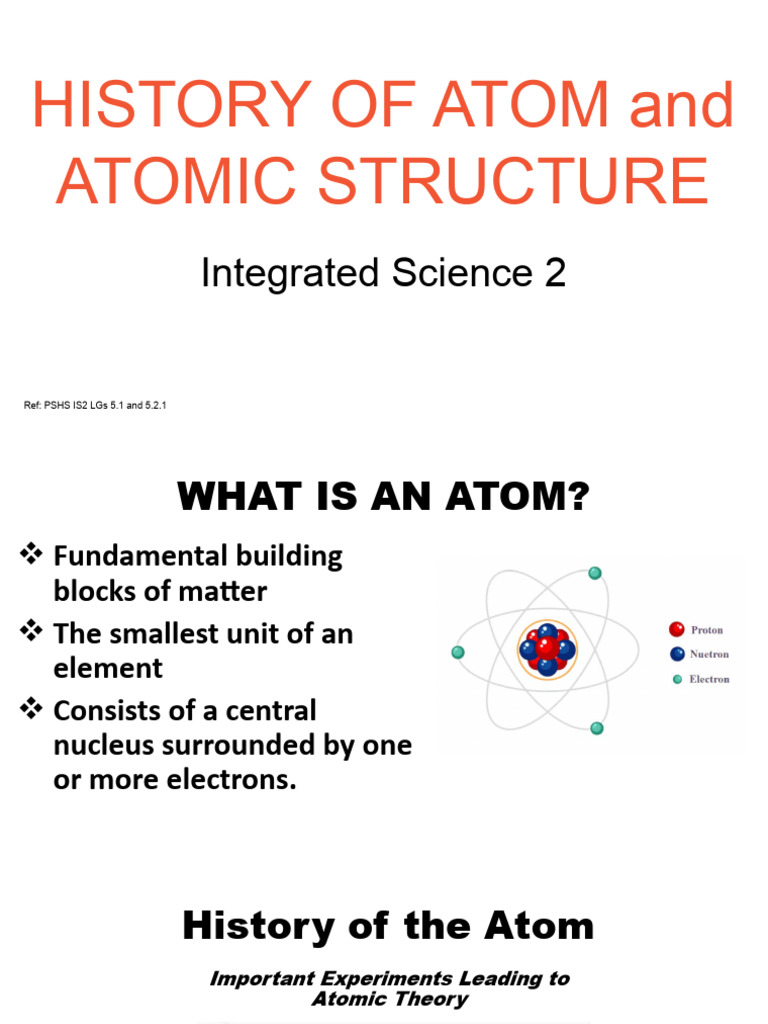
Definition of Atomic Attraction and Chemical Bonding Atomic attraction refers to the forces that cause atoms to connect and form stable structures, which are fundamental to the composition of matter. These connections, known as chemical bonds, arise from interactions between the subatomic particles within atoms-protons, neutrons, and electrons. Chemical bonding is the process by which […]

Read More →

What are nuclear forces?

Definition of Nuclear Forces Nuclear forces, also known as nuclear interactions, are the fundamental forces responsible for the behavior and stability of subatomic particles within atomic nuclei. These forces govern how protons and neutrons-collectively called nucleons-interact and bind together, shaping the structure and properties of atomic nuclei. Understanding nuclear forces is essential for explaining phenomena […]

Read More →

Is there a limit to how accurate measurements can be?

Understanding Measurement and Its Significance Measurement is the fundamental process of quantifying the characteristics of objects or phenomena, serving as the cornerstone of scientific exploration. Whether assessing the mass of subatomic particles or gauging astronomical distances, these quantifications enable researchers to build knowledge across various fields. However, the pursuit of perfect accuracy in measurement is […]

Read More →

What is graphene

Definition of Graphene Graphene is a single-atom-thick layer of carbon atoms arranged in a two-dimensional honeycomb lattice. This allotrope of carbon is renowned for its extraordinary physical and chemical properties, making it a groundbreaking material in science and technology. Its unique atomic structure endows it with exceptional strength, electrical conductivity, and flexibility, positioning graphene as […]

Read More →

A New Spin on Magnets: Unlocking Quantum Magnetic Mysteries

Understanding Quantum Magnetism Quantum magnetism delves into the magnetic properties that emerge from the quantum mechanical behavior of subatomic particles, distinguishing itself from the classical magnetism observed in everyday life. While traditional magnets rely on the alignment of magnetic domains to produce forces of attraction or repulsion, quantum magnets arise from more intricate phenomena such […]

Read More →

Is studying physics harder than studying medicine?

Understanding the Challenge: Physics vs. Medicine When choosing a path in higher education, many students wonder: Is pursuing physics more challenging than studying medicine? Both fields demand intense intellectual effort, yet they differ fundamentally in their nature and the types of challenges they present. This article explores the complexities inherent in both disciplines, highlighting their […]

Read More →

Which AI model performed the best in terms of math?

Overview of AI Models in Mathematical Problem Solving Artificial intelligence encompasses a variety of models, each demonstrating unique strengths across numerous applications, especially in the domain of mathematics. This article explores the capabilities of several leading AI frameworks in tackling mathematical problems, highlighting their operational principles, benefits, and comparative effectiveness. The discussion spans from classical […]

Read More →

Is quantum cryptography unbreakable?

Understanding Quantum Cryptography Quantum cryptography represents a cutting-edge approach to securing communication by harnessing the unique properties of quantum mechanics. Unlike traditional encryption methods, it aims to create communication channels that are fundamentally resistant to interception and tampering. The most prominent technique within this field is Quantum Key Distribution (QKD), which uses pairs of quantum […]

Read More →