
Short Answer
Definition of Nuclear Decay
Nuclear decay is a natural process in which unstable atomic nuclei release energy by emitting radiation, leading to the transformation of the original atom into a different element or a different isotope of the same element. This phenomenon is fundamental to nuclear physics and has significant implications across various scientific and technological domains, including medicine, energy, and environmental studies.
Fundamental Principles of Nuclear Decay
At the heart of nuclear decay lies the concept of nuclear instability, governed by quantum mechanics. Atomic nuclei with an imbalance in protons and neutrons possess excess energy or mass, making them prone to spontaneous changes aimed at achieving a more stable configuration. These unstable nuclei, known as radioisotopes, undergo decay processes to reduce their internal energy and reach equilibrium.
Classification of Nuclear Decay Types
Nuclear decay occurs through several distinct mechanisms, each characterized by the type of radiation emitted and the changes in the nucleus:
- Alpha Decay:
This decay involves the emission of an alpha particle, which consists of two protons and two neutrons. Common in heavy elements like uranium and radium, alpha decay reduces the atomic number by two and the mass number by four, resulting in the formation of a new element. - Beta Decay:
Beta decay transforms a neutron into a proton or vice versa within the nucleus, accompanied by the emission of a beta particle (electron or positron) and a neutrino or antineutrino. This process increases or decreases the atomic number by one, producing a different element. Beta decay is subdivided into beta-minus (β⁻) and beta-plus (β⁺) decay, depending on the emitted particle. - Gamma Decay:
Gamma decay involves the release of gamma rays, which are high-energy photons emitted when a nucleus transitions from an excited state to a lower energy state. Unlike alpha and beta decay, gamma emission does not alter the atomic or mass numbers but helps stabilize the nucleus after other decay events.
Mathematical Description: Decay Constant and Half-Life
The process of nuclear decay is inherently probabilistic and can be described using the decay constant (λ), which represents the probability per unit time that a nucleus will decay. A related and widely used concept is the half-life (T1/2), defined as the time required for half of a given sample of radioactive nuclei to undergo decay. The half-life varies significantly among isotopes, ranging from fractions of a second to billions of years, reflecting the diverse stability of different nuclei.
Applications of Nuclear Decay in Science and Technology
Nuclear decay is not only a subject of theoretical interest but also a cornerstone for numerous practical applications:
- Medical Uses:
Radioisotopes are vital in medical diagnostics and treatment, including cancer therapy and imaging techniques such as positron emission tomography (PET), which utilizes beta decay to visualize metabolic activity within the body. - Energy Generation:
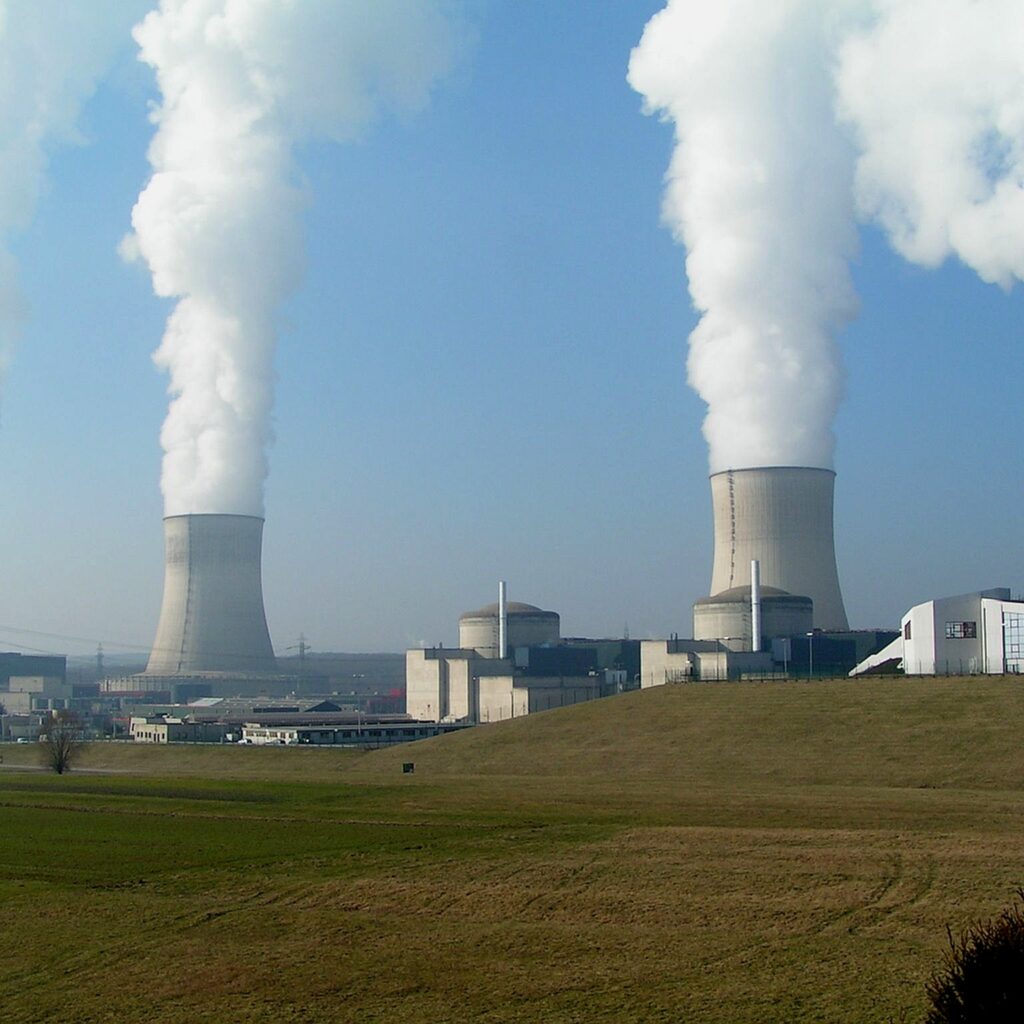
Nuclear reactors exploit the energy released during nuclear decay, particularly fission, to produce electricity on a large scale. Controlled decay processes enable efficient and sustained power generation. - Radiometric Dating:
Techniques like carbon-14 dating depend on the predictable decay rates of isotopes to estimate the age of archaeological and geological samples, providing critical insights into historical and evolutionary timelines. - Astrophysical Insights:
Understanding nuclear decay is essential for studying stellar nucleosynthesis, the process by which stars create new elements, thereby enriching the universe with diverse atomic species.
Health Risks and Safety Considerations
While nuclear decay offers numerous benefits, it also poses significant health risks due to the ionizing radiation emitted. Exposure to such radiation can damage living cells, potentially causing acute effects and increasing the risk of long-term illnesses like cancer. Consequently, strict safety protocols and regulatory measures are essential to manage radioactive materials and protect both human health and the environment.
Future Directions in Nuclear Decay Research
Ongoing research in nuclear decay aims to discover new isotopes, develop advanced radiopharmaceuticals, and deepen our understanding of nuclear processes. These efforts hold promise for breakthroughs in energy technology, medical diagnostics, and treatment. Interdisciplinary collaboration among physics, biology, and environmental science is expected to further illuminate the fundamental principles and applications of nuclear decay.
Significance of Nuclear Decay
Nuclear decay remains a foundational concept in modern science, linking fundamental physical laws with practical innovations. From elucidating the origins and evolution of matter in the cosmos to enabling life-saving medical technologies, the study of nuclear decay continues to expand our comprehension of the natural world and drive technological progress.
FAQ
What is nuclear decay?
Nuclear decay is the process by which unstable atomic nuclei emit radiation and transform into different elements or isotopes.
What are the different types of nuclear decay?
The primary types of nuclear decay are alpha decay, beta decay (including beta-minus and beta-plus), and gamma decay.
Why is nuclear decay important in medicine?
It is used in diagnostic imaging, such as PET scans, and in treatments like cancer radiotherapy.
What safety measures are important when working with radioactive materials?
Proper shielding, limiting exposure time, and following regulatory guidelines are crucial to minimize radiation risks.
How does the half-life of a radioactive isotope affect its use?
Half-life determines how quickly an isotope decays, influencing its suitability for various applications like dating or medical procedures.






Leave a Reply